|
Getting your Trinity Audio player ready...
|
Cowboy hats do more than protect you from the sun. They communicate style, tradition, and sometimes even a little personality before you say a word. In Western culture, hat color has long carried meaning. While modern fashion gives people more freedom than ever, many cowboys, ranchers, rodeo competitors, and Western enthusiasts still follow certain unwritten color rules.
If you’ve ever wondered what color cowboy hat should I wear, whether there are real cowboy hat color etiquette guidelines, or if the famous black vs white cowboy hat debate actually matters, this guide has you covered.
You’ll learn:
- Traditional cowboy hat color rules
- Seasonal hat color recommendations
- The meanings behind popular cowboy hat colors
- Rodeo and formal event etiquette
- Common myths about cowboy hat traditions
- How to choose the right cowboy hat color for your lifestyle
Do Cowboy Hat Colors Really Matter?
The short answer is yes—and no.
Traditionally, cowboy hat colors played an important role in Western culture. Working cowboys often chose colors based on practicality, weather, and local customs. Over time, certain shades became associated with specific occasions and seasons.
Today, cowboy hat color matters less than it did 50 years ago. Modern Western fashion encourages personal expression. However, understanding traditional color rules can help you avoid fashion mistakes at rodeos, weddings, ranch events, and formal Western gatherings.
Think of cowboy hat colors like dress shoes. You can technically wear sneakers to a formal event, but knowing the traditional expectations helps you make better style decisions.
The good news? Most color rules are guidelines rather than strict laws.
Traditional Cowboy Hat Color Rules
For generations, Western wear followed a fairly simple system.
Light Colors for Daytime
Cowboys traditionally wore lighter-colored hats during warmer months and daytime activities. Lighter shades reflected sunlight and stayed cooler during long hours outdoors.
Popular traditional light colors include:
- Silver belly
- Natural straw
- Tan
- Cream
- Light gray
These colors became common among ranchers, rodeo participants, and outdoor workers throughout the American West.
Dark Colors for Formal Occasions
Darker hats developed a reputation for being more formal and dressy.
Common formal cowboy hat colors include:
- Black
- Dark chocolate brown
- Charcoal gray
- Midnight blue
These shades became popular for:
- Weddings
- Funerals
- Formal rodeos
- Western banquets
- Evening events
Many Western dress codes still follow this tradition today.
Felt vs Straw Traditions
Historically, cowboy hat traditions focused on both color and material.
Many cowboys followed this rule:
- Straw hats in spring and summer
- Felt hats in fall and winter
This tradition remains popular because it matches seasonal comfort rather than strict fashion rules.
Summer vs Winter Cowboy Hat Colors
One of the oldest cowboy hat traditions involves seasonal color changes.
Summer Cowboy Hat Colors
During hot weather, lighter colors dominate.
Popular summer options include:
- White
- Silver belly
- Natural straw
- Light tan
- Sand
- Cream
These shades reflect sunlight more effectively than dark colors and often feel visually cooler.
Straw hats are especially common during:
- Summer rodeos
- Ranch work
- Outdoor festivals
- Country concerts
- County fairs
Best Summer Combination
Many experienced Western wearers choose:
Light-colored straw hat + lightweight Western clothing
This combination provides maximum comfort during hot weather.
Winter Cowboy Hat Colors
As temperatures drop, darker felt hats become more common.
Popular winter cowboy hat colors include:
- Black
- Chocolate brown
- Dark gray
- Charcoal
- Navy
Felt hats provide better insulation and weather protection than straw hats.
Many ranchers switch to felt hats once cooler weather arrives, regardless of color preferences.
Best Winter Combination
Dark felt hat + heavier Western outerwear
It’s practical, traditional, and visually balanced.
Black, White, Brown, and Silver Belly Meanings
Many people search for cowboy hat color meanings because certain colors carry traditional associations.
While modern wearers can choose any color they like, understanding these meanings adds useful context.
Black Cowboy Hat Meaning
Black also tends to hide stains well and is often considered one of the easiest felt colors to keep looking clean with regular brushing.
Black hats are often associated with:
- Formality
- Authority
- Sophistication
- Evening events
Hollywood Westerns often portrayed villains wearing black hats, which created the famous “good guy vs bad guy” stereotype.
In reality, modern black cowboy hats simply represent one of the most versatile and popular choices available.
Best For
- Formal events
- Nightlife
- Concerts
- Rodeos
- Everyday wear
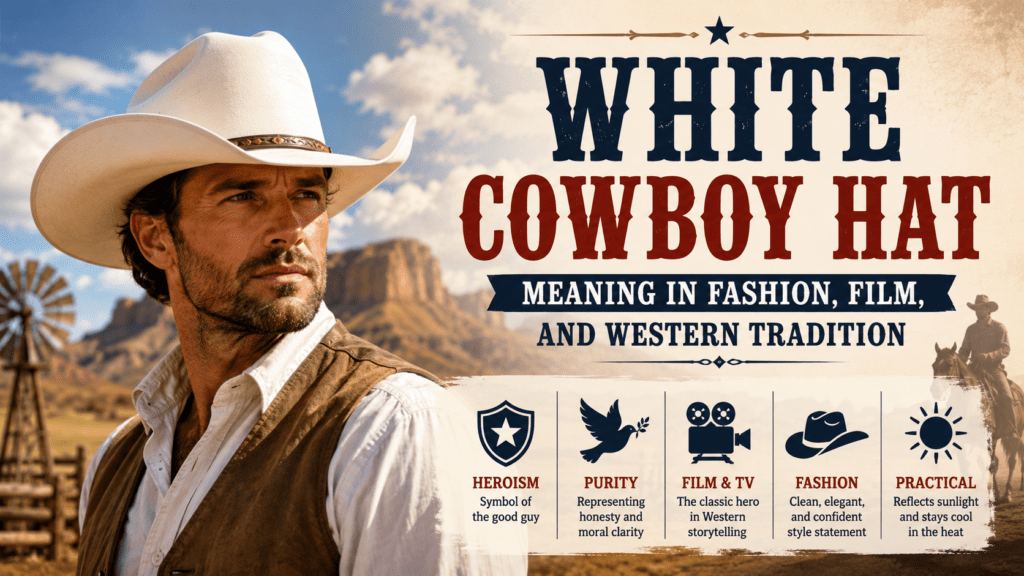
White Cowboy Hat Meaning
White hats traditionally symbolize:
- Honesty
- Tradition
- Western heritage
- Warm-weather wear
Classic Western movies often placed heroes in white hats, helping create the iconic image of the American cowboy.
Today, white and light-colored hats remain popular for summer events.
Best For
- Outdoor weddings
- Summer rodeos
- Festivals
- Daytime events
Brown Cowboy Hat Meaning
Brown remains one of the most practical cowboy hat colors.
It represents:
- Ranch life
- Hard work
- Authenticity
- Everyday Western style
Brown hides dust and dirt better than lighter colors, which explains its popularity among working cowboys.
Pecan and chocolate shades are especially popular among everyday wearers because they remain practical while pairing well with denim, earth tones, and traditional Western clothing.
Best For
- Ranch work
- Casual wear
- Everyday use
- First-time buyers
Silver Belly Cowboy Hat Meaning
The silver belly cowboy hat meaning often confuses beginners.
Silver belly refers to a light gray-beige color inspired by the soft underfur of certain animals used in premium felt hats.
Western enthusiasts often view silver belly as:
- Traditional
- Refined
- Versatile
- Classic
Many consider it one of the safest and most elegant cowboy hat colors.
Best For
- Weddings
- Rodeos
- Business-casual Western outfits
- Year-round wear
Cowboy Hat Etiquette for Rodeos and Formal Events
Understanding cowboy hat color etiquette becomes most important during social interaction and special occasions.
The basic Cowboy Hat Etiquette is compliance with Traditional hat manners which includes:
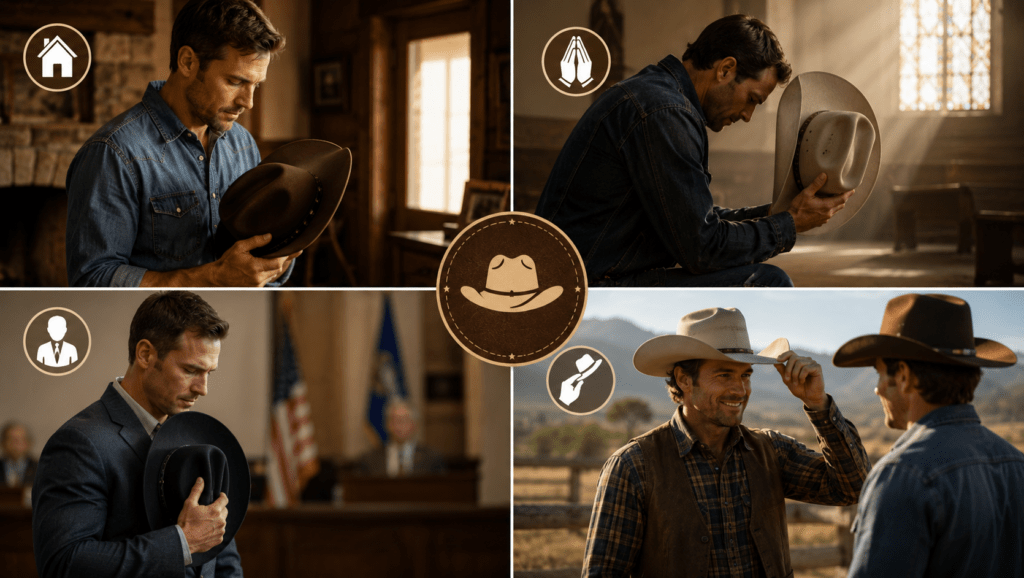
- Removing your hat indoors
- Removing your hat during prayers
- Removing your hat in respectful or formal settings
- Tipping your hat as a polite greeting in certain situations
These customs are rooted in respect and tradition, not in whether the hat is white, black, brown, or tan.
In other words, color may influence style, but it is not the main factor in cowboy etiquette.
Rodeo Cowboy Hat Color Rules
Modern rodeos rarely enforce strict color requirements.
However, you’ll commonly see:
Daytime Rodeos
- Straw hats
- Light-colored felt hats
- Silver belly hats
Evening Rodeos
- Black felt hats
- Dark brown felt hats
- Charcoal hats
Many competitors simply choose the hat that matches their outfit and sponsor requirements.
Cowboy Hat Etiquette for Weddings
Western weddings often follow traditional hat customs.
Popular choices include:
- Silver belly
- Light gray
- Black felt
- Chocolate brown
Guests should avoid overly flashy colors unless the event specifically encourages them.
Cowboy Hat Etiquette for Funerals
Western tradition generally favors:
- Black felt hats
- Dark brown felt hats
- Charcoal hats
These colors show respect while maintaining Western heritage.
Formal Western Events
For banquets, award ceremonies, and upscale Western gatherings:
- Black remains the safest choice
- Silver belly offers a classic alternative
- Dark brown provides a refined look
When unsure, a well-maintained black felt hat rarely looks out of place.
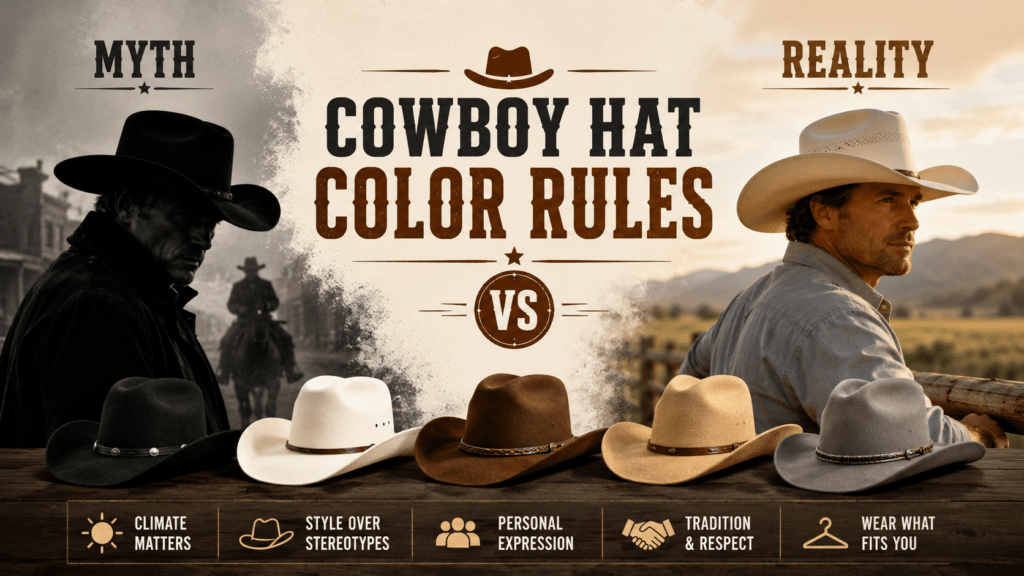
Common Cowboy Hat Color Myths
Many cowboy hat traditions have been exaggerated over time.
Let’s clear up some common misconceptions.
Myth #1: Only Good Guys Wear White Hats
This idea comes mostly from old Hollywood Westerns.
Real cowboys wear whatever color suits their needs, style, and environment.
Myth #2: Black Hats Are Only for Villains
Modern Western fashion completely ignores this stereotype.
Black remains one of the most popular cowboy hat colors worldwide.
Myth #3: You Must Wear Straw in Summer
While straw hats are practical, many people wear light-colored felt hats year-round.
Comfort matters more than strict rules.
Myth #4: Certain Colors Are Reserved for Professionals
There is no official rule stating that only ranchers, rodeo riders, or cowboys can wear specific colors.
Western fashion is for everyone.
Myth #5: Expensive Hats Only Come in Traditional Colors
Modern hat makers produce premium hats in:
- Black
- Brown
- Silver belly
- Blue
- Green
- Burgundy
- Custom colors
Quality has little to do with color.
How to Choose the Right Cowboy Hat Color
If you’re still asking what color cowboy hat should I wear, start with these practical considerations.
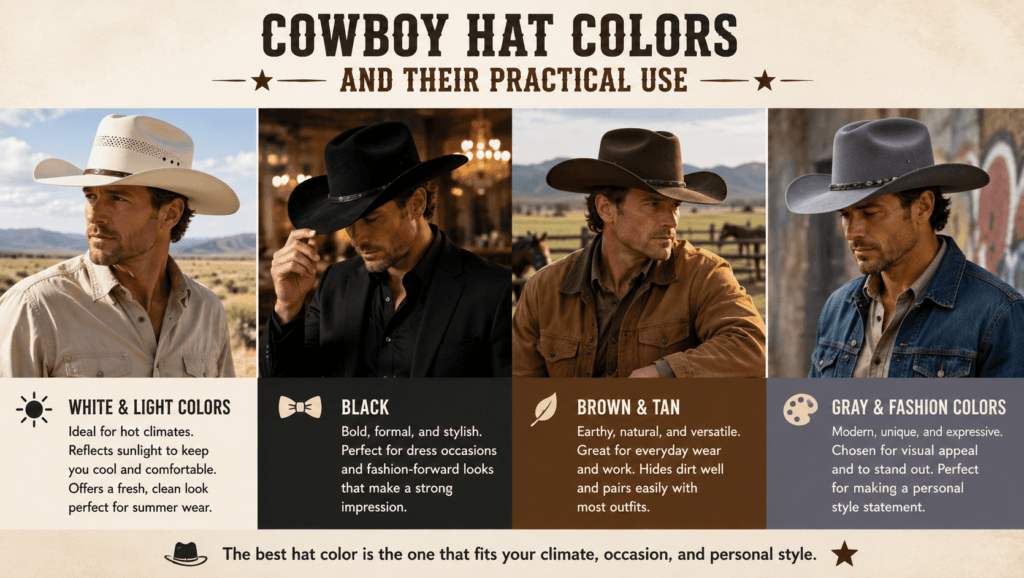
Consider Your Climate
Hot Climates
In hot, humid regions such as the Gulf Coast, many Western wearers rely on straw hats throughout summer and reserve darker felt hats for cooler months.
Choose:
- White
- Silver belly
- Tan
- Natural straw
These colors stay cooler and feel more comfortable outdoors.
Cooler Climates
Choose:
- Black
- Brown
- Charcoal
- Dark gray
These shades pair naturally with winter clothing and felt materials.
Match Your Wardrobe
A cowboy hat should work with the clothes you already own.
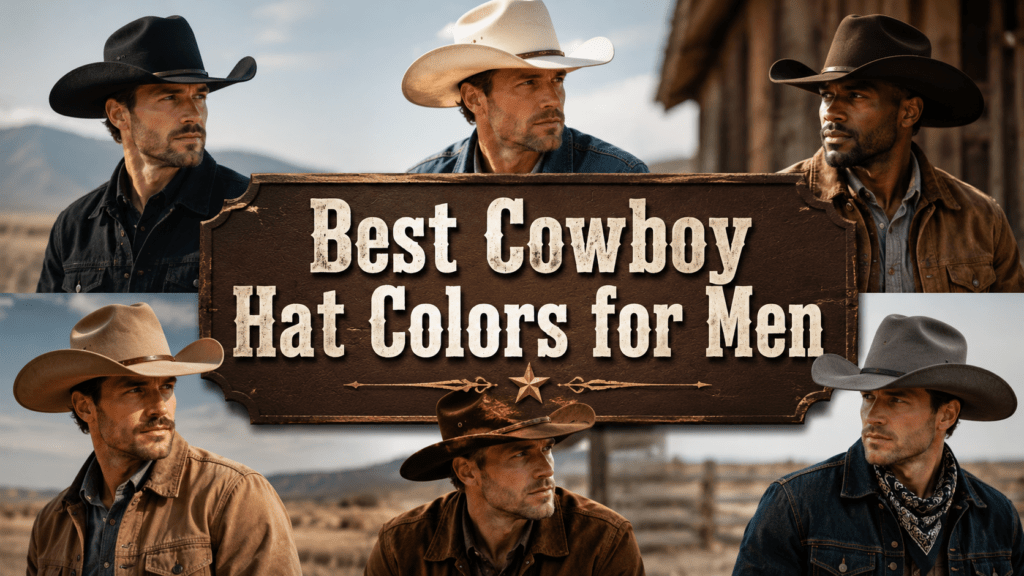
Most Versatile Colors
- Black
- Brown
- Silver belly
These colors complement nearly every Western outfit.
Coordinate Rather Than Match Exactly
Your cowboy hat doesn’t need to match your boots perfectly. Many experienced Western wearers coordinate their hat with their overall outfit—especially jackets, sport coats, or shirts—while keeping boots and belts matched to each other. This creates a balanced Western look without being overly rigid.
Think About Purpose
For Ranch Work
Choose:
- Brown
- Chocolate
- Tan
These colors hide dirt and wear better.
For Rodeos
Choose:
- Silver belly
- Black
- Brown
These remain the most common rodeo colors.
For Fashion
Choose whatever reflects your personal style.
Modern Western fashion includes:
- Burgundy
- Navy
- Forest green
- Distressed finishes
- Fashion-forward color combinations
Consider Your Experience Level
Consider Hat Quality Alongside Color
While color is important, many experienced Western hat owners recommend investing in the highest-quality felt your budget allows. Better-quality felt hats tend to hold their shape longer, resist wear better, and can often be professionally cleaned or reshaped for years of use.
If a premium 100X hat isn’t within your budget, there’s nothing wrong with starting with a quality 6X or 10X felt and upgrading later. Choosing the right fit and color matters far more than chasing the highest X rating on your first purchase.
Start With One Versatile Hat
Many long-time cowboy hat owners recommend buying one versatile felt hat before expanding your collection. A neutral color like silver belly, black, or brown gives you the most outfit options, and you can always add more distinctive colors later.
For first-time buyers, it’s hard to go wrong with:
Best First Cowboy Hat Colors
- Silver belly
- Brown
- Black
These three options offer maximum versatility and timeless Western appeal.
Gray and steel-colored hats are also becoming popular first choices because they pair well with both black and brown clothing while offering a softer look than solid black.
Frequently Asked Questions
Does my cowboy hat need to match my boots?
No. Most Western style enthusiasts recommend matching your boots and belt while coordinating your cowboy hat with the overall outfit rather than trying to match everything exactly.
Why do many people recommend silver belly for a first cowboy hat?
Silver belly is widely considered one of the most versatile cowboy hat colors. It pairs well with black, brown, gray, blue, and denim, making it an easy choice for first-time buyers.
Is black or silver belly better?
Black is generally considered more formal, while silver belly offers greater versatility for everyday wear. Your wardrobe and lifestyle should determine which is the better fit.
Final Thoughts
Cowboy hat colors have always reflected a mix of practicality, tradition, and personal style. While classic cowboy hat traditions still influence modern Western fashion, today’s wearers enjoy more freedom than ever before.
One interesting trend among cowboy hat owners is that very few stop at just one hat. Many people begin with a versatile neutral color—usually silver belly, black, or brown—and gradually add pecan, gray, chocolate, or even custom colors as their wardrobe and personal style evolve.
Whether you prefer the timeless appeal of a silver belly felt hat, the versatility of brown, or the bold statement of black, the best choice is the one that fits your lifestyle and makes you feel confident.
If you’re buying your first cowboy hat, start with a versatile color like silver belly, brown, or black. Focus on comfort, fit, and quality before worrying about strict color rules.
After all, the best cowboy hat isn’t necessarily the one that follows every tradition—it’s the one you’ll actually enjoy wearing.

Mike Wilson is a Western fashion enthusiast, content creator, and founder of HatWanderer.com. He shares expert insights, buying guides, and honest reviews to help readers choose the right cowboy hats and Western apparel.
Passionate about Western culture and craftsmanship, Mike covers hat styles, fit, materials, care, and the heritage behind iconic Western brands. His goal is to help both newcomers and longtime enthusiasts build a timeless Western wardrobe with confidence.
When he’s not writing, Mike enjoys exploring Western fashion trends, studying the history of cowboy culture, and discovering quality craftsmanship from respected hat makers.