|
Getting your Trinity Audio player ready...
|
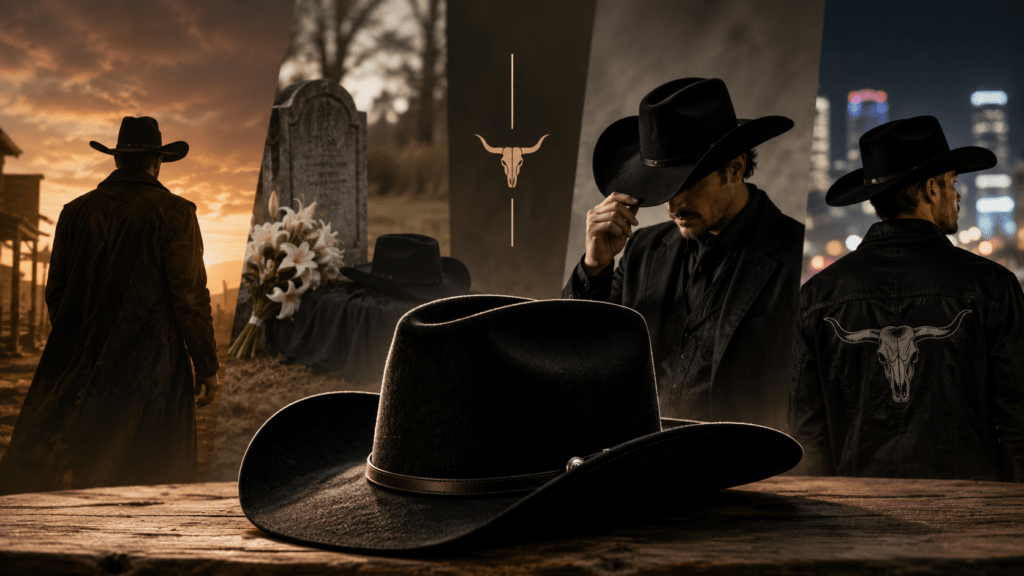
A black cowboy hat can mean a lot of different things. In one setting, it might give off an outlaw or dangerous vibe. In another, it can look respectful, formal, or stylish. You might see one in a dusty Western movie, at a funeral, or paired with streetwear in the city.
In this post, Black Cowboy Hat Meaning: From Outlaws to Elegance, we’ll answer the question: what does a black cowboy hat mean? We’ll look at where the meaning comes from, how movies and music shaped its image, and how people wear black cowboy hats today.
You’ll also find simple styling tips, cultural context, and real-world examples. Whether you’re planning an outfit, researching Western fashion, or just curious about cowboy hat symbolism, this guide will help you understand what a black cowboy hat can say about you.
Quick Answer: What does a Black Cowboy Hat Mean?
A black cowboy hat can mean different things depending on the situation, culture, and personal style.
Mourning and Respect
Black is often linked with grief, respect, and formality. That’s why a black cowboy hat can feel appropriate at funerals, memorials, or serious occasions.
Villainy and Rebellion
In classic Western movies, black hats were often worn by outlaws, rebels, or mysterious antiheroes. This helped create the famous “black hat villain” image in pop culture.
Authority and Seriousness
A black cowboy hat can also suggest power, confidence, and authority. Ranch owners, lawmen, performers, and public figures often choose black for its strong and polished appearance.
Fashion, Elegance, and Mystery
Today, many people wear black cowboy hats simply because they look stylish. Black feels sleek, versatile, bold, and easy to pair with different outfits.
Practical Reasons
Sometimes the meaning is practical rather than symbolic. Black hats hide dirt, stains, and wear better than lighter colors, making them popular for regular use.
Short Summary
The black cowboy hat meaning depends on context. It can symbolize mourning, rebellion, authority, fashion, or practicality depending on the setting and the person wearing it.
Historical Roots (Origins and Early Meanings)
Old West Context
The cowboy hat started as practical gear in the mid-to-late 1800s. Ranchers, cowboys, and frontiersmen needed hats that could handle long days outdoors. Wide brims helped block the sun and rain, while tall crowns added ventilation and insulation.
Early cowboy hats came in different shapes before styles like the cattleman crease became standard. Most hats were made from:
- Beaver or fur felt for premium quality
- Wool felt for cheaper everyday use
- Straw for hot summer weather
Color choices were mostly practical too. Browns, tans, and grays were common because they hid dust and matched leather boots and saddles easily.
White or lighter hats were often worn in warm weather or for formal occasions. Black hats existed too, but people usually chose them for practical reasons like hiding dirt or creating a dressier look — not because of deep symbolism.
Early Symbolic Meanings
In the real Old West, cowboy hat colors did not carry strict meanings at first. Most cowboys cared more about durability, comfort, and cost than symbolism.
Still, hats quietly communicated social signals.
A clean, high-quality hat could suggest:
- Pride
- Professionalism
- Higher social status
A worn-out or damaged hat might suggest:
- Hard labor
- Poverty
- Rough frontier living
As Western stories became popular in newspapers, stage shows, and dime novels, hat colors slowly gained symbolic meaning. Writers and performers started using visual shortcuts:
- Dark hats for mysterious or dangerous characters
- Light hats for friendly or trustworthy characters
Those early storytelling habits later influenced Hollywood Westerns.
Black in 19th-Century Culture
Long before cowboy movies existed, black already carried strong cultural meaning.
Mourning and Formal Wear
In the 1800s, black was strongly connected with mourning and funerals. Many people wore black clothing for long periods after losing a family member.
Because of that tradition, black hats naturally became linked with:
- Respect
- Grief
- Formal occasions
A black cowboy hat could easily fit into funeral attire or serious public events.
Authority and Respectability
Black also symbolized authority and professionalism during the 19th century.
Judges, officials, businessmen, and lawmen often wore darker clothing because it looked formal and respectable. On the frontier, wealthy ranchers and sheriffs sometimes preferred darker hats for the same reason.
A black hat could make someone appear:
- Serious
- Powerful
- Disciplined
- Successful
Outlaws and the Darker Image
At the same time, some outlaws and rough frontier figures also wore dark clothing and black hats.
Sometimes this was practical. Dark hats hid dirt and wear better. Other times it helped create a tougher appearance.
That overlap created an interesting contrast:
- Black could represent authority
- Or rebellion and danger
Later, Western films exaggerated this contrast and turned the black cowboy hat into one of the strongest symbols in movie history.
Common Symbolic Meanings
Mourning and Funerals
A black cowboy hat is often connected with mourning, respect, and solemn occasions. In many cultures, black is traditionally worn at funerals and memorial services. Because of that, a black hat can feel formal, respectful, and appropriate during times of grief.
In ranching and Western communities, someone may wear a black felt cowboy hat to a funeral as part of traditional mourning attire. In this setting, the hat functions like any other black formal accessory. It signals respect for the occasion rather than fashion or rebellion.
Villainy, Outlaws, and Rebellion
Western stories helped create one of the strongest meanings attached to black cowboy hats.
In dime novels, classic Western films, and modern cowboy movies, characters wearing black hats were often shown as outlaws, antiheroes, or dangerous rebels. Over time, the “black hat” became shorthand for moral ambiguity and rule-breaking behavior.
This image became deeply rooted in pop culture.
For example, Clint Eastwood often wore dark hats and clothing in Spaghetti Westerns to create a mysterious and intimidating presence. In Django Unchained, darker clothing and black hats are also used to signal power, resistance, and intensity.
Classic Western villains frequently wore black hats because audiences instantly understood the visual message.
Power, Authority, and Seriousness
A black cowboy hat can also suggest leadership, professionalism, and authority.
Darker hats often appear more formal and deliberate than lighter colors. Because of that, ranch bosses, sheriffs, judges, and public figures may choose black hats when they want to project confidence and control.
A well-made black felt hat can make the wearer appear:
- Serious
- Disciplined
- Powerful
- Respected
In many Western films, lawmen and authority figures wore darker hats to create a stronger and more commanding appearance.
Mystery, Sophistication, and Fashion
Today, many people wear black cowboy hats simply because they look stylish.
A black hat feels sleek, versatile, and modern. It works easily with denim, leather jackets, dark outfits, and streetwear-inspired Western fashion.
For some wearers, the black cowboy hat represents:
- Sophistication
- Mystery
- Confidence
- Personal style
Johnny Cash is one of the best-known examples. His all-black outfits and black cowboy hats became a signature part of his image. The look felt refined, serious, and unforgettable.
Modern country artists, musicians, and fashion influencers still use black cowboy hats to create a polished stage presence and strong visual identity.
Practical and Everyday Reasons
Not every black cowboy hat carries deep symbolism. Sometimes the reason is completely practical.
Black hats:
- Hide dirt and sweat better
- Show less wear over time
- Match many outfits easily
- Work well for daily outdoor use
That is one reason black felt and wool hats remain popular among working cowboys, ranch hands, and rodeo participants.
For many people, a black cowboy hat is simply durable, versatile, and easy to maintain. The meaning often depends more on the setting and the wearer than the color alone.
How Media and Pop Culture Shaped Meanings
A lot of what people think about black cowboy hats comes straight from movies, TV, and music.
Classic Western storytelling leaned heavily on simple visual shortcuts:
- High Noon — used stark costume contrast to signal tension between law and chaos
- The Good, the Bad and the Ugly — reinforced the idea of morally coded characters through style and tone
- Bonanza — helped normalize color-based character identity on television
- Django Unchained — modern Western that plays with darker symbolism and power aesthetics
- Johnny Cash — used all-black outfits and hats to build a powerful stage identity
Over time, repeated imagery started turning color into shorthand:
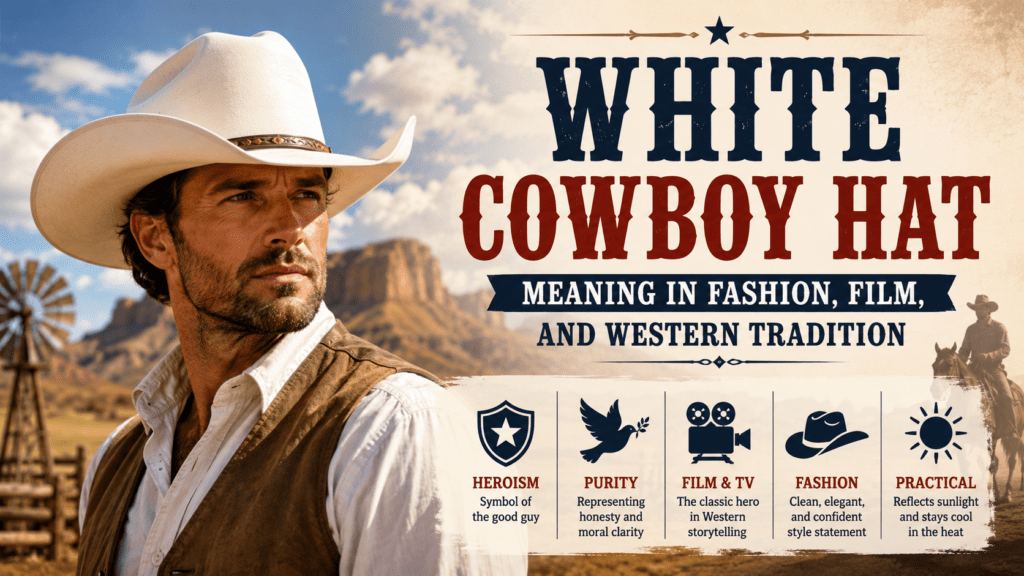
black = bad, white = good.
It worked well for storytelling, but it also oversimplified real life. In reality, hat color doesn’t decide someone’s character. Context, personality, and intention matter far more.
Regional and Subculture Differences
Black cowboy hats don’t mean the same thing everywhere.
In the U.S. West, especially ranching communities, black hats are often just practical or formal choices. They show up at events, rodeos, and everyday work settings without any “villain” meaning attached.
In urban fashion scenes, black cowboy hats are more about style. They show up in streetwear, concerts, and social media looks. Here, the hat is more “fashion statement” than cultural symbol.
In biker, rock, and country music cultures, black hats often connect to identity and performance. They can feel bold, rebellious, or stage-ready depending on how they’re worn.
Cultural meaning also shifts across communities. Indigenous, Latino, and other cultural groups may wear cowboy hats as part of heritage, identity, or regional tradition. In those cases, the hat isn’t symbolic of “good vs bad” at all—it’s cultural, functional, and personal.
Bottom line: meaning depends on the wearer, the setting, and who is looking at it.
How Context Changes Meaning (Short Scenarios)
A black cowboy hat doesn’t carry one fixed message. It changes completely based on where and how it’s worn.
- At a funeral: It usually signals mourning, respect, and formality.
- At a rodeo: It’s more about practicality, tradition, or style.
- At a stage or concert: It becomes part of a performance persona or brand image.
- At a protest or parade: It can turn into a symbolic or political statement depending on the message being expressed.
Same hat. Totally different meaning.
Style Guide — How to Wear a Black Cowboy Hat (Practical Tips)
Black cowboy hats are flexible, but styling still matters.
Materials and Finishes
- Wool felt: affordable, breathable, good for everyday wear
- Fur felt: more structured, durable, and premium-looking
- Straw: lightweight option for summer and outdoor use
Crown and Shape Styles
- Pinch front: modern, sharp, slightly aggressive look
- Cattleman crease: classic Western style, most traditional
- Telescope crown: smoother, more fashion-forward feel
Outfit Pairings
- Casual: jeans, boots, plain tees, denim jackets
- Country concert: patterned shirts, leather belts, boots
- Formal: dark suits, tailored jackets, clean dress shirts
- Urban streetwear: black denim, oversized fits, layered jackets
Care Tips
- Brush off dust regularly
- Store in a cool, dry place
- Avoid long sun exposure to prevent fading
- Reshape gently using steam if needed
Buying Guide and Product Suggestions (Brief)
When choosing a black cowboy hat, focus on fit and quality first.
What to Look For
- Correct hat size (snug but not tight)
- Material type (felt, wool, or straw)
- Brim width (affects style and sun protection)
- Comfortable sweatband (important for long wear)
Price Ranges
- Budget: entry-level straw or wool blends
- Mid-range: better felt quality, more structure
- Premium: fur felt, handcrafted finishes, long durability
Suggested Products (Add Affiliate Links Here)
- Classic black felt cattleman hat (everyday Western style)
- Premium fur felt black cowboy hat (formal + long-lasting)
- Lightweight black straw cowboy hat (summer wear option)
Myths and Misconceptions
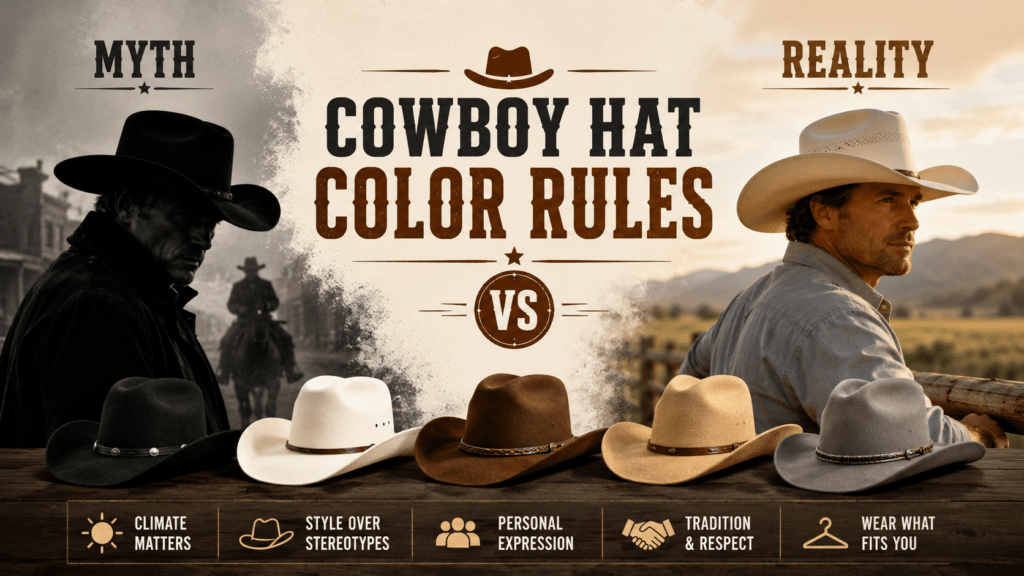
A lot of beliefs about black cowboy hats come from movies, not reality.
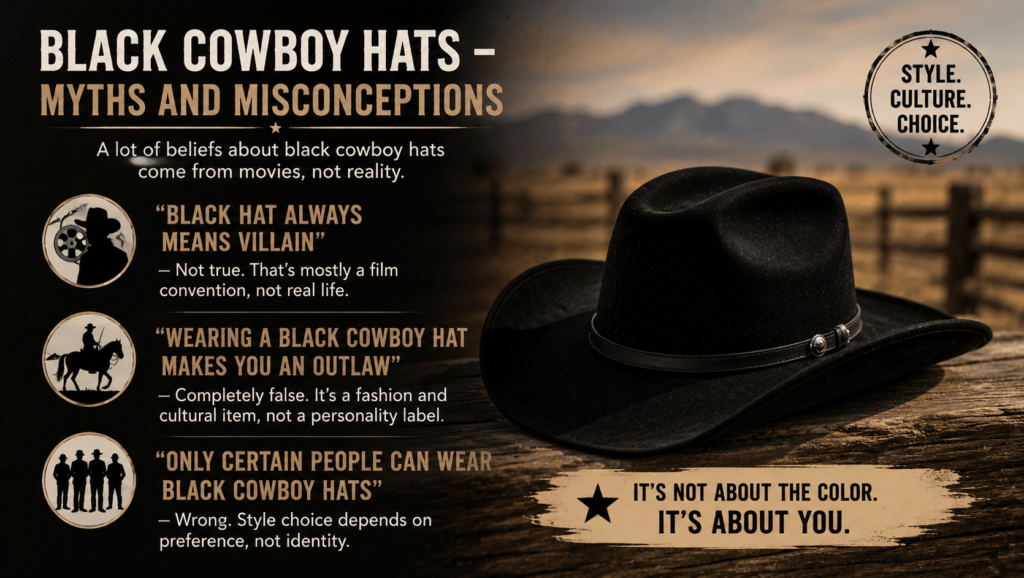
- “Black hat always means villain” — Not true. That’s mostly a film convention, not real life.
- “Wearing a black cowboy hat makes you an outlaw” — Completely false. It’s a fashion and cultural item, not a personality label.
- “Only certain people can wear black cowboy hats” — Wrong. Style choice depends on preference, not identity.
Real meaning depends on context, not color rules.
Quick Checklist — Deciding What a Black Cowboy Hat Will Mean for You
Before you pick one, ask yourself:
- Where will I wear it most?
- Do I want a bold, subtle, or neutral look?
- Is this for fashion, work, or events?
- Does it match my usual outfits?
- What impression do I want to give off?
If the answers feel aligned, you’re on the right track.
FAQ
What does a black cowboy hat symbolize in movies?
In movies, it often represents mystery, power, or villainy, but modern films also use it for heroes and complex characters.
Is wearing a black cowboy hat offensive?
No. It’s a fashion and cultural item. Meaning depends on context, not color.
Does a black cowboy hat mean you’re a bad person?
Not at all. That idea comes from old Western films, not real life.
How should I style a black cowboy hat for a wedding?
Pair it with a clean suit or formal Western outfit in neutral or dark tones for a polished look.
Conclusion
A black cowboy hat doesn’t have one fixed meaning. Its symbolism shifts with history, culture, media, and personal style. What matters most is context and intention, not outdated color rules.
If you’ve got your own take on it, drop a comment — what does a black cowboy hat mean to you? And if you’re exploring more Western style topics, check out our related guides on hat colors, styling, and cowboy culture.
Call to Action
To learn more about cowboy hats and the ranch culture of the Wild West, keep visiting Hatwanderer.com and reading our informative blog posts.

Mike Wilson is a Western fashion enthusiast, content creator, and founder of HatWanderer.com. He shares expert insights, buying guides, and honest reviews to help readers choose the right cowboy hats and Western apparel.
Passionate about Western culture and craftsmanship, Mike covers hat styles, fit, materials, care, and the heritage behind iconic Western brands. His goal is to help both newcomers and longtime enthusiasts build a timeless Western wardrobe with confidence.
When he’s not writing, Mike enjoys exploring Western fashion trends, studying the history of cowboy culture, and discovering quality craftsmanship from respected hat makers.