|
Getting your Trinity Audio player ready...
|
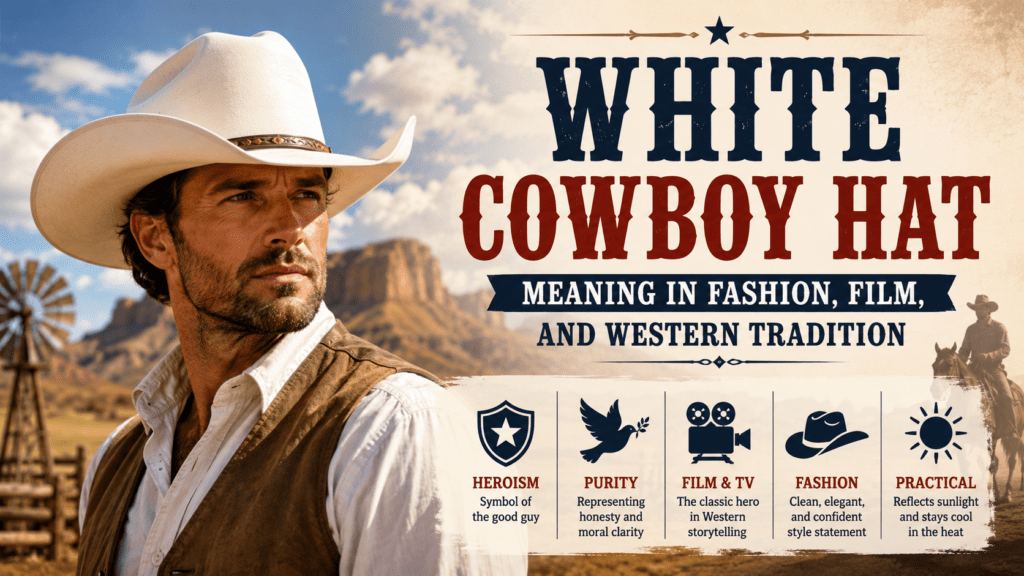
The white cowboy hat is more than a stylish piece of Western fashion. While it certainly turns heads, it also carries symbolic meaning that has evolved over generations. From classic Hollywood Westerns to modern rodeos and country music concerts, the white cowboy hat often represents positive qualities such as honesty, confidence, respect, and leadership.
However, like many symbols, its meaning isn’t universal. Culture, location, tradition, and even the occasion can influence how people interpret it. A white cowboy hat worn at a ranch may send a different message than one worn at a country wedding or a music festival.
In this guide, we’ll explore what a white cowboy hat symbolizes, how different cultures interpret it, where common misconceptions come from, and whether the hat is considered a sign of good luck.
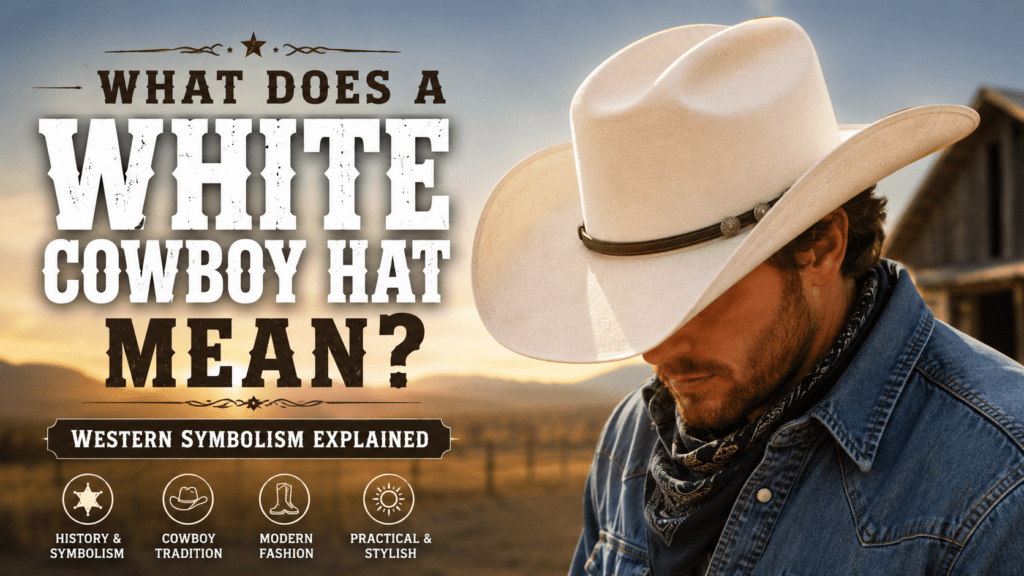
What Does a White Cowboy Hat Mean?
At its core, a white cowboy hat is commonly associated with positive character traits and a clean, honorable image. Although there is no official rule defining its meaning, Western traditions and popular culture have shaped several widely recognized interpretations.
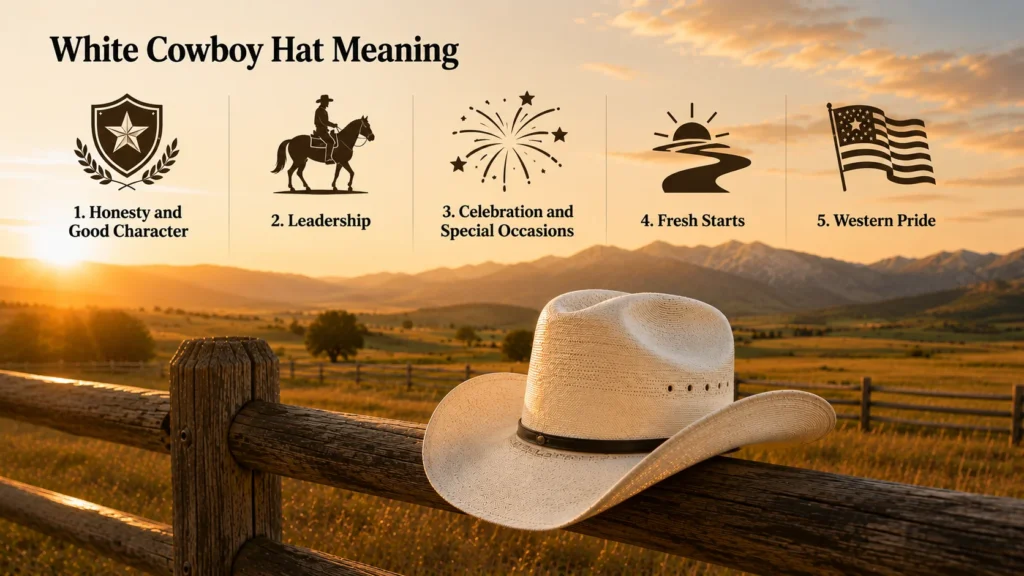
A white cowboy hat often symbolizes:
- Honesty and integrity
- Good character
- Leadership
- Confidence
- Fresh beginnings
- Celebration
- Success
- Respect for Western traditions
Many people also choose white hats simply because they enjoy the classic look. Not every hat color carries a hidden message, but symbolism has become part of Western fashion over time.
Symbolism of a White Cowboy Hat
1. Honesty and Good Character
Perhaps the best-known symbolism comes from classic Western films, where the hero frequently wore a white hat while the villain appeared in a darker one.
Although real life isn’t that simple, the image became deeply rooted in popular culture. Today, many people still associate a white cowboy hat with someone who is trustworthy, fair, and honorable.
2. Leadership
White hats naturally stand out in a crowd. Because of this visibility, they are often connected with leadership and confidence.
In rodeos, ranching communities, and country events, respected individuals sometimes choose white hats as part of their signature appearance. While the hat doesn’t create authority, it can reinforce an image of experience and professionalism.
3. Celebration and Special Occasions
White is widely recognized as a color of celebration across many cultures. As a result, white cowboy hats are popular for:
- Weddings
- Country-themed parties
- Rodeo championships
- Western festivals
- Formal ranch events
The bright color gives the hat a polished appearance that suits memorable occasions.
4. Fresh Starts
Because white is often associated with cleanliness and new beginnings, some people wear a white cowboy hat to mark a new chapter in life.
Examples include:
- Graduations
- New business ventures
- Retirement celebrations
- Milestone birthdays
While this symbolism isn’t a formal tradition, it’s a common personal interpretation.
5. Western Pride
For many hat owners, the white cowboy hat simply represents appreciation for Western heritage.
Cowboy hats remain an iconic symbol of ranch life, rodeo culture, and country traditions. Choosing white can reflect pride in that heritage while adding a modern, stylish touch.
How Culture Changes the Meaning
One of the most interesting aspects of symbolism is that meanings change depending on cultural context.
In American Western Culture
The white cowboy hat is strongly associated with heroes, respected ranchers, successful rodeo competitors, and confident personalities.
Hollywood helped reinforce this image throughout the twentieth century, making the white hat almost synonymous with the “good guy.”
In Modern Country Fashion
Today, white cowboy hats have become popular fashion accessories at:
- Country music concerts
- Festivals
- Line dancing events
- Western-themed weddings
In these settings, the hat often symbolizes style, confidence, and personality more than traditional cowboy values.
In Ranching Communities
Working ranchers generally choose hats based on practicality rather than symbolism.
Light-colored hats, including white or cream shades, reflect sunlight better than darker colors, making them more comfortable during hot weather. Here, function often matters more than symbolism.
Outside Western Culture
In countries where cowboy hats are uncommon, a white cowboy hat may simply be viewed as a fashion statement or costume. Many people may not recognize any deeper symbolic meaning at all.
When the Meaning Is Misread
Symbols often create assumptions, and cowboy hats are no exception.
Here are some common misconceptions.
“Only Heroes Wear White Hats”
This idea largely comes from old Western movies.
In reality, anyone can wear a white cowboy hat. Your personality isn’t determined by your choice of hat color—otherwise shopping for hats would become a personality test.
“White Means Wealth”
Some people assume white hats are worn only by wealthy ranch owners or celebrities.
While premium white hats can be expensive, quality cowboy hats are available across many price ranges. The color itself doesn’t indicate social status.
“White Hats Are Only for Formal Events”
Although white hats are popular at weddings and celebrations, many people wear them casually every day.
As with most fashion choices, personal preference matters more than unwritten rules.
Why White Cowboy Hats Stand Out
There’s also a practical reason white hats attract attention.
Lighter colors reflect more sunlight than darker shades, helping keep the wearer cooler in warm climates. This makes white hats especially appealing during summer rodeos, ranch work, and outdoor events.
The clean appearance also photographs well, which explains why many entertainers, performers, and public figures choose white hats for stage performances and promotional images.
White Cowboy Hats in Popular Culture
Movies and television have played a major role in shaping public perception.
Classic Western films often used hat color as a visual shortcut to distinguish heroes from villains. While modern storytelling has moved beyond this simple approach, the symbolism remains familiar.
Country music has also contributed to the popularity of white cowboy hats. Many performers wear them as part of their signature style, reinforcing associations with confidence, charisma, and Western identity.
Even today, seeing someone in a crisp white cowboy hat often evokes images of the American West, rodeos, country music, and open landscapes.
Choosing a White Cowboy Hat
If you’re considering wearing a white cowboy hat, don’t worry too much about symbolism.
The best hat is one that:
- Fits comfortably
- Matches your style
- Suits the occasion
- Is made from quality materials
- Reflects your personality
Whether you’re attending a country concert, working outdoors, or dressing for a Western-themed event, confidence matters far more than the color itself.
Frequently Asked Questions
What does a white cowboy hat symbolize?
A white cowboy hat commonly symbolizes honesty, integrity, leadership, confidence, celebration, and respect within Western culture. Its meaning is largely shaped by tradition, popular culture, and personal interpretation rather than official rules.
Is a white cowboy hat good luck?
Some people believe a white cowboy hat represents good luck because white is often associated with positivity, fresh beginnings, and success. However, there is no historical evidence that white cowboy hats are universally considered lucky. The belief is largely symbolic and varies between cultures and individuals.
Final Thoughts
The meaning of a white cowboy hat goes beyond fashion. Over decades, it has become associated with honesty, confidence, leadership, celebration, and Western heritage. At the same time, its symbolism isn’t fixed. Cultural traditions, personal experiences, and modern fashion all influence how people interpret it.
Whether you wear one for practical reasons, personal style, or appreciation of Western culture, the white cowboy hat remains an enduring icon. The most important meaning is ultimately the one you give it—because character comes from the person wearing the hat, not the hat itself.
Continue Reading
If you’re still researching symbolism and meaning of different Cowboy Hat Colors, these blog post can help:
- White Straw vs. White Felt Cowboy Hat
- White vs Black Cowboy Hat
- The History of the White Cowboy Hat
- Cowboy Hat Color Meanings
Call to Action
To learn more about cowboy hats and the ranch culture of the Wild West, keep visiting Hatwanderer.com and reading our informative blog posts.

Mike Wilson is a Western fashion enthusiast, content creator, and founder of HatWanderer.com. He shares expert insights, buying guides, and honest reviews to help readers choose the right cowboy hats and Western apparel.
Passionate about Western culture and craftsmanship, Mike covers hat styles, fit, materials, care, and the heritage behind iconic Western brands. His goal is to help both newcomers and longtime enthusiasts build a timeless Western wardrobe with confidence.
When he’s not writing, Mike enjoys exploring Western fashion trends, studying the history of cowboy culture, and discovering quality craftsmanship from respected hat makers.