|
Getting your Trinity Audio player ready...
|
Cowboy hats have always been more than practical headwear. Across ranches, rodeo arenas, country music stages, and Western communities throughout the United States, the color of a cowboy hat often communicates something about the person wearing it.
While there is no universal rulebook that assigns a specific meaning to every cowboy hat color, certain traditions, perceptions, and cultural associations have developed over generations. Some colors project authority and confidence. Others suggest approachability, practicality, elegance, or authenticity. In many cases, a cowboy hat color becomes part of a person’s identity.
Whether you are purchasing your first cowboy hat, adding to an existing collection, or simply curious about Western culture, understanding cowboy hat color meanings can help you make a more informed choice.
This guide explores the history, symbolism, practical considerations, modern trends, and common misconceptions surrounding cowboy hat colors so you can choose a hat that fits both your lifestyle and personality.
Why Cowboy Hat Color Matters
When most people think about cowboy hats, they focus on shape, material, or brand. Yet color is often the first thing people notice.
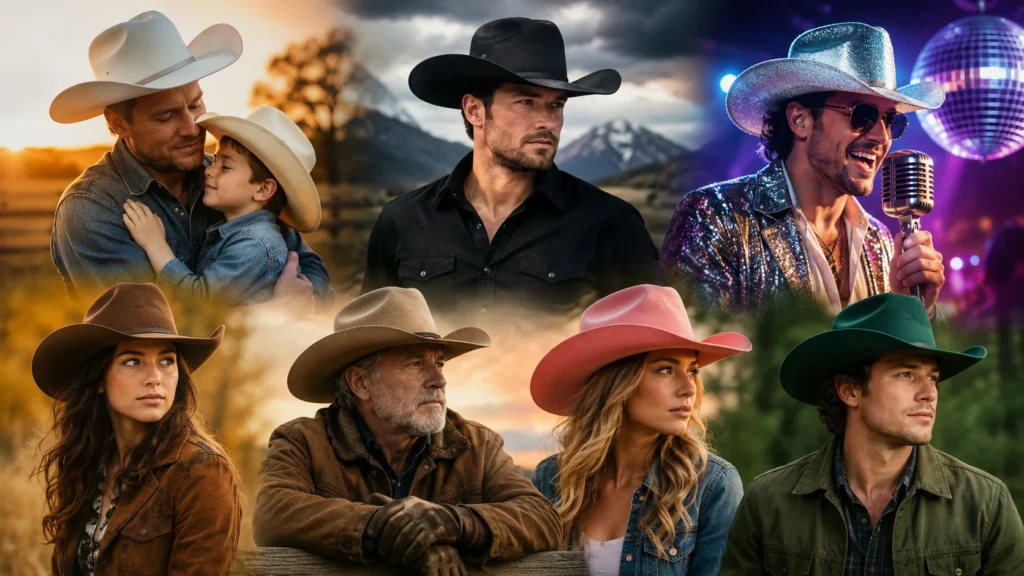
A hat’s color can influence:
- First Impressions
- Professional Appearance
- Event Appropriateness
- Heat Management in Different Climates
- Compatibility with Clothing
- Personal Expression
- Cultural and Regional Perceptions
In Western communities, hat color is often viewed as part of an individual’s overall image. Ranchers, rodeo competitors, country performers, business owners, and everyday Western enthusiasts frequently select colors that align with how they want to be perceived.
That said, color preferences remain highly personal. Today’s Western culture values individuality far more than strict tradition.
The Historical Roots of Cowboy Hat Colors
Early cowboys typically chose hats based on practicality rather than symbolism.
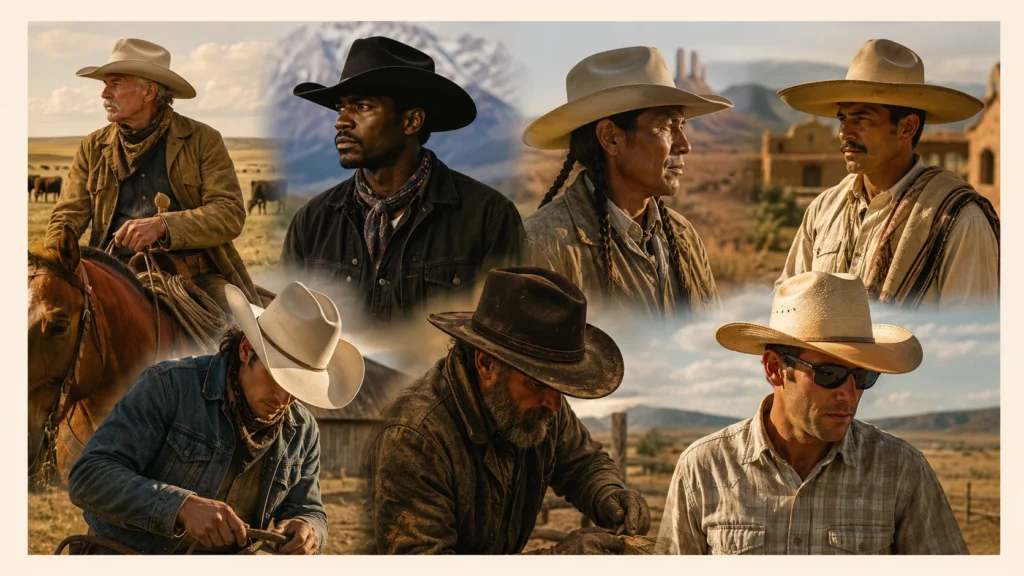
Natural fur felt colors such as tan, brown, gray, and cream were common because they reflected the natural appearance of animal fibers used in production. Darker colors later gained popularity because they resisted visible staining and created a more formal appearance.
As Western fashion evolved through Hollywood films, rodeo culture, and country music, color associations became more established.
Classic Western movies often portrayed heroes wearing lighter hats and villains wearing darker ones. While entertaining, this cinematic convention created perceptions that still influence people today.
Modern Western culture recognizes that hat color says far less about character than it does about personal preference and practical needs.
Cowboy Hat Color Meanings and Common Perceptions
Rightly or wrongly, people have associated different meanings with different color cowboy hats. Here is the list of common hat color meanings
Black Cowboy Hats
Black remains one of the most popular cowboy hat colors in America.
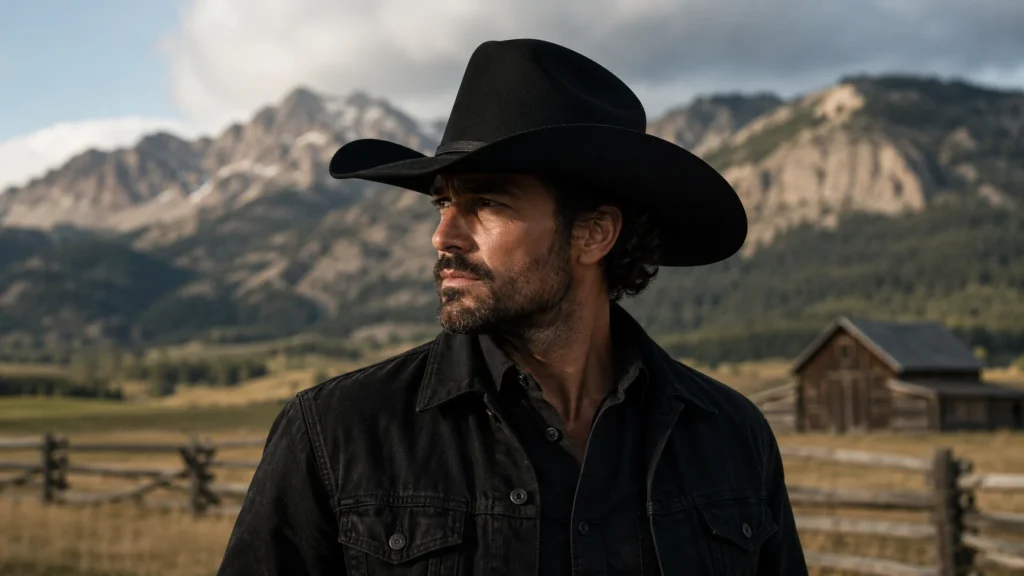
Traditional Associations
- Authority
- Confidence
- Strength
- Professionalism
- Formality
Common Uses
- Rodeo events
- Concert performances
- Formal Western gatherings
- Evening events
Advantages
- Matches almost everything
- Creates a bold appearance
- Often considered timeless
Potential Drawbacks
- Absorbs more heat
- Shows dust more easily
- Can feel overly formal for some settings
Many people choose black because it projects confidence and works well in both traditional and contemporary Western fashion.
To learn more about the meaning and symbolism of black cowboy hats, read our blog post: Black Cowboy Hat Meaning
White Cowboy Hats
White cowboy hats stand out immediately.
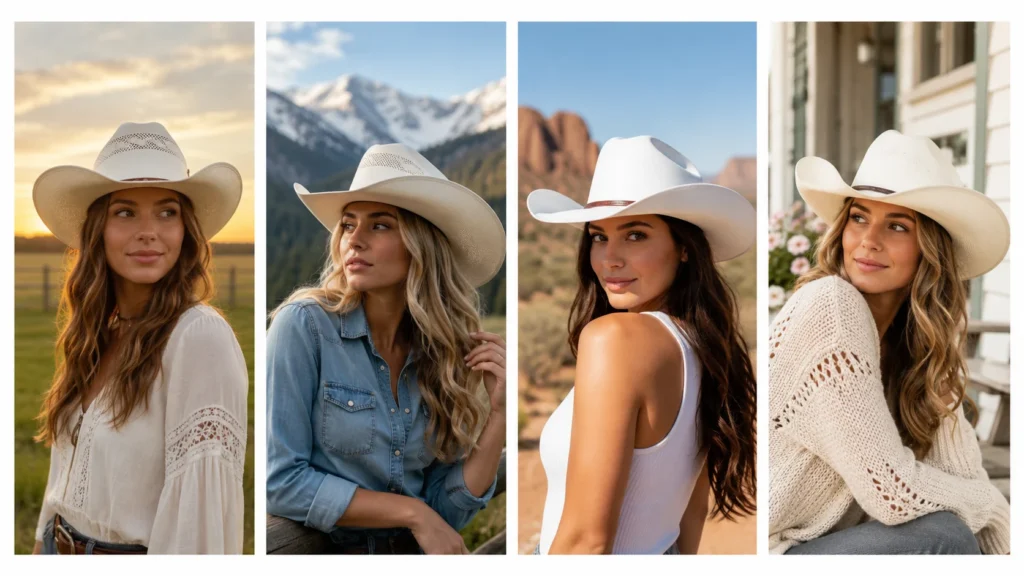
Traditional Associations
- Respectability
- Visibility
- Confidence
- Clean presentation
Common Uses
- Special events
- Country music performances
- Summer occasions
- Formal Western celebrations
Advantages
- Reflects sunlight
- Photographs well
- Creates a memorable appearance
Potential Drawbacks
- Shows dirt quickly
- Requires more maintenance
White hats are often selected by individuals who want to make a strong visual impression.
To learn more about the meaning and symbolism of white cowboy hats, read our blog post: White Cowboy Hat Meaning in Fashion, Film, and Western Tradition.
Silver Belly Cowboy Hats
Silver belly is among the most respected and versatile colors in Western culture.
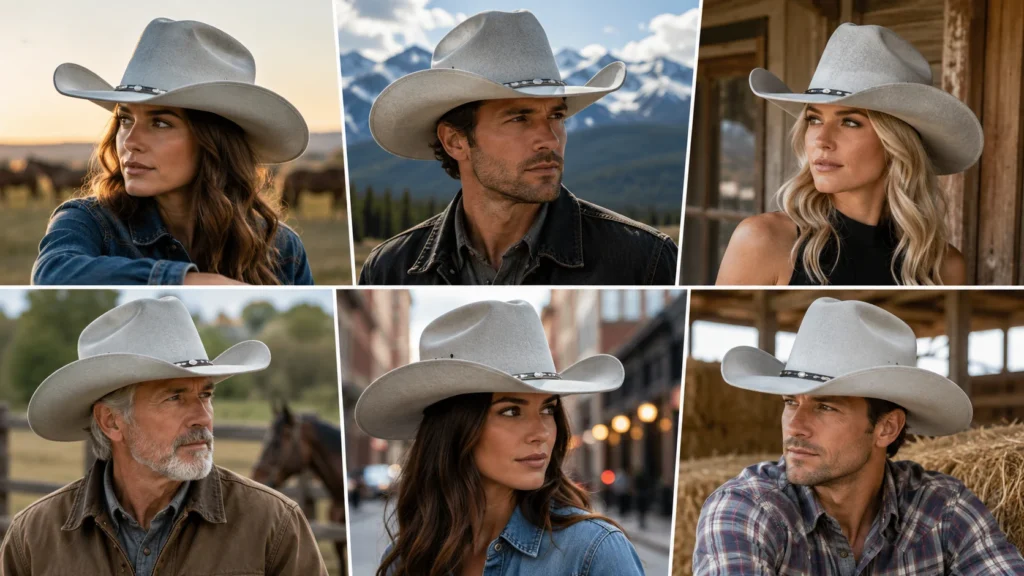
Despite the name, silver belly usually appears as a light gray, soft cream-gray, or pale beige shade.
Traditional Associations
- Authentic Western heritage
- Sophistication
- Versatility
- Professional ranch culture
Common Uses
- Ranch work
- Rodeo competitions
- Business settings
- Everyday Western wear
Advantages
- Suitable year-round
- Complements most clothing
- Considered highly versatile
Potential Drawbacks
- Requires occasional cleaning
Many experienced hat wearers consider silver belly one of the safest choices for a first premium cowboy hat.
To learn more about the meaning and symbolism of white cowboy hats, read our blog post: Silver Belly Cowboy Hat: The Complete Guide to This Classic Western Color.
Brown Cowboy Hats
Brown remains a classic Western favorite.
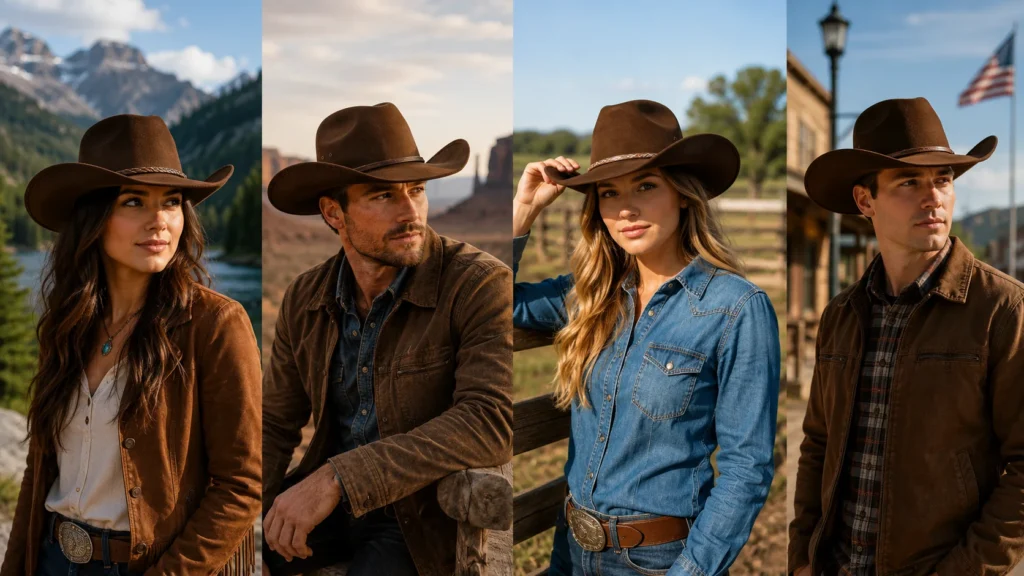
Traditional Associations
- Dependability
- Practicality
- Hard work
- Authentic ranch life
Common Uses
- Ranch work
- Outdoor activities
- Everyday wear
- Hunting and recreation
Advantages
- Hides dust and wear
- Practical for outdoor environments
- Pairs well with earth tones
Potential Drawbacks
- Less formal than black or silver belly
Brown hats often appeal to people who prioritize functionality over attention-grabbing style.
To learn more about the meaning and symbolism of brown cowboy hats, read our blog post: Brown Cowboy Hat Meaning: Style, Personality, and Western Culture.
Tan Cowboy Hats
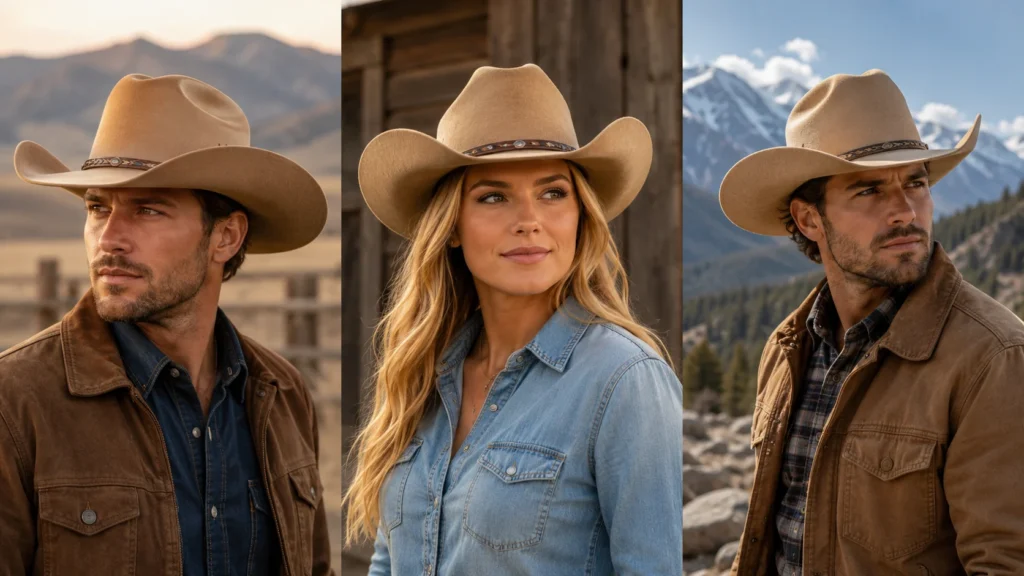
Tan shades have long been associated with the American West.
Traditional Associations
- Outdoor living
- Tradition
- Accessibility
- Practicality
Common Uses
- Daily wear
- Ranching
- Agricultural work
- Casual Western events
Advantages
- Comfortable appearance
- Good heat reflection
- Natural Western aesthetic
Potential Drawbacks
- Can show stains more readily than darker colors
Tan hats often embody the classic image many people associate with working cowboys.
Gray Cowboy Hats
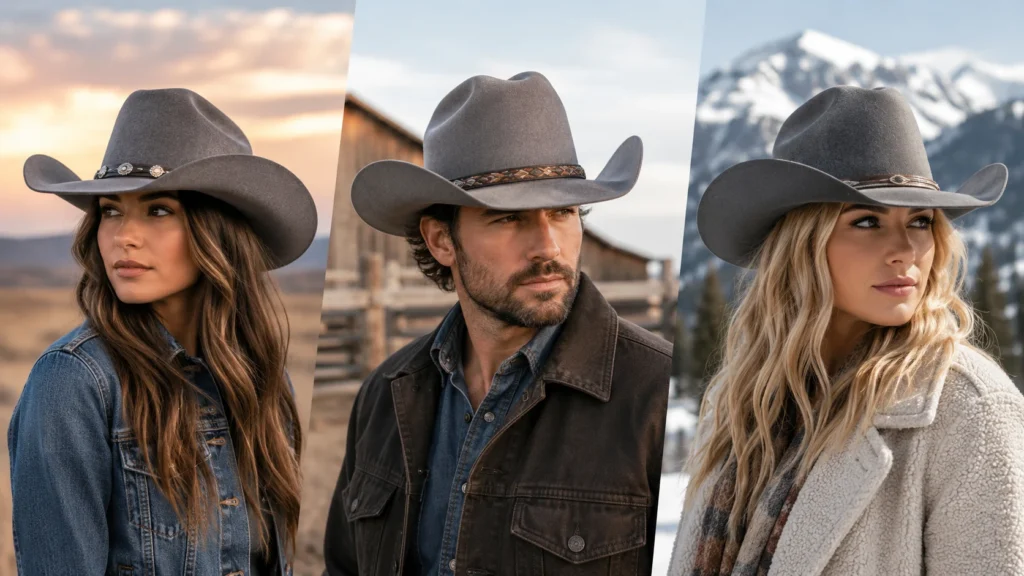
Gray has become increasingly popular among modern Western wearers.
Traditional Associations
- Balance
- Professionalism
- Understated confidence
- Modern Western style
Common Uses
- Business casual settings
- Urban Western fashion
- Rodeo events
Advantages
- Highly versatile
- Works with nearly any wardrobe
- Less common than black
Potential Drawbacks
- Some lighter shades require regular care
Gray offers a refined alternative for those seeking something distinctive without being flashy.
Cream and Natural Colors
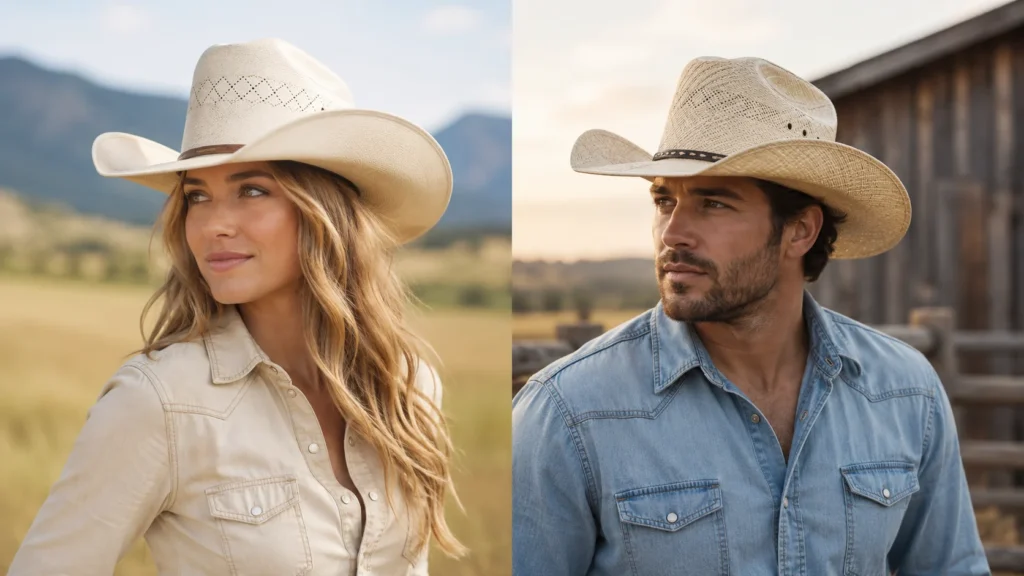
Cream-colored hats bridge the gap between white and tan.
Traditional Associations
- Elegance
- Heritage
- Warm-weather practicality
Common Uses
- Weddings
- Outdoor celebrations
- Summer events
Advantages
- Reflects heat
- Sophisticated appearance
- Complements many skin tones
Potential Drawbacks
- Shows dirt relatively easily
Cream hats have become increasingly popular for modern Western weddings and upscale gatherings.
Cowboy Hat Color Comparison Table
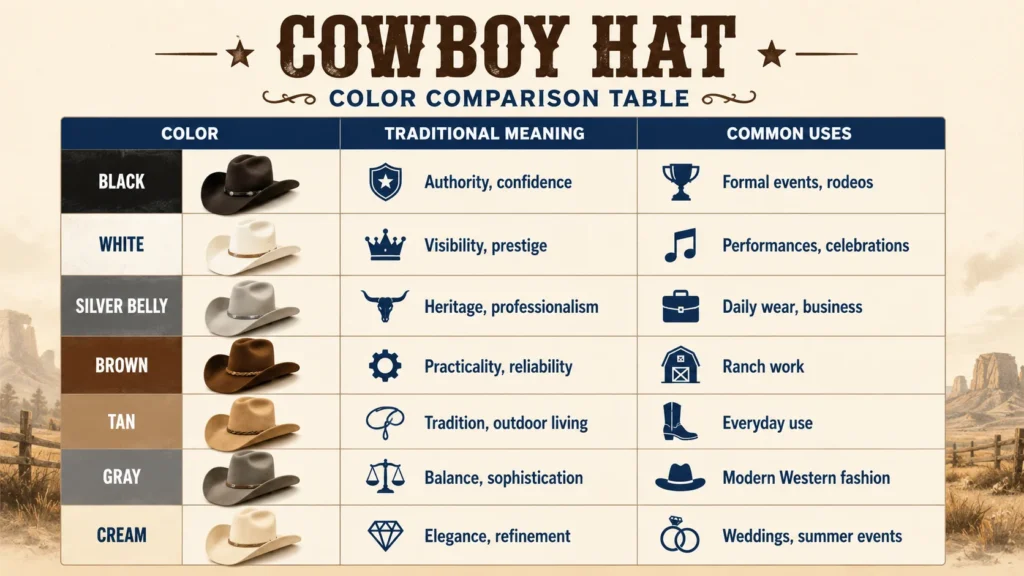
| Color | Traditional Meaning | Common Uses | Advantages | Potential Drawbacks |
| Black | Authority, confidence | Formal events, rodeos | Timeless, versatile | Hotter in sunlight |
| White | Visibility, prestige | Performances, celebrations | Eye-catching | High maintenance |
| Silver Belly | Heritage, professionalism | Daily wear, business | Extremely versatile | Needs cleaning |
| Brown | Practicality, reliability | Ranch work | Hides dirt well | Less formal |
| Tan | Tradition, outdoor living | Everyday use | Reflects heat | Can stain |
| Gray | Balance, sophistication | Modern Western fashion | Flexible styling | Less traditional |
| Cream | Elegance, refinement | Weddings, summer events | Stylish appearance | Shows dirt |
How Cowboy Hat Color Meanings Have Changed Over Time
Western culture has evolved significantly over the past century.
Historically, practical concerns influenced color choices more than symbolism. Cowboys selected hats that were available, affordable, and durable.
Over time, movies, television, rodeo culture, and fashion marketing introduced symbolic interpretations.
Today:
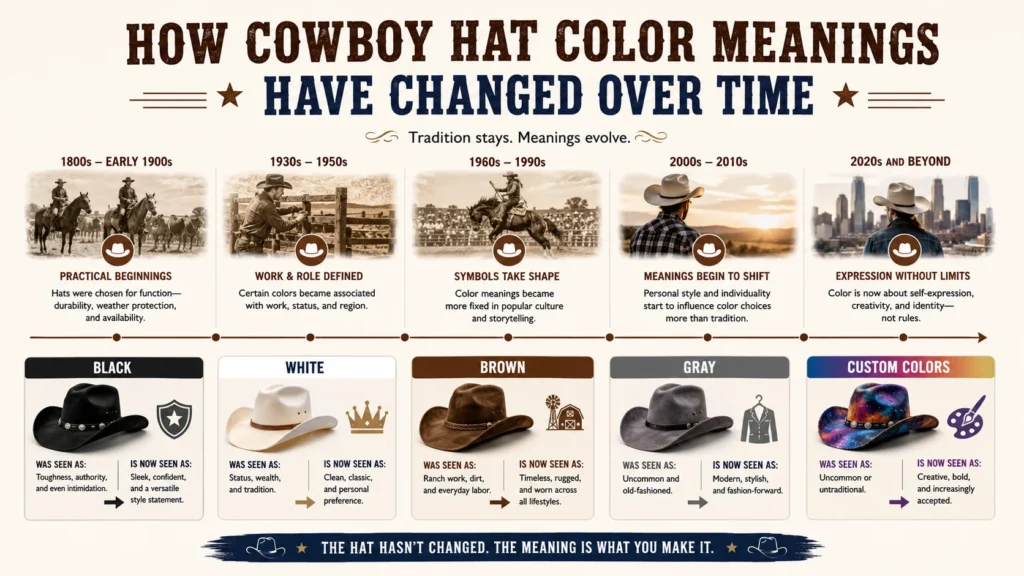
- Black no longer suggests toughness alone.
- White no longer automatically represents status.
- Brown is not limited to ranch workers.
- Gray has emerged as a fashionable modern choice.
- Custom colors are increasingly accepted.
Modern wearers often prioritize individuality over tradition.
A younger rodeo competitor may choose charcoal gray because it fits personal style. A ranch owner may wear silver belly because it remains practical. A country artist may select bright custom colors to stand out on stage.
The meaning of a hat color today is often defined by the wearer rather than tradition.
Choosing a Cowboy Hat Color Based on Your Lifestyle
You don’t need to follow trends when choosing a hat color. Your lifestyle should be the most important factor in your decision. So here are the recommendation of hat color based on your lifestyle.
If you are Ranchers and Agricultural Worker
Our recommended colors are:
- Brown
- Tan
- Silver belly
These shades hide dust effectively while maintaining a traditional appearance.
If you are Rodeo Competitor
Popular choices is:
- Black
- Silver belly
- Gray
These colors project professionalism while remaining versatile.
If you are a Business Professional
Popular choices:
- Silver belly
- Gray
- Black
These colors often transition smoothly between Western and business environments.
If you are a Country Music Performer
Common choices:
- Black
- White
- Custom colors
Stage visibility often influences these decisions.
Climate and Weather Considerations
Color affects comfort more than many first-time buyers realize. For example, wearing a black cowboy hat on a hot, sunny day can be a poor choice, as darker colors absorb more heat and may make you feel hotter.
When selecting a hat color, be sure to take your climate into account.
Hot Southern States
Popular choices include:
- Cream
- White
- Tan
- Silver belly
Lighter colors reflect sunlight more effectively.
Northern Regions
Popular choices include:
- Black
- Dark brown
- Gray
Heat retention may become less of a concern.
Dry Southwestern Areas
Common choices include:
- Tan
- Brown
- Silver belly
These shades blend naturally with regional landscapes.
Regional Cowboy Hat Color Preferences in the United States
Although personal preference dominates today, regional patterns still exist.
Texas
- Silver belly
- Black
- Tan
Oklahoma
- Brown
- Silver belly
- Gray
Wyoming and Montana
- Brown
- Tan
- Natural felt shades
Nashville and Entertainment Markets
- Black
- White
Fashion-forward custom colors
Regional preferences reflect local climate, culture, and industry influences.
Common Situations Where People Choose the Wrong Hat Color
Many first-time buyers focus exclusively on appearance.
Mistake #1: Choosing Black for Constant Summer Ranch Work
A black hat may look great but become uncomfortable during long hours in intense heat.
Better choice: Silver belly or tan.
Mistake #2: Choosing White for Everyday Work
White hats require frequent cleaning.
Better choice: Brown or gray. These color hats require least maintenance.
Mistake #3: Following Trends Without Considering Wardrobe
A trendy color may clash with most existing clothing.
Better choice: Select a versatile shade that complements what you already wear.
Mistake #4: Buying Based Only on Tradition
Traditional recommendations can be helpful, but they should not override personal preference and practical needs.
Common Myths About Cowboy Hat Colors
Myth: Black Hats Mean You’re Tough
Reality: Black hats are popular because they look good and work well in many situations.
Myth: White Hats Are Only for Heroes
Reality: This belief comes largely from Hollywood Western films.
Myth: Real Cowboys Only Wear Brown Hats
Reality: Working cowboys wear virtually every color available.
Myth: Certain Colors Bring Luck
Reality: Personal traditions exist, but there is no evidence that hat color affects luck or performance.
Myth: Younger People Should Avoid Traditional Colors
Reality: Silver belly, tan, and brown remain popular among younger Western enthusiasts.
Current and Future Trends in Cowboy Hat Colors
Western fashion continues to evolve.
Retailers, custom hat makers, rodeo organizations, and Western fashion professionals consistently report growing demand for personalization.
Current trends include:
- Increased popularity of gray shades
- Growth in custom-colored hats
- Strong demand for Silver Belly
- Continued dominance of black in entertainment
- More gender-neutral color preferences
Social media influencers, country artists, rodeo athletes, and younger ranchers are helping broaden acceptance of nontraditional colors.
Many custom hat shops report customers seeking unique shades that reflect personal identity rather than historical expectations.
Looking ahead, versatility and self-expression will likely continue driving color trends.
How to Choose Your First Cowboy Hat Color
If this is your first cowboy hat, follow these steps.
Step 1: Define Your Primary Use
Ask yourself:
- Daily work?
- Rodeos?
- Social events?
- Fashion?
Step 2: Consider Your Climate
Hot climates often favor lighter colors.
Cooler climates provide greater flexibility.
Step 3: Evaluate Your Wardrobe
Choose a color that works with most of your clothing.
Step 4: Think About Maintenance
Lighter colors require more care.
Darker colors often show dust differently.
Step 5: Consider Long-Term Versatility
For many beginners, silver belly, gray, tan, or brown offer the greatest flexibility.
Step 6: Trust Your Personal Preference
The best cowboy hat color is ultimately the one you enjoy wearing.
Frequently Asked Questions
What is the most popular cowboy hat color?
Black and silver belly are consistently among the most popular choices in the United States.
Which cowboy hat color is best for beginners?
Silver belly is often recommended because it balances versatility, tradition, and practicality.
Is a black cowboy hat too formal?
Not necessarily. Black works well for many casual and formal Western settings.
Which color stays coolest in summer?
White, cream, tan, and silver belly generally reflect more sunlight than darker colors.
Do rodeo competitors prefer certain colors?
Black and silver belly remain especially common in competitive rodeo environments.
Does cowboy hat color affect resale value?
Condition, quality, brand, and craftsmanship typically matter more than color alone.
Can I wear different colors for different seasons?
Absolutely. Many experienced hat owners rotate colors throughout the year.
Share Your Story
Every cowboy hat has a story.
Why did you choose your hat color?
- Was it inspired by family tradition?
- Ranch life?
- Rodeo competition?
- Country music?
- Personal style?
Tell us:
- Your cowboy hat color
- How long you’ve worn it
- What it represents to you
- Whether you’d choose the same color again
Sharing personal experiences helps others learn from real-world perspectives while preserving the rich traditions of Western culture.
Final Thoughts
Cowboy hat colors carry meaning, but those meanings are rarely fixed. While tradition offers useful guidance, modern Western culture increasingly values authenticity and personal expression.
Black may communicate confidence. Silver belly may suggest heritage. Brown may reflect practicality. White may create a memorable impression.
Yet the most important meaning comes from the person wearing the hat.
The right cowboy hat color is the one that fits your lifestyle, environment, values, and sense of identity. When those elements align, a cowboy hat becomes more than an accessory. It becomes part of your story.
Call to Action
To learn more about cowboy hats and the ranch culture of the Wild West, keep visiting Hatwanderer.com and reading our informative blog posts.

Mike Wilson is a Western fashion enthusiast, content creator, and founder of HatWanderer.com. He shares expert insights, buying guides, and honest reviews to help readers choose the right cowboy hats and Western apparel.
Passionate about Western culture and craftsmanship, Mike covers hat styles, fit, materials, care, and the heritage behind iconic Western brands. His goal is to help both newcomers and longtime enthusiasts build a timeless Western wardrobe with confidence.
When he’s not writing, Mike enjoys exploring Western fashion trends, studying the history of cowboy culture, and discovering quality craftsmanship from respected hat makers.