|
Getting your Trinity Audio player ready...
|
A cowboy hat can cost $50. It can also cost $500.
Neither one feels good if it squeezes your head like a car tire.
Hat retailers regularly report sizing issues because many buyers measure incorrectly or guess their size. A cowboy hat that’s too tight can leave pressure marks and headaches. A loose one slides around, catches wind, and spends half the day annoying you.
Fit affects more than comfort.
The right size helps your hat keep its shape, sit correctly on your head, and last longer. It also looks better. A properly fitted cowboy hat feels secure without making you count the minutes until you take it off.
In this cowboy hat size chart guide, you’ll learn:
- How to measure your head correctly
- Cowboy hat size conversions in inches and centimeters
- Stetson sizing recommendations
- What to do if you’re between sizes
- Common fitting mistakes people make
Grab a measuring tape. This takes about 2 minutes.
How to Measure Your Head for A Cowboy Hat
Most sizing mistakes happen before the hat even arrives.
People measure too high, too tight, or once and call it a day.
A small measuring error can push you into the wrong size.
Tools You Need
You don’t need special equipment.
Use:
- Flexible cloth measuring tape
- Pen and paper
- Mirror (optional)
No tape measure?
Use a non-stretch string and a ruler. Just avoid stretchy materials. Unless you want your hat size determined by wishful thinking.
Step-by-step measurement process
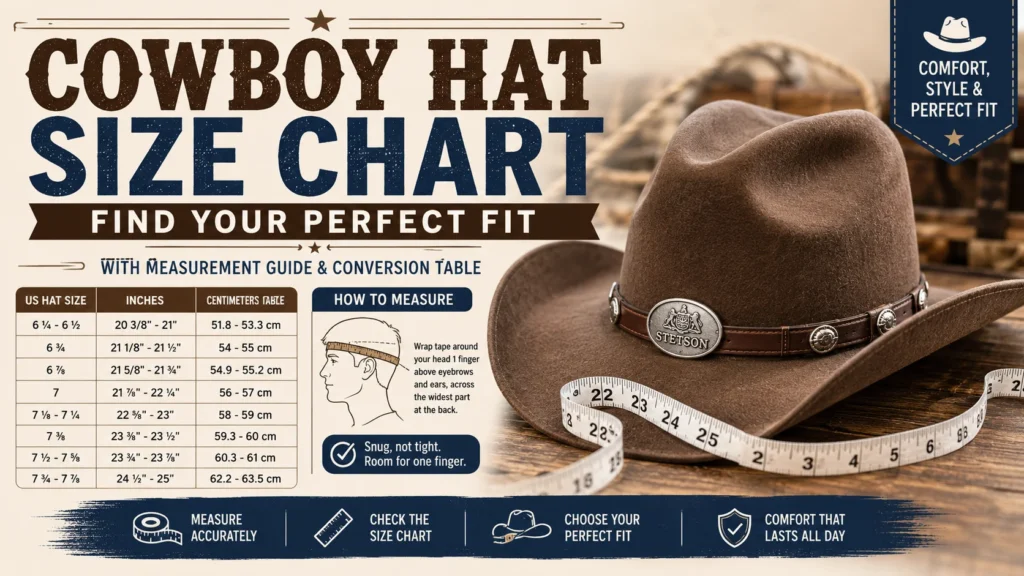
For the right cowboy hat size, ask somebody else to measure your hat size by following these five steps in the hat measurement process.
1. Position the tape correctly
Wrap the measuring tape around your head where the hat will naturally sit.
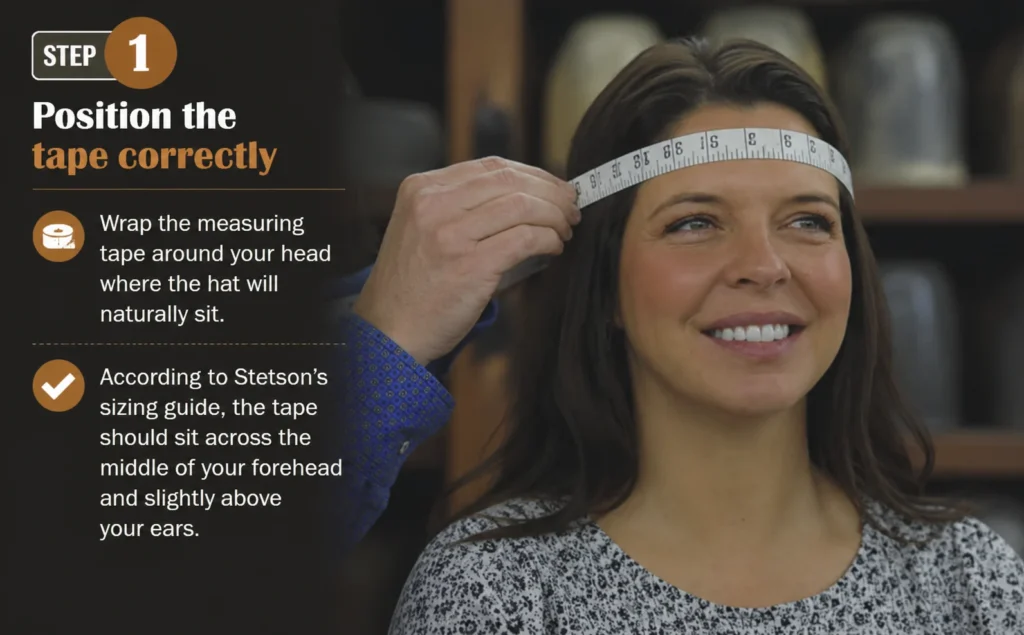
According to Stetson’s sizing guide, the tape should sit across the middle of your forehead and slightly above your ears.
2. Measure the widest part of your head
Make sure the tape passes around the widest area at the back of your head.
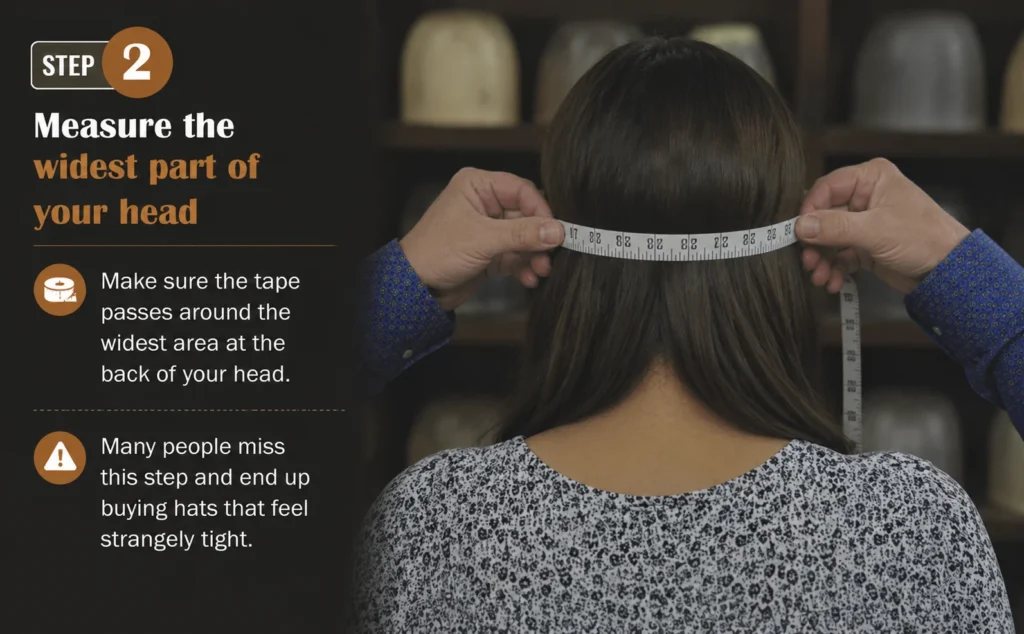
Many people miss this step and end up buying hats that feel strangely tight.
3. Keep the tape level
Check the mirror.
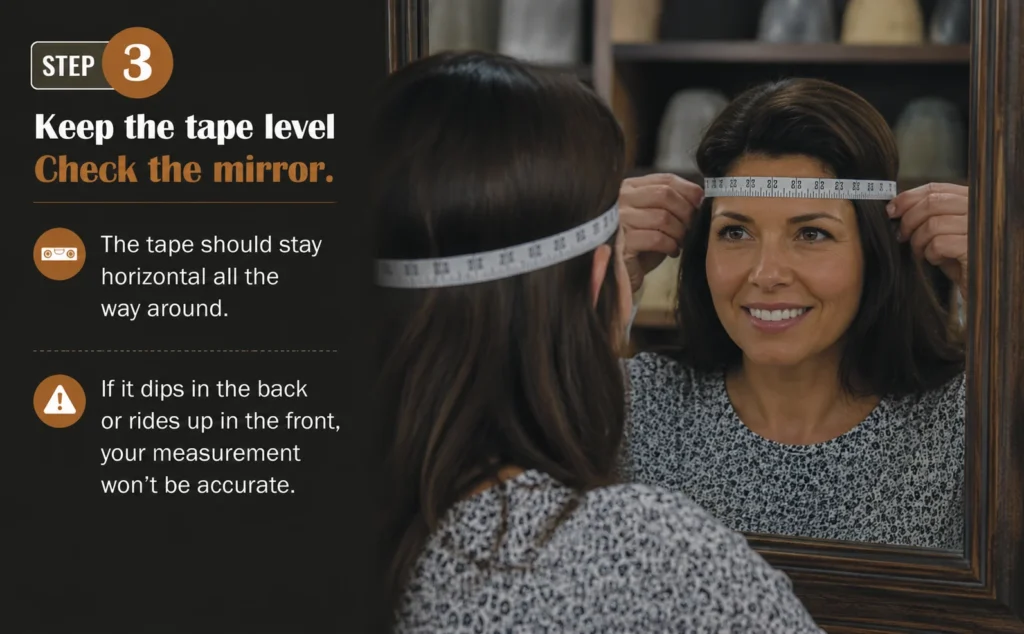
The tape should stay horizontal all the way around. If it dips in the back or rides up in the front, your measurement won’t be accurate.
4. Keep it snug
The tape should feel secure but comfortable.
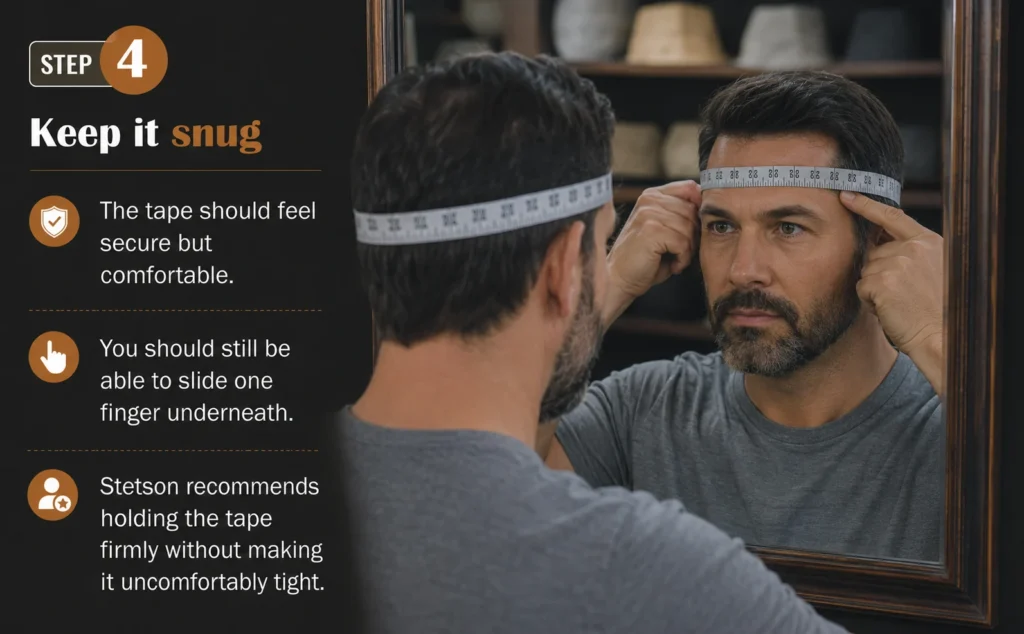
You should still be able to slide one finger underneath.
Stetson recommends holding the tape firmly without making it uncomfortably tight.
5. Measure more than once
Measure 2 or 3 times.
Use the largest consistent reading.
Human heads aren’t perfectly symmetrical. Hat sizing gets more accurate when you verify the measurement.
Common measurement mistakes to avoid
A few mistakes show up over and over:
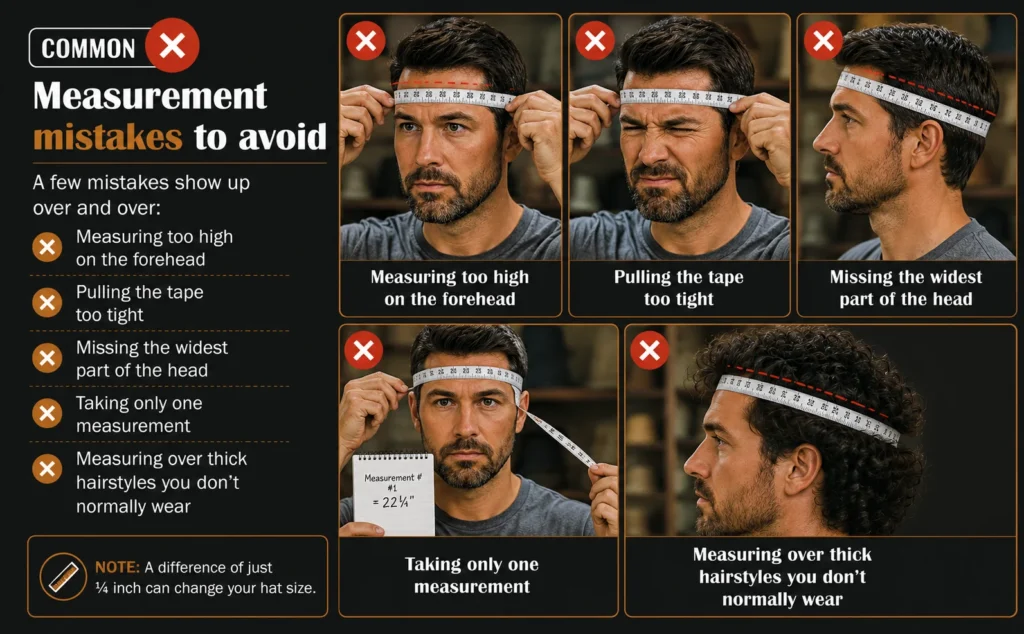
- Measuring too high on the forehead
- Pulling the tape too tight
- Missing the widest part of the head
- Taking only one measurement
- Measuring over thick hairstyles you don’t normally wear
A difference of just ¼ inch can change your hat size.
Complete cowboy hat size chart
Most cowboy hats use US sizing, but many brands also provide measurements in inches and centimeters.
Centimeters tend to be more precise.
Cowboy hat size conversion chart
| Head Circumference (Inches) | Head Circumference (CM) | US Hat Size | Size Category |
| 20 3/8″ – 21″ | 51.8 – 53.3 cm | 6 ¼ – 6 ½ | XXS |
| 21 1/8″ – 21 ½” | 54 – 55 cm | 6 ¾ | XS–S |
| 21 5/8″ – 21 ¾” | 54.9 – 55.2 cm | 6 ⅞ | S |
| 21 ⅞” – 22 ¼” | 56 – 57 cm | 7 | M |
| 22 ⅝” – 23″ | 58 – 59 cm | 7 ⅛ – 7 ¼ | L |
| 23 ⅜” – 23 ½” | 59.3 – 60 cm | 7 ⅜ | L–XL |
| 23 ¾” – 23 ⅞” | 60.3 – 61 cm | 7 ½ – 7 ⅝ | XL |
| 24 ½” – 25″ | 62.2 – 63.5 cm | 7 ¾ – 7 ⅞ | 2XL |
Stetson size chart reference
Stetson’s official sizing guide uses the following measurements:
| US Size | Inches | CM |
| 6 3/8 | 20 1/4″ | 51 cm |
| 6 1/2 | 20 5/8″ | 52 cm |
| 6 5/8 | 21″ | 53 cm |
| 6 3/4 | 21 1/2″ | 54 cm |
| 6 7/8 | 21 7/8″ | 55 cm |
| 7 | 22 1/4″ | 56 cm |
| 7 1/8 | 22 5/8″ | 57 cm |
| 7 1/4 | 23″ | 58 cm |
| 7 3/8 | 23 3/8″ | 59 cm |
| 7 1/2 | 23 3/4″ | 60 cm |
| 7 5/8 | 24″ | 61 cm |
| 7 3/4 | 24 1/2″ | 62 cm |
| 7 7/8 | 25″ | 63 cm |
| 8 | 25 1/2″ | 64 cm |
Simplified size categories
If you shop using standard sizing:
- Small: 21 ⅛” – 21 ½” (54–55 cm)
- Medium: 21 ⅞” – 22 ¼” (56–57 cm)
- Large: 22 ⅝” – 23″ (58–59 cm)
- Extra Large: 23 ½” – 23 ⅞” (60–61 cm)
Important sizing notes
Keep these in mind:
- Hat sizes increase in ⅛-inch increments
- Round up if you’re between sizes
- Centimeters provide better accuracy
- Different hat materials fit differently
Stetson specifically recommends sizing up when your measurement falls between sizes.
Stetson cowboy hat sizing guide
Brand matters more than many buyers realize.
A size 7 in one brand may feel different from a size 7 in another.
What makes Stetson sizing different?
Stetson uses traditional US hat sizing and provides both inch and metric conversions. Their official guide covers sizes from 6 3/8 through size 8.
The company recommends:
- Measuring carefully
- Rounding up between sizes
- Using padding if the hat feels slightly loose
That’s easier than stretching a hat that’s too small.
Head shape matters too
A hat can technically match your measurement and still feel wrong.
Some heads are more oval. Others are rounder.
That’s why two people with identical measurements can prefer different hat shapes.
If possible, try on different crown styles before buying.
Cowboy hat size chart for kids and special sizes
Kids need accurate sizing too.
Buying a hat they’ll “grow into” usually means buying a hat they’ll spend months pulling off their ears.
Children’s hat sizes
| Age | Head Size | Hat Size |
| 3–5 Years | 20″–20 ¾” (51–53 cm) | 6 ¼–6 ⅜ |
| 6–8 Years | 21″–21 ½” (53–55 cm) | 6 ½–6 ¾ |
| 9–12 Years | 21 ⅞”–22 ¼” (56–57 cm) | Size 7 |
Plus sizes and custom sizing
Larger head sizes often fall into:
- 24 ½”–25″ (62.2–63.5 cm)
- US sizes 7 ¾–7 ⅞
Many premium hat makers also offer:
- Custom sizing
- Stretching services
- Adjustable sweatbands
How should a cowboy hat fit?
A good cowboy hat feels secure.
You shouldn’t constantly adjust it.
Signs of a perfect fit ✅
- Snug but comfortable
- No pressure headaches
- No red marks after a few minutes
- Stays in place when bending over
- One finger fits under the sweatband
Signs your hat doesn’t fit ❌
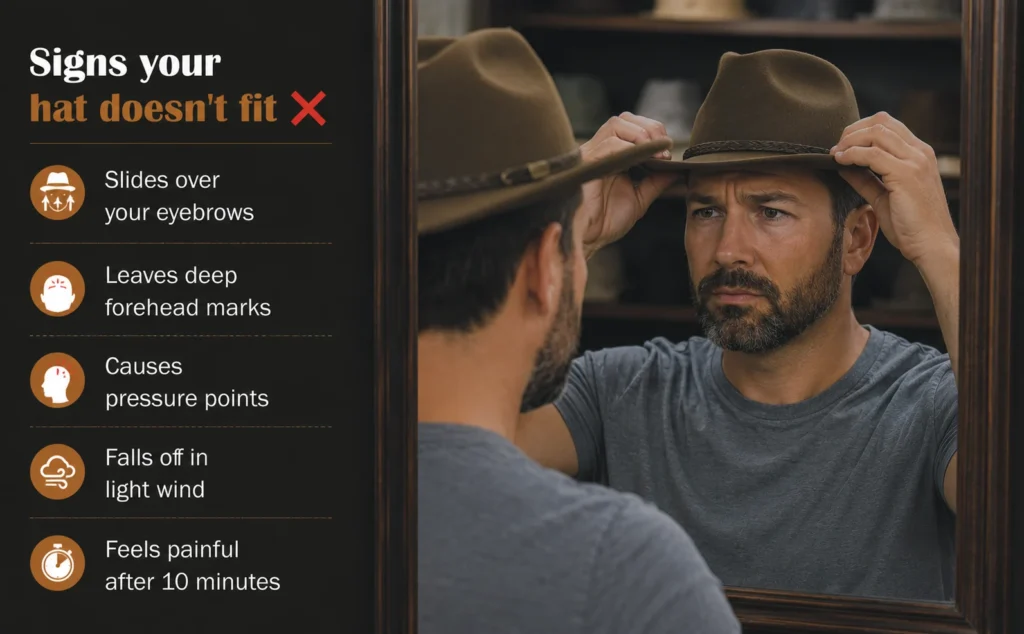
- Slides over your eyebrows
- Leaves deep forehead marks
- Causes pressure points
- Falls off in light wind
- Feels painful after 10 minutes
That’s not “breaking it in.”
That’s your head asking for mercy.
Break-in period
New felt hats often feel slightly firmer during the first few wears.
Most felt hats loosen a little with time.
Straw hats don’t stretch much.
That’s why accurate sizing matters more with straw styles.
Frequently asked questions
What if my measurement falls between sizes?
Round up.
Stetson recommends choosing the larger size when you’re between measurements. You can always add sizing foam if needed.
How do I convert inches to centimeters?
Multiply inches by 2.54.
Example:
22 inches × 2.54 = 55.88 cm
Do cowboy hat sizes vary by brand?
Yes.
Every brand uses slightly different sizing standards, shaping methods, and fit profiles.
Should I measure with my hair up or down?
Measure your head the way you’ll actually wear the hat most often.
How often should I remeasure?
At least once a year.
Weight changes, hairstyles, and age can affect measurements.
Can a tight cowboy hat be stretched?
Yes.
Professional hat stretching tools can increase size slightly.
Many western wear stores offer this service.
What’s the difference between US and EU hat sizing?
US sizing uses fractional measurements like 7 1/4.
European sizing usually uses centimeters.
Final Thoughts
A cowboy hat should feel comfortable from the moment you put it on.
The easiest way to get that fit is taking accurate measurements before you buy.
Grab a measuring tape, follow the steps above, and compare your results with the cowboy hat size chart. A few extra minutes now can save you from returns, headaches, and hats that spend their lives sitting on a shelf.
For the best results, check the sizing guide for the specific brand you’re buying and keep your measurements written down for future purchases.
Call to Action
To learn more about cowboy hats and the ranch culture of the Wild West, keep visiting Hatwanderer.com and reading our informative blog posts.

Mike Wilson is a Western fashion enthusiast, content creator, and founder of HatWanderer.com. He shares expert insights, buying guides, and honest reviews to help readers choose the right cowboy hats and Western apparel.
Passionate about Western culture and craftsmanship, Mike covers hat styles, fit, materials, care, and the heritage behind iconic Western brands. His goal is to help both newcomers and longtime enthusiasts build a timeless Western wardrobe with confidence.
When he’s not writing, Mike enjoys exploring Western fashion trends, studying the history of cowboy culture, and discovering quality craftsmanship from respected hat makers.