|
Getting your Trinity Audio player ready...
|
Cowboy Hat Shapes Explained: If you’ve ever watched an old western movie, you’ve probably noticed something interesting about cowboy hats. The brims curl up at the sides. The crowns are pinched and creased. Some hats look tall and sharp, while others are wide and flat.
At first glance, it might seem like cowboy hats were designed only for style. But that’s not really how they started.
Long before cowboy hats became fashion pieces, they were working tools. Cowboys spent long days outside under brutal sun, heavy rain, dust storms, and strong prairie winds. They rode horses for hours. They worked cattle. They fixed fences. Their hats had to do more than look good. They had to survive hard work.
That’s why cowboy hats are shaped the way they are today.
The curled brims, tall crowns, and pinched fronts all developed for practical reasons. Over time, different regions, rodeo culture, and Hollywood added their own spin to those shapes. What started as functional outdoor gear slowly became one of the most recognizable symbols of the American West.
Why Are Cowboy Hats Shaped Like That?
Do you wonder why Cowboy Hats Look Like That? Cowboy hats are shaped that way because the design helps riders stay protected from sun, rain, and wind while making the hat easier to wear during horseback riding and ranch work.
The curved brims improve visibility and control. The pinched crowns make the hat easier to grab and remove with one hand. Later on, fashion and rodeo culture exaggerated those shapes into the styles people recognize today.
In simple terms, cowboy hats were built for outdoor survival first and style second.
The Parts of a Cowboy Hat
Before understanding the shape, it helps to know the basic parts of the hat itself.
The Crown
The crown is the top part of the hat that sits over your head. This is where you’ll usually see dents, pinches, or creases.
Some crowns are tall. Some are low and rounded. Others have sharp folds pressed into them.
The Brim
The brim is the wide edge surrounding the hat. It can curl upward, slope downward, stay flat, or roll slightly at the edges.
The brim shape affects sun protection, rain runoff, and visibility.
The Sweatband
Inside the hat is a sweatband. Cowboys spent entire days outdoors, so this helped absorb sweat and improve comfort.
The Hatband
This is the decorative band wrapped around the crown. Sometimes it’s purely decorative. Other times it reflects regional or western traditions.
Why Cowboy Hat Brims Curl Up
Imagine riding a horse across open land with strong wind blowing from every direction. A completely flat hat brim would flap around constantly.
That’s one reason cowboy hats started curling upward at the sides.
Better Vision While Riding
A cowboy needed to see everything around him. Cattle could move suddenly. Horses reacted fast. Obstacles appeared without warning.
If the brim stayed too low on the sides, it blocked peripheral vision. Curled sides solved that problem.
Wind Didn’t Catch the Hat as Easily
Open plains can get incredibly windy. Curled brims cut through the wind better than flat ones. They reduced flapping and helped keep the hat stable while riding.
Rain Could Run Off More Easily
Rainwater needed somewhere to go. Curled brims helped direct water away from the rider’s face and neck.
At the same time, the shape still allowed the cowboy to look downward while working.
Easier to Grab Quickly
Cowboys constantly adjusted their hats. They tipped them in greeting. Pulled them down during storms. Removed them while working.
A curved brim gave them a quick grip point.
That small design detail made everyday work easier.
Why Some Brims Curve Downward
Not all cowboy hats curl upward dramatically. Some curve downward in front. Others stay mostly flat.
That usually comes down to environment and purpose.
Sun Protection
In extremely sunny areas, wider and flatter brims gave more shade. A front-down brim blocked sunlight from hitting the eyes directly.
This mattered a lot in desert regions where riders worked under harsh sun for hours.
Preventing Interference
Some rear brims curve upward so they don’t bump against saddles, jackets, or gear while riding.
It sounds minor, but after spending an entire day on horseback, comfort matters.
Windy Areas Needed Different Shapes
Cowboys living in windy plains often shaped their hats differently than cowboys in hot desert climates.
Wind influenced almost everything about western clothing design.
Why Cowboy Hat Crowns Are Pinched
One of the most recognizable features of a cowboy hat is the pinched crown.
That shape didn’t appear by accident.
Cowboys Needed a Better Grip
A rider often needed to remove or adjust a hat using only one hand.
The pinches created natural grip points. Cowboys could quickly grab the front of the crown without crushing the brim.
Over time, this became second nature.
Better Airflow
Tall crowns also trapped air inside the hat. That little pocket of space helped reduce heat buildup during hot days.
In a way, the crown worked like simple ventilation.
Regional Identity
As western culture grew, different crown shapes became associated with different regions and ranch traditions.
Some cowboys preferred tall crowns. Others liked flatter shapes or sharper creases.
Eventually, hat styles became personal signatures.
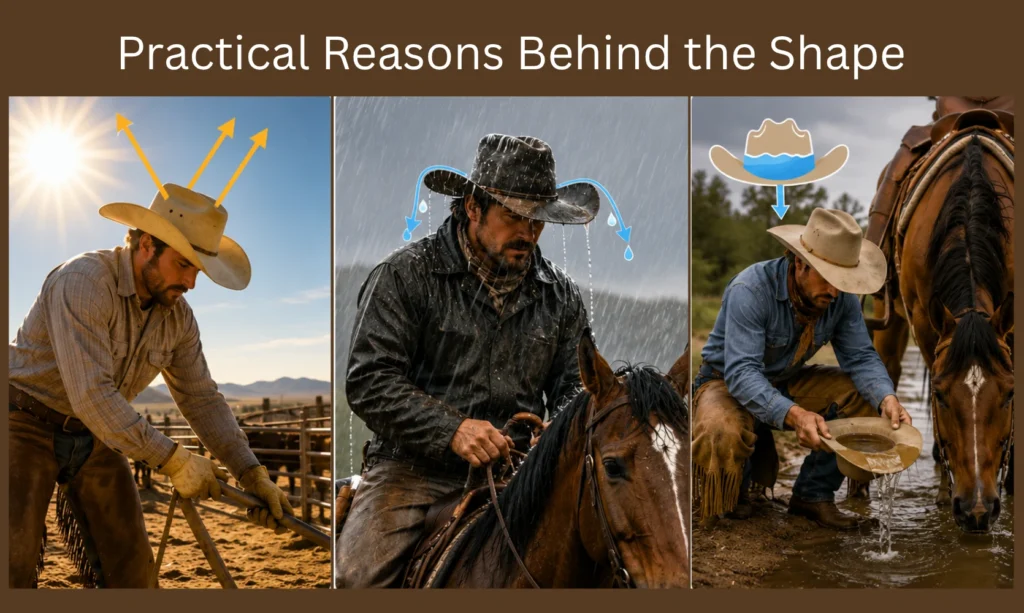
How Cowboy Hats Protected Riders from Weather
Cowboy hats were outdoor survival gear long before they became fashion accessories.
Every curve served a purpose.
Protection from Sun
Wide brims shaded the face, neck, ears, and eyes from direct sunlight.
Without that shade, working outdoors all day could become miserable very quickly.
Protection from Rain
Curled brims helped rainwater slide away instead of pouring directly onto the rider’s face.
Felt hats also resisted moisture better than many ordinary hats of the time.
Protection from Heat
Tall crowns created ventilation space above the head. Air could circulate more easily inside the hat.
Protection from Wind
A properly shaped brim handled strong wind better than a flat floppy design.
That mattered a lot out on open land.
Cowboy Hats and Horse Riding
Horse riding shaped almost every part of the cowboy hat’s design.
Cowboys didn’t just stand around wearing these hats. They worked in them constantly.
Better Sightlines
Curled sides allowed riders to see cattle, terrain, and nearby movement more clearly.
That visibility helped during herding and long trail rides.
Easier Movement
Certain brim shapes prevented interference with ropes, reins, and saddle gear.
A badly shaped hat could quickly become annoying during hard work.
Secure Fit During Fast Riding
Sweatbands helped hats stay snug during fast riding or rough terrain.
Some riders also used hat cords in extreme wind conditions.
Ranch Work Needed Practical Hats
Life on a ranch was rough on clothing. Cowboy hats had to handle dirt, weather, sweat, and constant movement.
Working with Ropes
When using a lariat, cowboys needed their hats out of the way. Curled sides helped create space for arm movement.
Moving Through Brush and Fences
Raised brims snagged less often on branches, fencing, or wire.
That made day-to-day work smoother.
Seasonal Materials
Cowboys usually switched materials depending on weather.
- Felt hats worked better in cold or rainy seasons
- Straw hats were lighter and cooler during summer
Practicality always came first.
Different Regions Created Different Cowboy Hat Types and Styles
Cowboy hats didn’t evolve the same way everywhere. Different Cowboy Hat Types and Styles were created in differetn region based on the climate and available materials.
Climate changed the shape.
Texas Styles
Texas hats often featured tall crowns and wide brims because of strong heat and open landscapes.
Mexican Influence
Early American cowboy culture borrowed heavily from Mexican vaqueros.
Large sombrero-style brims inspired wider western hat designs for sun protection.
Great Plains Styles
Windy plains encouraged tighter curls and more structured shapes.
Southwest Desert Shapes
Hot desert climates favored wide brims that created maximum shade.
Even today, you can often guess where a cowboy is from based on hat style.
How Rodeo Culture Changed Cowboy Hats
As rodeos became popular, cowboy hats started changing in new ways.
Function still mattered. But appearance mattered too.
Bigger Shapes for Visibility
Rodeo riders wanted bold-looking hats that stood out in arenas.
Brims became more dramatic. Crowns became taller.
Performance Needs
Certain rodeo events required hats that stayed secure during intense movement.
Shape played a role in safety and comfort.
Hollywood Influence
Then movies arrived.
Actors like John Wayne turned cowboy hats into global western symbols. Suddenly, hat shapes became part of entertainment and fashion culture.
Modern Cowboy Hats Blend Function and Fashion
Today, many cowboy hats still follow traditional practical designs.
Others are shaped mainly for appearance.
Some modern hats feature exaggerated curls or sharp decorative pinches that would look unusual on a working ranch.
Country music, western fashion brands, and social media trends all influence modern styles now.
But underneath the fashion side, most cowboy hats still carry the DNA of their working roots.
What Materials Allow Cowboy Hats to Hold Their Shape?
The material matters a lot.
Without the right material, those famous curves and creases wouldn’t hold properly.
Felt Hats
Felt is strong, shapeable, and weather-resistant. It works especially well for structured cowboy hats.
Straw Hats
Straw is lighter and cooler. That makes it popular in hot climates.
How Hatters Shape Cowboy Hats
Hat shaping usually involves steam and hand-forming.
First, the material is softened using steam. Then the hatter carefully shapes the brim and crown by hand. Once cooled and stiffened, the hat keeps its form.
It’s part craftsmanship and part tradition.
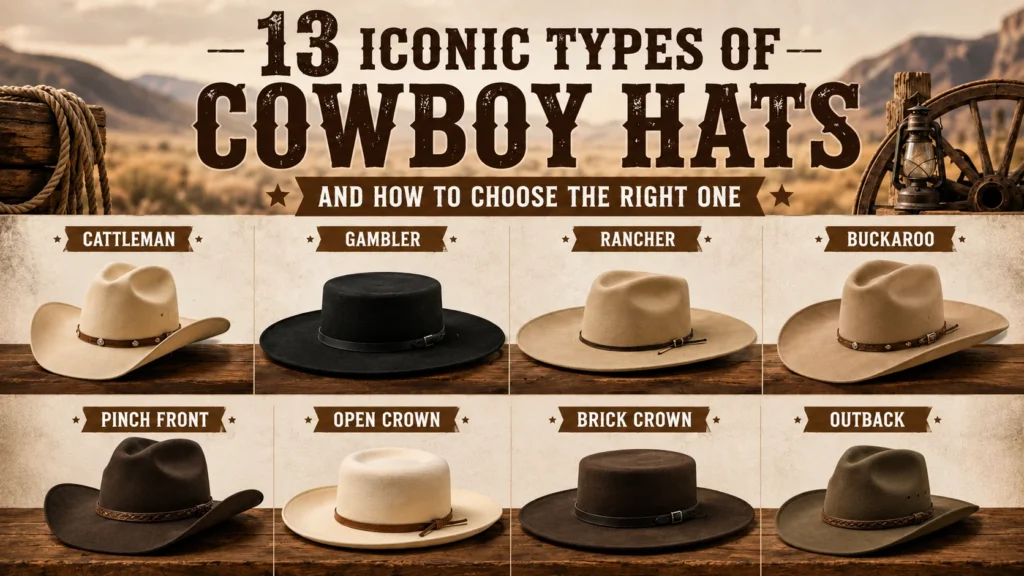
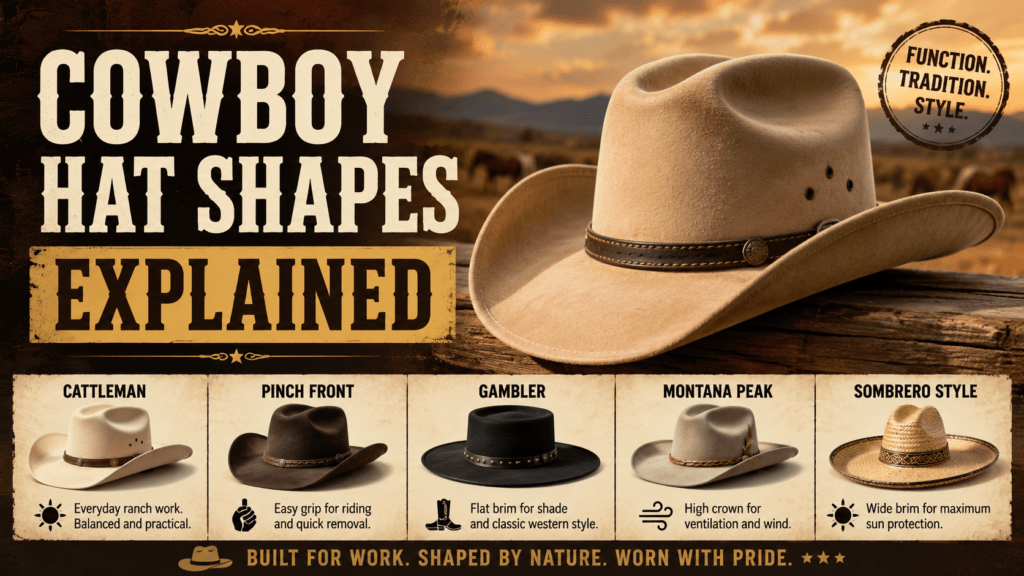
Popular Cowboy Hat Shapes
Over the years, several classic shapes became well known.
Cattleman Crease
This is the traditional western ranch style most people picture first.
Balanced. Practical. Timeless.
Pinch-Front
Easy to grip and popular among riders.
It has a sharper, more modern appearance.
Gambler Hat
Flatter brim. Lower crown.
More associated with style and western entertainment culture.
Montana Peak
A high crown with distinct dents that improve airflow and weather resistance.
Sombrero-Inspired Styles
Extremely wide brims designed for maximum sun protection.
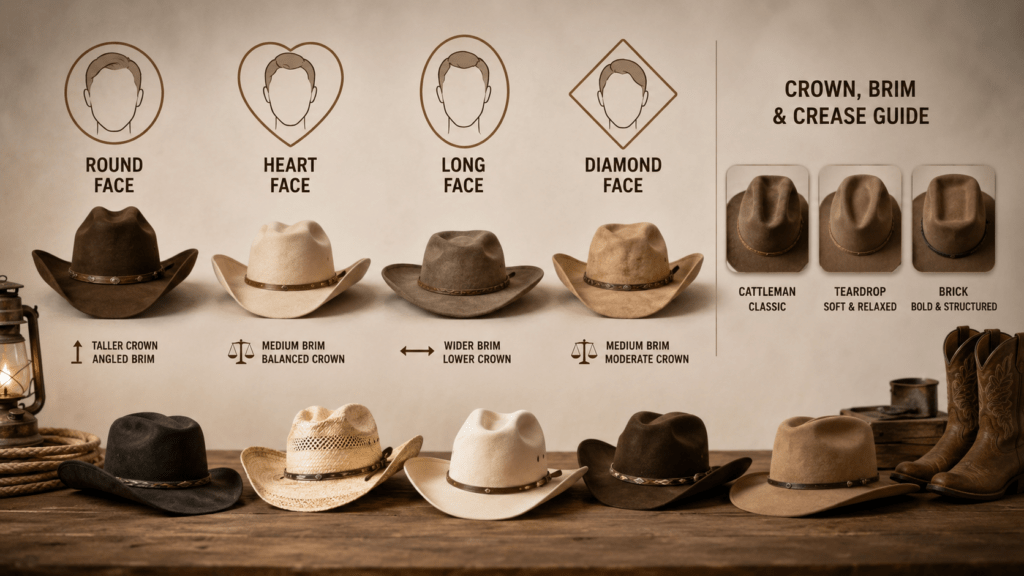
Choosing the Right Cowboy Hat Shape
The best cowboy hat depends on how you plan to use it.
For Ranch Work
Choose durable felt hats with practical brim curves.
For Hot Weather
Straw hats with wide brims help keep you cool.
For Windy Areas
Curled side brims handle gusts better.
For Fashion
Modern designer hats often focus more on appearance than work function.
There’s no single “perfect” cowboy hat. The right shape depends on climate, comfort, and purpose.
To learn more about how to choose the right cowboy hat for your face, visit our post, “How to Choose the Best Cowboy Hat for Face Shape.”
Frequently Asked Questions About Cowboy Hat Shapes
Why are cowboy hats turned up on the sides?
To improve visibility, reduce wind resistance, and make the brim easier to handle while riding.
Why are cowboy hat crowns pinched?
The pinches create grip points so riders can remove or tip the hat with one hand.
Are cowboy hat curls only for style?
No. Most curls originally developed for practical reasons before becoming fashion trends.
Why are some cowboy hats flat?
Flat brims provide maximum shade and are common in extremely sunny environments.
Final Thoughts
Cowboy hats didn’t become iconic overnight.
Their shape evolved slowly through years of riding, ranch work, harsh weather, and western culture. Every curl, pinch, and crease had a reason behind it. Some designs improved visibility. Others handled wind better. Some simply made life on horseback easier.
Later, rodeos, movies, and fashion turned those practical features into style statements.
That’s why cowboy hats still feel timeless today. They aren’t just decorative pieces. They carry generations of history, hard work, and western tradition in every curve.
Call to Action
To learn more about cowboy hats and the ranch culture of the Wild West, keep visiting Hatwanderer.com and reading our informative blog posts.
Related Guides on HatWanderer.com
Continue exploring our expert resources:
Cowboy Hat Care & Shaping Guide
Why Are Cowboy Hats Curved? The Real Story Behind the Shape
Cowboy Hat Styles vs. Cowboy Hat Shapes: What’s the Difference?
Anatomy of Cowboy Hats: Understanding the Parts, Front vs. Back
Cowboy Hat Crown Shapes Explained

Mike Wilson is a Western fashion enthusiast, content creator, and founder of HatWanderer.com. He shares expert insights, buying guides, and honest reviews to help readers choose the right cowboy hats and Western apparel.
Passionate about Western culture and craftsmanship, Mike covers hat styles, fit, materials, care, and the heritage behind iconic Western brands. His goal is to help both newcomers and longtime enthusiasts build a timeless Western wardrobe with confidence.
When he’s not writing, Mike enjoys exploring Western fashion trends, studying the history of cowboy culture, and discovering quality craftsmanship from respected hat makers.