|
Getting your Trinity Audio player ready...
|
Have you ever wondered why cowboy hats look the way they do?
That wide, upturned brim and pinched crown are not just for style. They came from years of real ranch work and practical needs.
The cowboy hat we recognize today was not created by a fashion designer. Cowboys shaped it over time while working in tough weather and rough conditions across the frontier.
Every part of the hat had a purpose.
In this post, we’ll look at the practical reasons behind the cowboy hat’s famous shape. We’ll also explore how it changed from a simple sun shield into a symbol of the American West.
1. The Wide Brim: Nature’s All-in-One Weather Shield
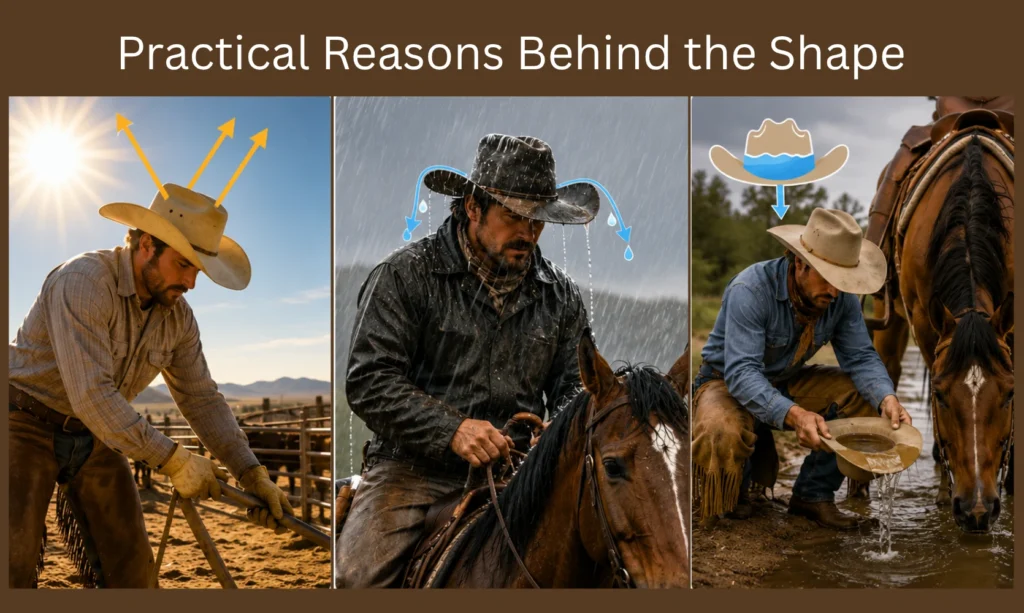
The first thing you notice about a cowboy hat is its wide brim—typically 3 to 4 inches all around. This wasn’t accidental. It served multiple survival functions:
Sun Protection:
he wide brim shields the face, neck, and shoulders from intense sunlight. It also shields the shoulders and back during extended hours of riding.
Rain Protection:
It keeps rain off important parts of the body, especially the head and neck. This helps prevent heat loss from the head and neck, which lose body heat more quickly.
Rainwater Drainage:
This helps prevent water from running down the face and blocking vision. This helps prevent water from running down the face and blocking vision.
Without this wide brim, working outdoors in the harsh Texas and Western plains would have been extremely difficult.
2. Why Cowboy Hats Have Curled Brims (It’s Not Just Style)
The curved or upturned sides of a cowboy hat are not just for looks. They are designed to make the hat more practical, safe, and comfortable during real ranch work.
Rope Control While Lassoing Cattle
When cowboys rope cattle, they swing a lasso quickly and with force. If the hat had a flat brim, the rope could easily catch on it by mistake. This could pull the hat off or push it out of place at the wrong moment.
The curved brim helps solve this problem. It guides the rope away from the hat instead of letting it get stuck. This keeps the hat secure and allows the cowboy to work without distraction.
Better Comfort in Tight Spaces (Pickup Truck Idea)
Another explanation comes from everyday travel on ranches. Cowboys often sat close together in pickup trucks. With flat brims, hats could bump into each other and feel uncomfortable.
The curved sides help reduce this problem by keeping each hat slightly angled. This makes it easier for multiple people to sit together without their hats constantly hitting each other.
Wind Protection on Open Plains
Strong wind is common in open ranch areas. A flat brim can act like a sail, catching the wind and making it easier for the hat to blow off.
The curved brim changes how wind flows around the hat. Instead of trapping air underneath, it directs the wind smoothly over and around the hat. This reduces the lifting force and helps the hat stay firmly in place.
3. The Pinched Crown: Why Cowboy Hats Are Creased
The top part of a cowboy hat is called the crown. Unlike a smooth round hat, it has dents and creases. These shapes are not random—they make the hat more practical for everyday use.
Easier Grip and Handling
The pinched crown gives cowboys a better place to hold the hat. It makes it easier to grab, put on, or take off quickly. This is useful when working outdoors or moving fast.
A Shape That Formed Over Time
Some historians believe these creases didn’t start as a design choice. Instead, they may have formed naturally over time as cowboys repeatedly grabbed and handled their hats in the same spots. Over time, those pressure points became permanent creases.
Better Airflow for Cooling
The tall crown also helps with ventilation. It creates space between the top of the head and the hat, allowing air to move through. This helps keep the head cooler in hot weather, especially during long hours outdoors.
Different Crease Styles
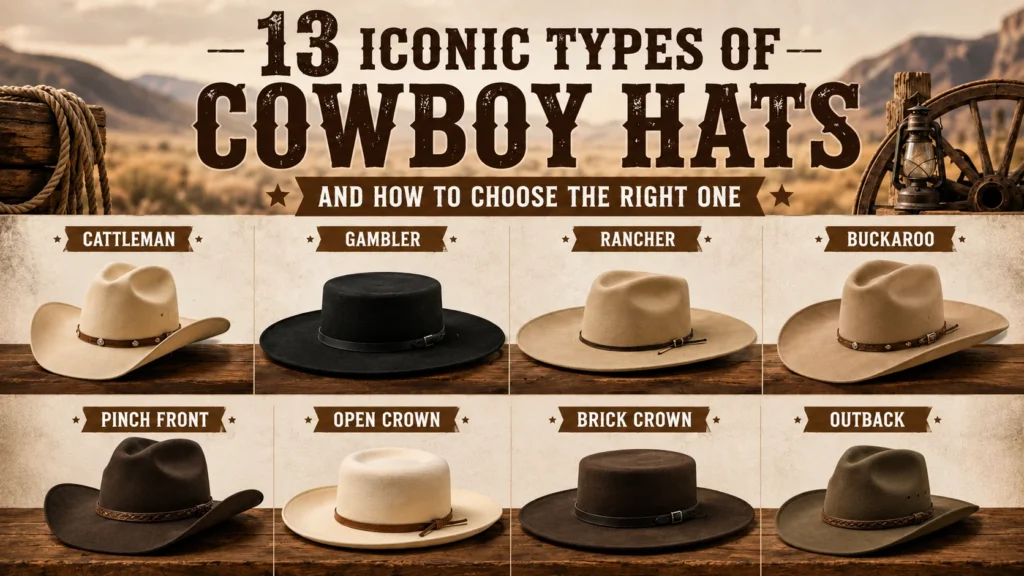
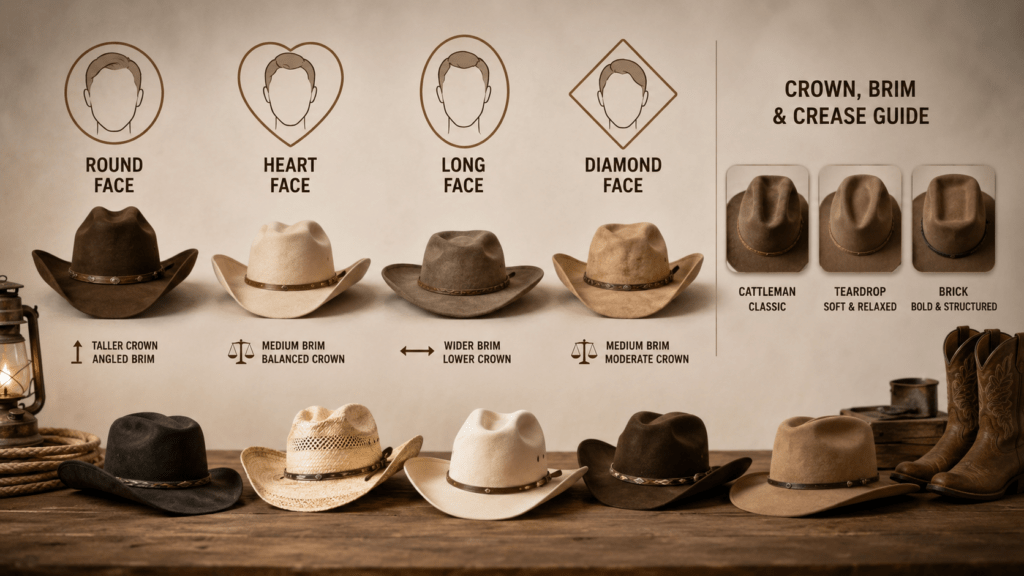
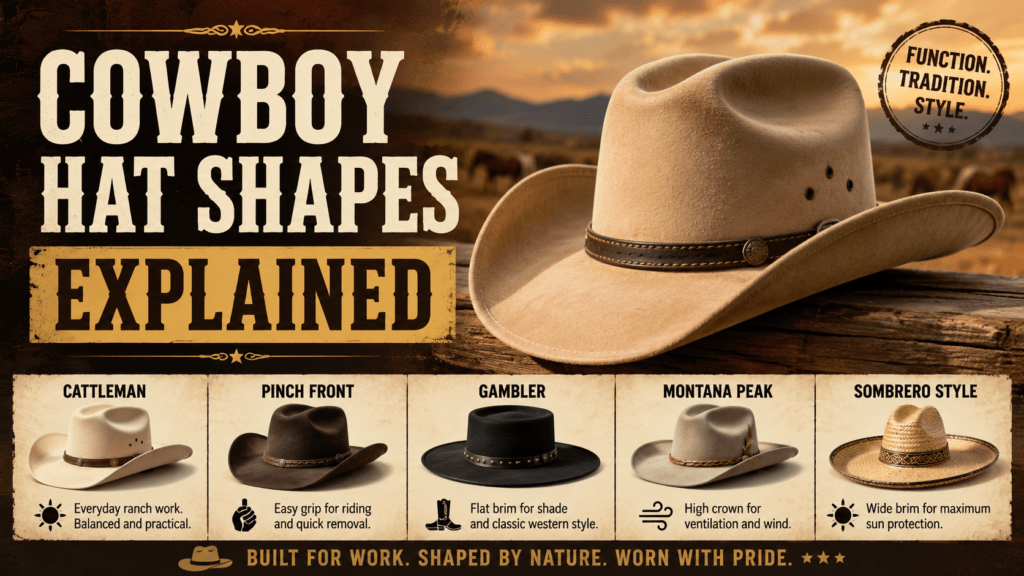
Over time, different crown shapes became popular in different regions. Some of the most common styles include:
- Cattleman crease: A center dent with two smaller side dents
- Gus crease: A higher, more rounded front shape
- Pinch front: A sharp pinch at the front of the crown
Each style developed based on personal preference, local tradition, and working conditions.
4. The Historical Evolution: From Stetson to the Modern Cowboy Hat
The cowboy hat didn’t start out in its current shape. It slowly changed over time as cowboys adapted it for real working conditions.
1865: The First Cowboy Hat Design
In 1865, John B. Stetson created the first widely known cowboy hat in Philadelphia. It was called the “Boss of the Plains.” This early version had a flat brim and a smooth, round crown.
Its main purpose was simple: to protect people from the sun and rain.
Late 1800s: Cowboys Start Customizing
As cowboys began using these hats in real ranch work, they started changing them to suit their needs.
Some pinched the crown to get a better grip. Others bent and curled the brim to prevent it from getting in the way of ropes or harsh weather. Over time, these changes became common. However, they were not the same everywhere—different regions had different styles.
Early 1900s: Factories Follow Cowboy Styles
Hat makers noticed these changes and began copying them. Instead of selling only flat, plain hats, they started producing hats with pre-shaped brims and creased crowns.
This made cowboy hats more practical and ready to wear right out of the box.
Influence from the Spanish Sombrero
The wide brim design was also influenced by the Spanish sombrero, a hat used in Spain and Mexico for centuries. The word “sombrero” comes from a word meaning “shade,” since its main purpose was sun protection.
This influence helped shape the wide brim that later became a defining feature of the cowboy hat.
5. From Function to Fashion: The Cowboy Hat Today
What began as a practical tool for outdoor work has now become a strong cultural symbol of the American West. Today, cowboy hats are worn:
- By working cowboys for practical purposes
- At country music concerts and rodeos as fashion statements
- By fashion enthusiasts looking for Western-inspired style
- As symbols of individuality and heritage
Even though the design hasn’t changed much, its meaning has grown. It still works as a functional hat—but now it also stands as a style and identity statement.
Conclusion: Why the Cowboy Hat Shape Still Matters
The cowboy hat has its shape because of practical needs, not fashion trends. Every part of it—the wide brim, upturned sides, and pinched crown—was designed to solve real problems faced by cowboys working in tough conditions.
Knowing this history helps you appreciate why the cowboy hat is still so iconic today. It is more than just a hat; it is a piece of functional design that has lasted because it truly works.
Whether you are a working cowboy, a Western fashion fan, or simply interested in hat history, the next time you see a cowboy hat, you will understand the purpose behind every curve and crease.
Call To Action
To learn more about cowboy hat shapes and how cowboy hats become part of Western fashion, visit piller post Cowboy Hat Shapes Explained and HatWanderer.com

Mike Wilson is a Western fashion enthusiast, content creator, and founder of HatWanderer.com. He shares expert insights, buying guides, and honest reviews to help readers choose the right cowboy hats and Western apparel.
Passionate about Western culture and craftsmanship, Mike covers hat styles, fit, materials, care, and the heritage behind iconic Western brands. His goal is to help both newcomers and longtime enthusiasts build a timeless Western wardrobe with confidence.
When he’s not writing, Mike enjoys exploring Western fashion trends, studying the history of cowboy culture, and discovering quality craftsmanship from respected hat makers.