|
Getting your Trinity Audio player ready...
|
What are Cowboy Hat Etiquette? Like any formal or informal dress code, there are rules for properly handling cowboy hats. These rules are called Cowboy Hat Etiquette.
Cowboy Hats are a symbol of the American West. They represent independence, hard work, and respect for tradition.
Because cowboy hats carry so much cultural meaning, there are special rules about how to treat them. It is not just about good manners. It is also about respect for a culture and tradition.
How you handle a cowboy hat—your own or someone else’s—can show how respectful you are to other people. This guide will help you understand the basic rules. It also explains when to wear a hat, when to take it off, and how to treat it properly.
Core Cowboy Hat Etiquette Rules
1. Respect the hat as personal identity
A cowboy hat often represents a person’s identity, work, and lifestyle. It is not just clothing.
- Never touch or adjust someone else’s hat without permission
- Avoid jokes like knocking it off or trying it on
- A hat carries personal meaning, wear, and shape
2. Don’t touch what isn’t yours
Even playful handling is considered disrespectful.
- Never grab or remove someone’s hat
- Always ask first if you need to handle it
- The hat is linked to dignity and personal space
3. Indoor hat etiquette (when to remove it)
Remove your hat in:
- Private homes
- Churches and places of worship
- Formal events (weddings, ceremonies, banquets)
- During prayer, funerals, or national ceremonies
When it’s okay to keep it on:
- Ranches, barns, and work settings
- Casual stores or outdoor spaces
- Rodeos or Western-style events
- Public places where hats are commonly worn
4. Hat tipping as greeting etiquette
A light tip of the hat is a traditional sign of respect.
- Small tilt or lift of the brim is enough
- Used for greetings or acknowledgment
- More common in rural or traditional settings
5. Introduction and greeting behavior
- Make eye contact when meeting someone
- Remove hat in formal introductions
- A simple hat tip is fine in casual settings
- Follow the other person’s lead
6. Handshake etiquette with a cowboy hat
- Let the other person initiate the handshake
- Remove hat for formal greetings
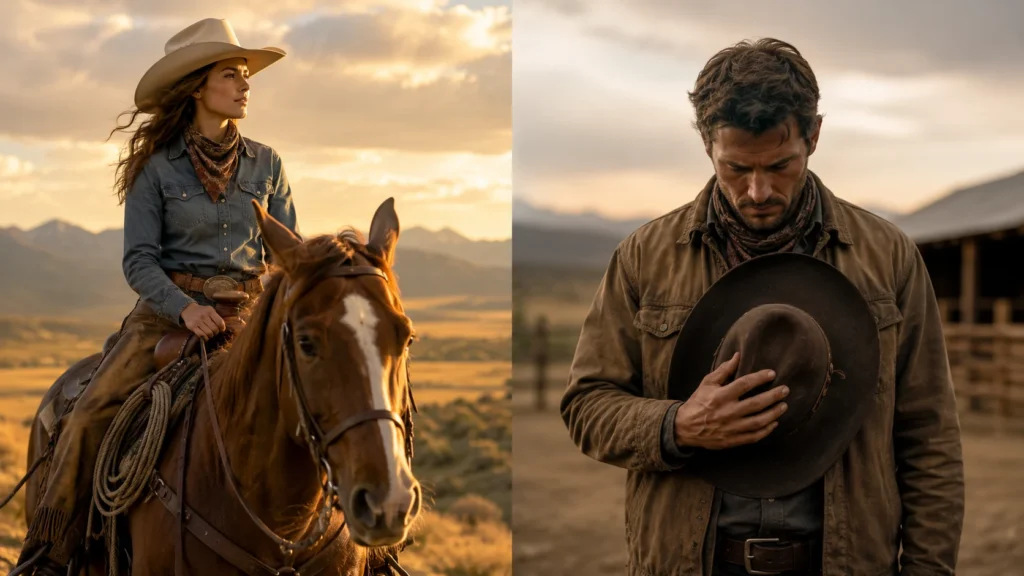
- Hold hat by the crown, not the brim
- Keep handshake firm but respectful
7. Proper indoor handling
- Hold hat in your hand inside homes
- Ask where to place it if unsure
- Never place it carelessly on furniture
Avoid:
- Brim-down placement (damages shape)
- Putting it on beds without permission
8. The “no hat on the bed” rule
This tradition comes from both hygiene and superstition:
- Old hats carried dust, sweat, and insects
- Beds could get dirty from outdoor hats
- Some believe it brings bad luck
Today, it mainly helps keep things clean and respectful.
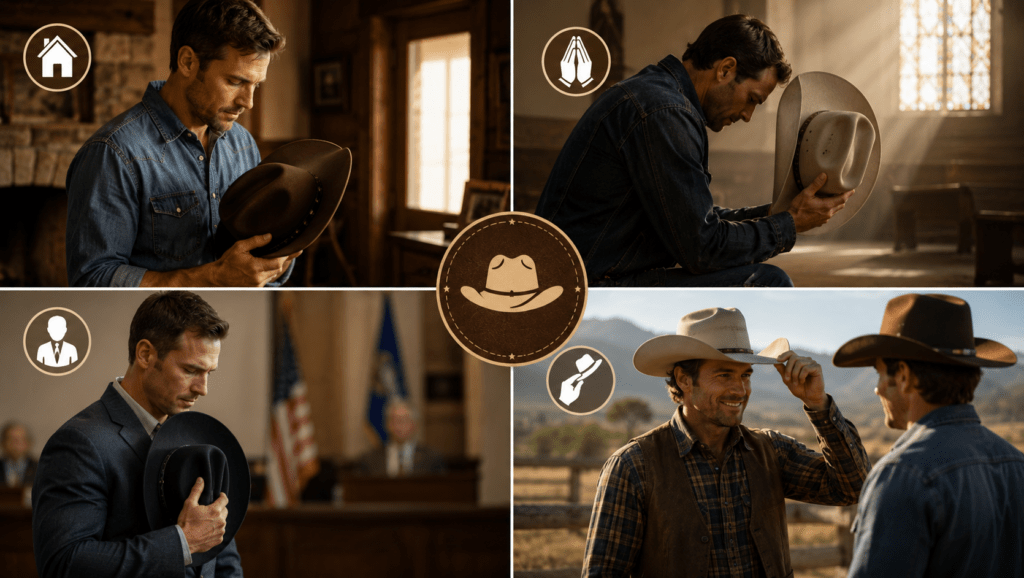
Cowboy hat rules can change depending on where you are.
In rural towns, ranch areas, and rodeos, people are more relaxed about hats. Many people wear their hats indoors for longer time. It is often part of their daily work and lifestyle. The rules are still based on respect, but they are less strict.
In cities, offices, and formal places, the rules are stricter. People usually take their hats off when they go inside. Manners and politeness are more important in these places. Some people may not know cowboy hat traditions very well.
Because of this, it is best to look around and follow what others are doing.
Quick Reference: Do’s and Don’ts
Do’s
- Ask permission before touching someone else’s hat.
- Hold your hat by the crown, not the brim.
- Store your hat on a rack or upside-down on the crown.
- Remove your hat in homes, churches, and formal settings.
- Follow the other person’s lead during greetings.
Don’ts
- Don’t grab, adjust, or knock off someone else’s hat.
- Don’t place a hat brim-down on furniture.
- Don’t put your hat on a bed without permission.
- Don’t assume etiquette rules are universal.
- Don’t wear a felt hat in melting heat or straw in heavy rain.
Conclusion
Cowboy hat etiquette is more than a set of rules—it’s a reflection of respect, manners, and cultural appreciation.
Whether you’re wearing it, admiring it, or interacting with someone who wears one, honoring these customs shows you value the tradition and the people who live it.
Final takeaway: A hat is worn on the head, but carried with respect.

Mike Wilson is a Western fashion enthusiast, content creator, and founder of HatWanderer.com. He shares expert insights, buying guides, and honest reviews to help readers choose the right cowboy hats and Western apparel.
Passionate about Western culture and craftsmanship, Mike covers hat styles, fit, materials, care, and the heritage behind iconic Western brands. His goal is to help both newcomers and longtime enthusiasts build a timeless Western wardrobe with confidence.
When he’s not writing, Mike enjoys exploring Western fashion trends, studying the history of cowboy culture, and discovering quality craftsmanship from respected hat makers.