|
Getting your Trinity Audio player ready...
|
IImagine standing under the bright lights of a rodeo arena. A rider walks out of the chute wearing a silver-belly hat that catches the glow. Another cowboy, in a sharp black felt hat, nods to the crowd.
In that moment, hat color is more than just style. It connects to a tradition that goes back to dusty ranches, rodeo arenas, and even Hollywood films.
Over time, colors have meant different things. Neutral tones were once common for working cowboys. Today, we also see bold colors, gold shades, and sponsor-driven designs.
Hat color can show function, identity, and personal style. It still carries meaning, even if that meaning has changed over time.
Whether you are a working cowboy, a rodeo competitor, or a Western style fan, this helps you understand the story behind each hat. It also helps you choose a color that fits your role, climate, and audience.
2. Origins of the cowboy hat and early color choices
The cowboy hat did not begin in rodeos or Hollywood. It originated on the American West plains in the mid-19th century. In 1865, John B. Stetson designed the “Boss of the Plains,” often considered the first true cowboy hat. It was made for work, not fashion.
The design was practical. The wide brim protected against sun and rain. The high crown improved airflow and helped regulate temperature. Strong felt material made it durable in harsh weather and long travel. It was built for tough outdoor conditions.
Early cowboy hat colors were simple and functional. Most working cowboys wore light tan or off-white straw hats. Others used brown or gray felt. These choices were not about style or meaning. They were based on practicality.
Light colors reflected heat and kept wearers cooler in strong sun. Darker shades helped hide dust, dirt, and sweat. Bright colors were rare due to limited dye quality at the time.
There were no symbolic rules for color in that era. White did not mean “good,” and black did not mean “bad.” Hat color was chosen for weather, work, and durability. It was a practical tool, not a symbol.
3. Silver-belly: the elite white felt
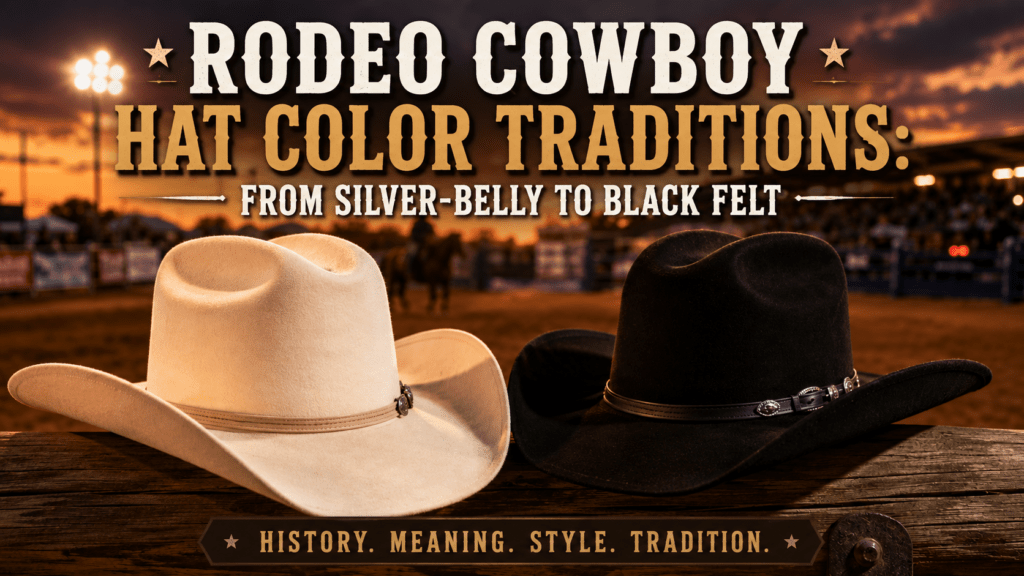
“Silver-belly” is not just a cowboy hat color. In western culture, it is often linked with quality, tradition, and a strong cowboy image.
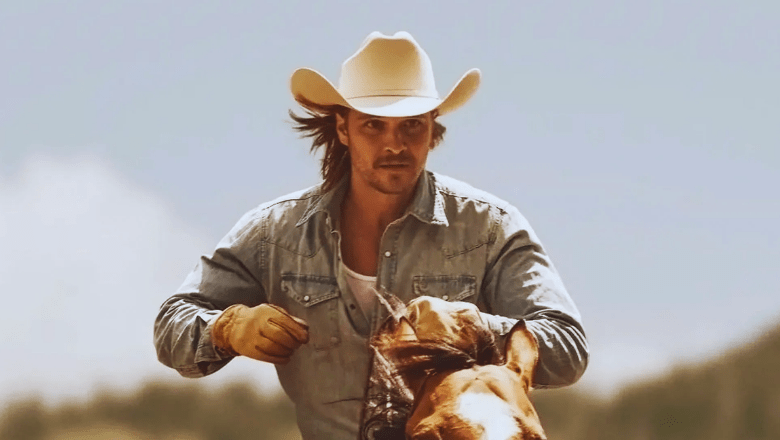
What Does a Silver-Belly Cowboy Hat Mean?
A silver-belly cowboy hat is usually a soft off-white or light gray felt hat. It is commonly made from wool or fur blends. The felt has a smooth finish with a slight shine that gives the hat a clean and refined look.
Unlike bright white hats, silver-belly has a softer tone. That is one reason it is popular for rodeos, formal ranch events, western shows, and dress wear.
In the past, silver-belly hats were not everyday work hats. Most working cowboys wore brown, tan, or straw hats for ranch work because they were more practical.
Silver-belly hats were often saved for special occasions like celebrations, rodeos, and community gatherings.
Over time, the silver-belly hat became a symbol of experience and western tradition. In many rodeo communities, people started calling it the “Sunday hat.”
It was the hat cowboys wore when appearance mattered more than hard work.
Why Rodeo Cowboys Wear Silver-Belly Hats
Many rodeo cowboys wear silver-belly hats because they look sharp and stand out in the arena. The lighter color reflects more sunlight and heat than dark felt hats. This feature makes them more comfortable in warm weather.
Silver-belly hats also look great in photos and under bright arena lights. That is why they are often worn during rodeo openings, parades, ceremonies, and televised events.
Another reason rodeo riders choose silver-belly hats is the strong contrast they create with darker western clothing. The combination gives a polished and balanced western look.
However, silver-belly hats do have some downsides. Their light color shows sweat, dust, and stains more easily than darker hats. They also need more cleaning and careful storage to keep them looking fresh.
Because of that, many cowboys avoid wearing silver-belly hats for heavy ranch work. Instead, they save them for rodeos, competitions, formal events, and special occasions.
For many riders, wearing a silver-belly hat is a style choice that also honors cowboy tradition.
4. Hollywood’s hero vs villain hat code
Long before rodeos had big screens and sponsors, Hollywood shaped the cowboy image. Western films often used a simple idea. Heroes wore light hats, usually white. Villains wore black hats. This made it easy to tell good from bad.
Movies like The Lone Ranger made this idea popular. Many Western films used the same pattern. The white hat became linked with heroes. The black hat became linked with outlaws. Over time, people started believing this was real life.
In reality, cowboys did not follow this rule. Hat color was about function. Light hats helped with heat. Dark hats hid dust and dirt. Weather and work mattered more than style or meaning. Early rodeos also focused on comfort and use, not symbolism.
Hollywood did influence cowboy style, but mostly in appearance. Bold and noticeable hats became part of rodeo fashion. Today, hat colors are used for style and identity. They are not about good or bad anymore. They show personality, branding, and personal choice.
5. Practical color choices for rodeo riders
For rodeo riders, hat color is less about symbolism. Rather it is more about making smart choices for different situations.
Straw white / tan
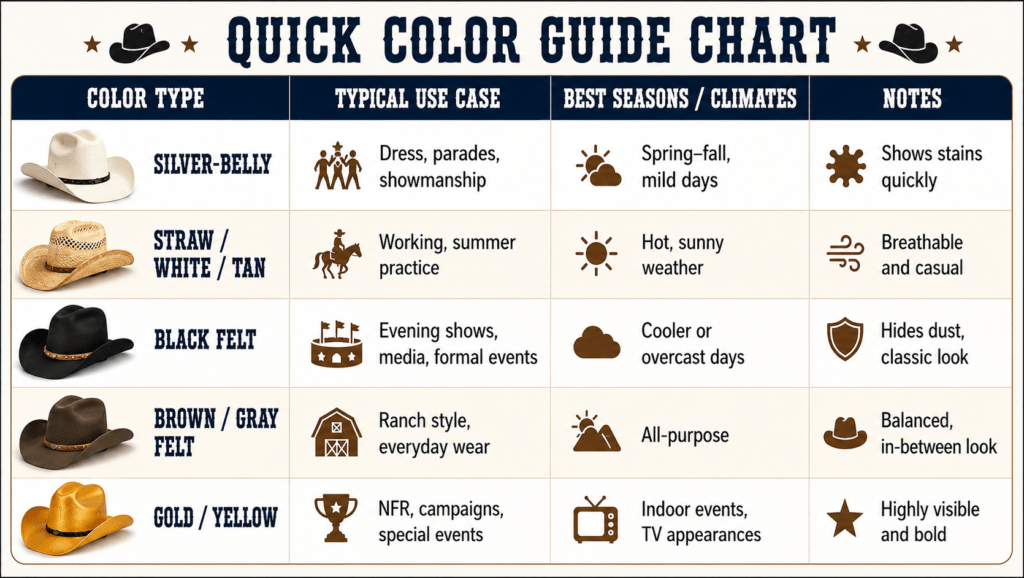
Light straw, white, or tan hats are popular for summer events, hot climates, and outdoor practice.
They are lightweight, breathable, and still maintain a traditional ranch look without causing too much heat.
Silver‑belly felt:
Silver-belly felt hats are often used in formal rodeo events, parades, and televised competitions. They create a clean and polished appearance that looks great in photos and on camera.
Black or dark brown felt:
Black or dark brown felt hats are better suited for cooler weather and evening shows. They offer a more serious and professional look. These darker colors also hide dust and dirt more easily.
Other colors (brown, gray, red, novelty):
Modern rodeo riders sometimes wear brown, gray, or bold colors like red to reflect personal style, team identity, or branding.
Sponsors may also influence hat colors or patches to match logos and team colors. Even with these modern trends, practicality still remains an important part of rodeo hat culture.
6. Regional and arena traditions
Regional and cultural differences play a big role in cowboy hat color choices, even in the rodeo world.
In many Southern regions, lighter straw hats are very common. They work better in hot weather and give a more casual working-cowboy look. These hats are practical for long days under the sun.
Western and Northern ranch culture often leans toward darker felt hats instead. These hats handle cooler weather, wind, and winter conditions more effectively.
At rodeo arenas, officials and announcers usually wear more uniform colors, such as black or dark felt hats.
Contestants, however, often have more freedom in their choices. They may wear straw hats, silver-belly styles, or even bold fashion colors.
High-profile televised events like the National Finals Rodeo also influence hat trends. Riders often choose hats that look sharp on camera.
Cleaner colors, polished finishes, and sponsor-friendly styles have become more common on the big stage.
7. Modern trends and statements
Modern rodeo hat trends have turned hat color into both a fashion statement and a form of branding.
Gold and yellow hats, especially at events like the National Finals Rodeo, are often used for awareness campaigns or cause-related promotions. These bright colors stand out clearly in photos and on camera.
Bold hat colors and custom patches are also becoming more common. Many riders use them to display team identities, sponsor logos, memorial colors, or personal mottos. In many cases, the cowboy hat has become both a personal symbol and a walking billboard.
At the same time, traditionalists still prefer neutral colors and classic hat shapes. However, many modern riders now treat cowboy hats as fashion pieces. This has created a gentle clash between tradition and modern style under the arena lights.
8. Etiquette and when to stay traditional
Hat etiquette in rodeo often comes down to matching the mood of the moment.
Neutral tones like tan, brown, black, and gray felt are usually seen as respectful and appropriate. These colors are commonly worn during practice sessions, judging, and formal ceremonies. In these settings, professionalism and tradition matter most.
Bright or flashy colors are treated differently. Bold patterns, gold hats, and novelty styles are more common during exhibition rides, fan events, media appearances, and televised showcases. In these situations, personality and showmanship are often encouraged.
Some rodeo circuits and ranches still prefer conservative styles and subdued colors. Others are more open to self-expression and personal branding.
A simple rule of thumb is to match your hat to the tone of the event. If you are unsure, classic neutral colors are usually the safest choice.
9. Quick color guide chart (sidebar or inline)
10. Closing thoughts
Rodeo cowboy hat colors blend history, practicality, and personal style. From simple straw and felt hats to modern flashy designs, cowboys have always chosen colors based on comfort, function, and appearance.
Over time, hat colors also began to carry style and symbolism. But choosing the right cowboy hat color is not really about being the “good guy” in white or the “bad guy” in black. It is more about matching the hat to the role, occasion, and audience.
Some people prefer a classic silver-belly hat for major shows. Others choose a reliable straw hat for summer practice. Some even go for bold gold hats to stand out or support a special cause. In the end, every cowboy hat color tells its own story.
What color hat would you wear to a rodeo, and why? Share your choice in the comments. Would you go traditional, flashy, or somewhere in between?
Call to Action:
If you want to go deeper into Western fashion, check out related guides like Cowboy Hat Color Meanings Explained, and Cowboy Hat Color Rules: Myth vs Reality.

Mike Wilson is a Western fashion enthusiast, content creator, and founder of HatWanderer.com. He shares expert insights, buying guides, and honest reviews to help readers choose the right cowboy hats and Western apparel.
Passionate about Western culture and craftsmanship, Mike covers hat styles, fit, materials, care, and the heritage behind iconic Western brands. His goal is to help both newcomers and longtime enthusiasts build a timeless Western wardrobe with confidence.
When he’s not writing, Mike enjoys exploring Western fashion trends, studying the history of cowboy culture, and discovering quality craftsmanship from respected hat makers.