|
Getting your Trinity Audio player ready...
|
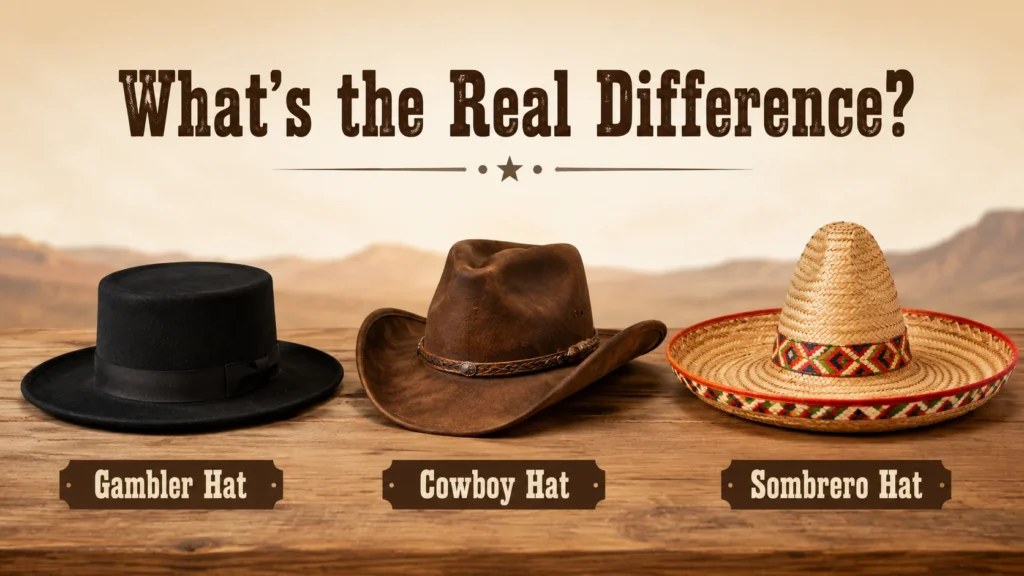
You’ve probably seen all Gambler Hats, Cowoboy Hats and Somberero Hats.
From the outset, gambler hats tend to have flat brims, while cowboy hats are typically curved. Sombreros, on the other hand, are often characterized by their oversized design.
Notwithstanding their similarities and differences, up close they are built for very different purposes.
Let’s break it down clearly.
What’s the difference between a gambler hat and a cowboy hat?
A gambler hat has a flat brim and a round crown.
A cowboy hat has a curved brim and a creased crown.
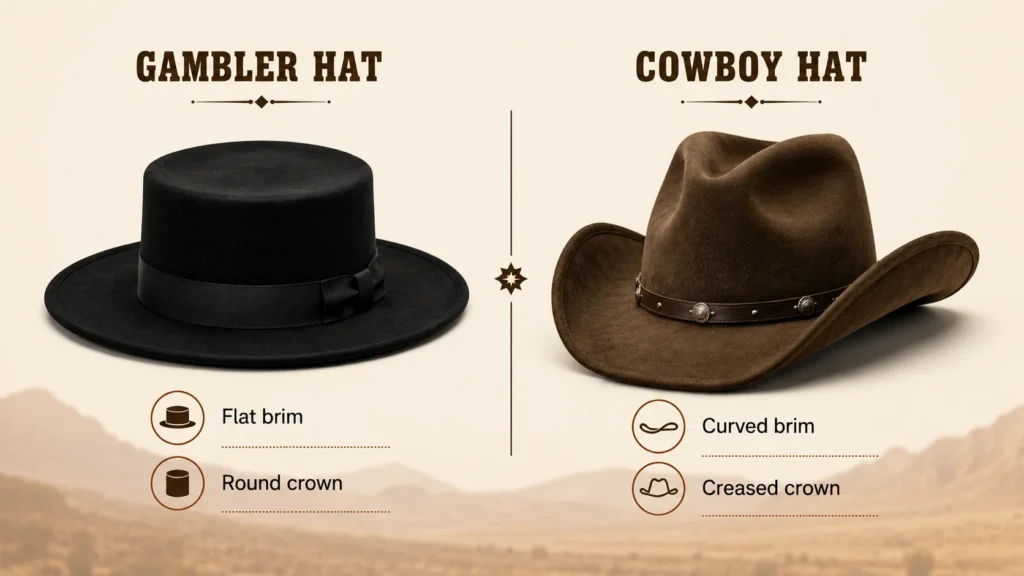
That’s the quick answer. Here’s what that actually means when you wear one.
Shape and Structure
The gambler hat keeps things simple. Flat brim all the way around. Crown is usually low and round, often called a “telescope crown.”
Cowboy hats go the opposite direction. The brim curves up on the sides. The crown has creases like the cattleman, pinch front, or cutter style.
Those curves aren’t just for looks. They help with sun angles, rain runoff, and visibility when riding.
Historical Use
Gambler hats trace back to riverboat gamblers in the 1800s. They needed something stylish, not rugged.
Cowboy hats came out of necessity. Ranch work. Harsh sun. Long hours outdoors. John B. Stetson introduced the “Boss of the Plains” in 1865, and it stuck.
That design evolved into what we now call the cowboy hat.
Practical Use Today
Gambler hats are more fashion-forward. You’ll see them at events, concerts, or styled outfits.
Cowboy hats still work hard. Ranchers, rodeo riders, and outdoor workers use them daily.
The brim shape alone tells you which one handles wind better. A flat brim catches it. A curved brim cuts through it.
Comfort and Fit
Gambler hats tend to sit lower and feel more snug.
Cowboy hats often have more crown depth. That gives airflow and space, which matters in heat.
If you’re outside for hours, that difference becomes obvious fast.
Is a sombrero the same as a cowboy hat?
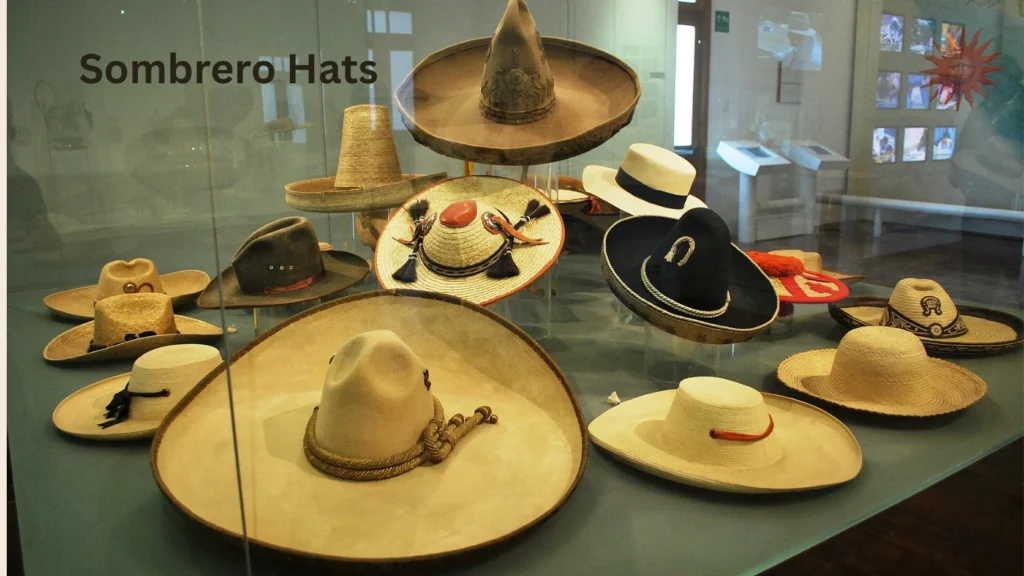
No. A sombrero is larger, wider, and built specifically for intense sun.
Both protect from sunlight. That’s where the similarity ends.
Size and Coverage
Sombreros have very wide brims. Sometimes over 20 inches across.
Cowboy hats usually sit between 3 to 4.5 inches in brim width.
That extra size on a sombrero creates full-body shade. Face, neck, shoulders.
Cowboy hats focus more on the face and upper neck.
Cultural Origin
Sombreros come from Mexico. The word itself comes from “sombra,” meaning shade.
They’ve been part of Mexican culture for centuries, especially among farmers, ranchers, and charros.
Cowboy hats come from the American West, though both share influence from Spanish riding traditions.
There’s overlap in history, but the designs split based on environment.
Materials
Traditional sombreros use straw, felt, or even palm fibers.
Cowboy hats are usually felt (beaver, rabbit blends) or straw for summer.
Higher-end felt hats can be dense and water-resistant. That matters for durability.
Purpose
Sombreros are built for maximum sun protection.
Cowboy hats balance protection with mobility. Riding, working, moving fast.
A sombrero in strong wind becomes a problem. A cowboy hat stays put.
Which hat style is better for hot, sunny climates?
Sombreros provide the most shade.
Straw cowboy hats come in second.
Gambler hats depend heavily on material.
Now let’s get practical.
Heat And Airflow
Straw hats breathe. Felt hats trap heat.
That’s why summer cowboy hats are almost always straw.
According to the U.S. National Weather Service, shade can reduce perceived temperature by up to 10–15°F. A wider brim directly improves that effect.
Sombreros take this to the extreme with oversized brims.
Sun Protection
Dermatologists, including guidance from the CDC, recommend hats with at least a 3-inch brim for sun protection.
Cowboy hats meet that standard. Sombreros exceed it.
Gambler hats vary. Some are wide enough, some aren’t.
If sun exposure is your main concern, brim width matters more than style.
Wind and Usability
Here’s where sombreros struggle.
Large surface area means more wind resistance. In open environments, that becomes annoying quickly.
Cowboy hats are built for movement. Riding horses, working outdoors, dealing with unpredictable weather.
Gambler hats fall somewhere in between, but they’re still more fashion than function.
How do gambler hats, cowboy hats, and sombreros compare side by side?
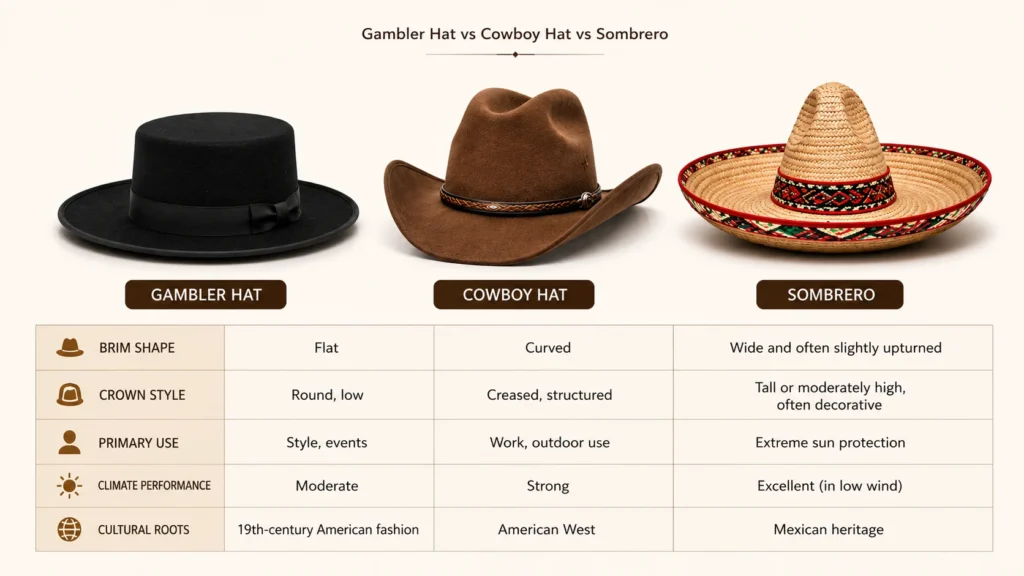
Here’s a clear breakdown.
Brim shape
Gambler: flat
Cowboy: curved
Sombrero: wide and often slightly upturned
Crown style
Gambler: round, low
Cowboy: creased, structured
Sombrero: tall or moderately high, often decorative
Primary use
Gambler: style, events
Cowboy: work, outdoor use
Sombrero: extreme sun protection
Climate performance
Gambler: moderate
Cowboy: strong
Sombrero: excellent (in low wind)
Cultural roots
Gambler: 19th-century American fashion
Cowboy: American West
Sombrero: Mexican heritage
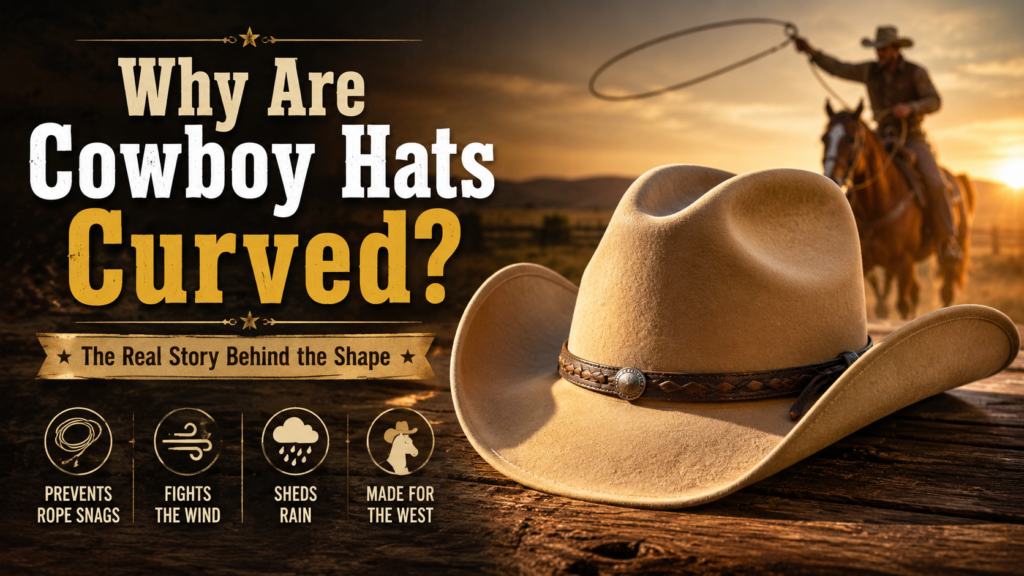
Why do cowboy hats have curved brims?
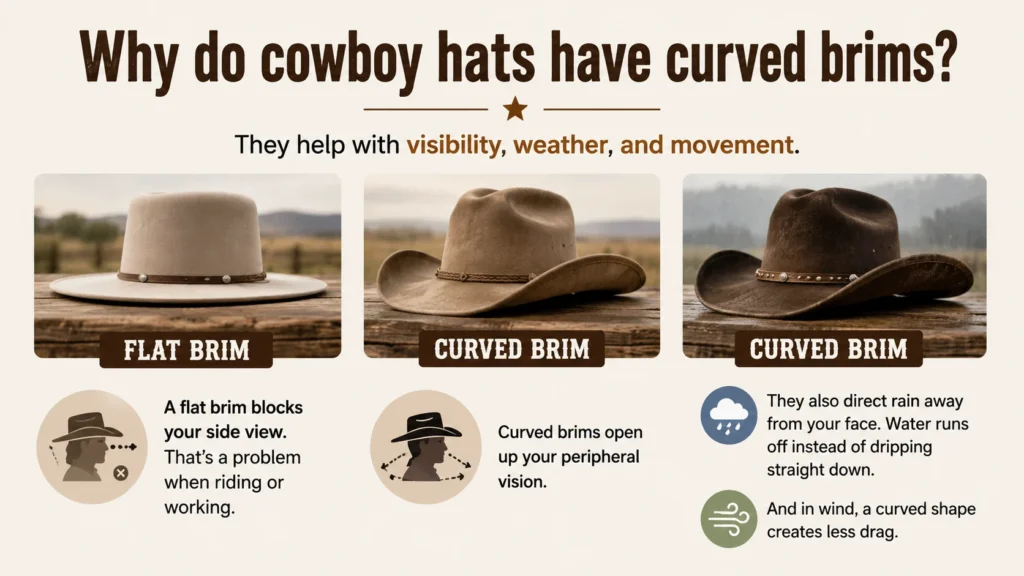
They help with visibility, weather, and movement.
A flat brim blocks your side view. That’s a problem when riding or working.
Curved brims open up your peripheral vision.
They also direct rain away from your face. Water runs off instead of dripping straight down.
And in wind, a curved shape creates less drag.
It’s a small design change that makes a big difference over long hours.
Are gambler hats good for outdoor use?
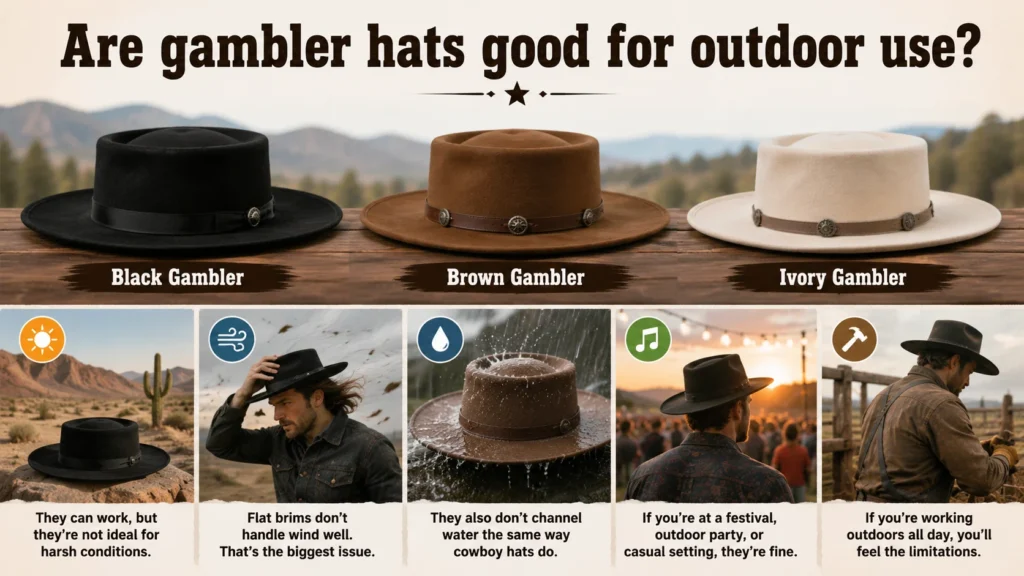
They can work, but they’re not ideal for harsh conditions.
Flat brims don’t handle wind well. That’s the biggest issue.
They also don’t channel water the same way cowboy hats do.
If you’re at a festival, outdoor party, or casual setting, they’re fine.
If you’re working outdoors all day, you’ll feel the limitations.
When should you choose a sombrero over a cowboy hat?
Pick a sombrero when sun exposure is extreme and wind is minimal.
Think farming in open fields. Long hours under direct sunlight.
The extra shade reduces heat stress. That’s backed by basic thermal exposure research from organizations like OSHA, which stresses the role of shade in preventing heat-related illness.
But if you’re moving a lot, dealing with wind, or need versatility, a cowboy hat makes more sense.
Which hat lasts longer?
Felt cowboy hats usually last the longest.
High-quality felt, especially beaver blends, can handle years of use.
Straw hats wear out faster. They’re lighter, but less durable.
Sombreros vary. Handmade ones can last a long time if cared for, but cheaper versions degrade quickly.
Durability depends more on material than style.
What about style and modern fashion?
All three show up in fashion, just in different ways.
Gambler hats lean into vintage and boho looks.
Cowboy hats sit at the center of Western fashion, which keeps cycling back into mainstream trends.
Sombreros appear more in cultural or themed settings, though designers occasionally reinterpret them for runway pieces.
If you’re building a wardrobe, cowboy hats offer the most flexibility.
Quick answers to common questions
What’s the easiest hat to wear daily?
Cowboy hat. It balances comfort, protection, and practicality.
Which hat gives the most shade?
Sombrero. No contest.
Which one looks the most modern?
Depends on styling, but gambler hats often feel more fashion-forward.
Can you wear a gambler hat in summer?
Yes, if it’s straw. Felt versions get hot quickly.
Final thought
Each hat solves a different problem.
Gambler hats lean toward style.
Cowboy hats handle real-world use.
Sombreros push hard into sun protection.
Pick based on where you’ll wear it. Not just how it looks.
That’s what makes the difference.
Call to Action
To learn more about cowboy hats and the ranch culture of the Wild West, keep visiting Hatwanderer.com and reading our informative blog posts, including Cowboy Hat Styles Explained: How to Identify Each Type at a Glance

Mike Wilson is a Western fashion enthusiast, content creator, and founder of HatWanderer.com. He shares expert insights, buying guides, and honest reviews to help readers choose the right cowboy hats and Western apparel.
Passionate about Western culture and craftsmanship, Mike covers hat styles, fit, materials, care, and the heritage behind iconic Western brands. His goal is to help both newcomers and longtime enthusiasts build a timeless Western wardrobe with confidence.
When he’s not writing, Mike enjoys exploring Western fashion trends, studying the history of cowboy culture, and discovering quality craftsmanship from respected hat makers.