|
Getting your Trinity Audio player ready...
|
Cowboy hats are one of the most recognizable symbols of Western culture. Whether you’re buying your first hat, upgrading to a premium felt model, or simply trying to understand the differences between styles, shapes, and sizing, choosing the right cowboy hat can feel overwhelming.
With dozens of crown styles, brim shapes, materials, and sizing systems available, it’s easy to get lost in the details. Yet the right cowboy hat does more than complete an outfit. It provides sun protection, reflects personal style, and often becomes a long-term part of your wardrobe.
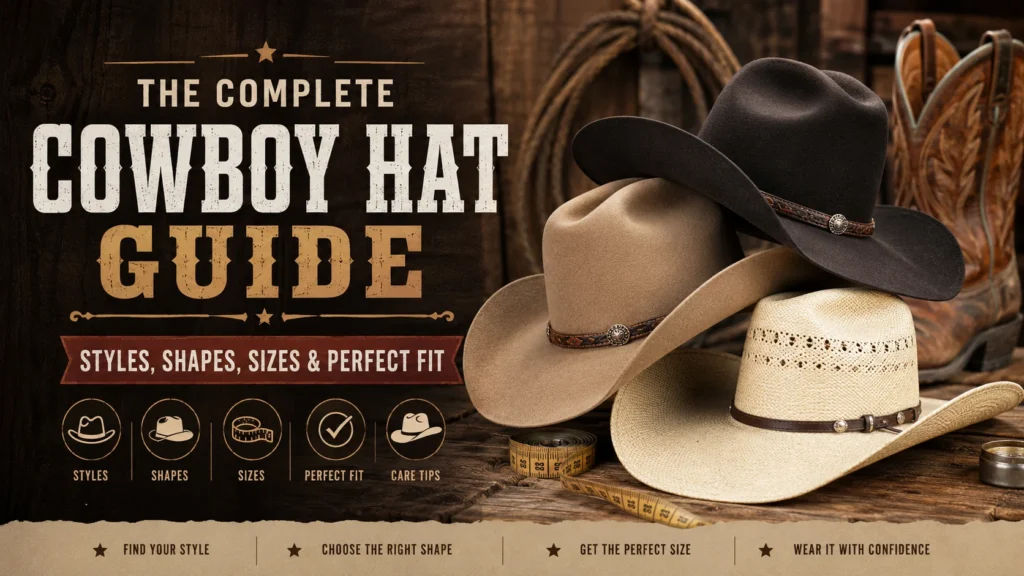
This complete cowboy hat guide explains everything you need to know about cowboy hat styles, shapes, sizing, fit, materials, and buying considerations. By the end, you’ll understand how to choose a cowboy hat that looks great, feels comfortable, and suits your lifestyle.
Why Cowboy Hats Remain Popular Today
Cowboy hats originated as practical working gear for ranchers and cattlemen throughout the American West. Their wide brims provided protection from harsh sun, rain, and wind, while durable materials stood up to demanding outdoor conditions.
Today, cowboy hats remain popular for many reasons:
- Western fashion and personal style
- Rodeo events and country concerts
- Ranch and farm work
- Outdoor recreation
- Cultural heritage and tradition
- Everyday wear in many parts of the United States
From Texas ranches to Nashville music venues, cowboy hats continue to represent independence, confidence, and Western heritage.
Understanding Cowboy Hat Anatomy
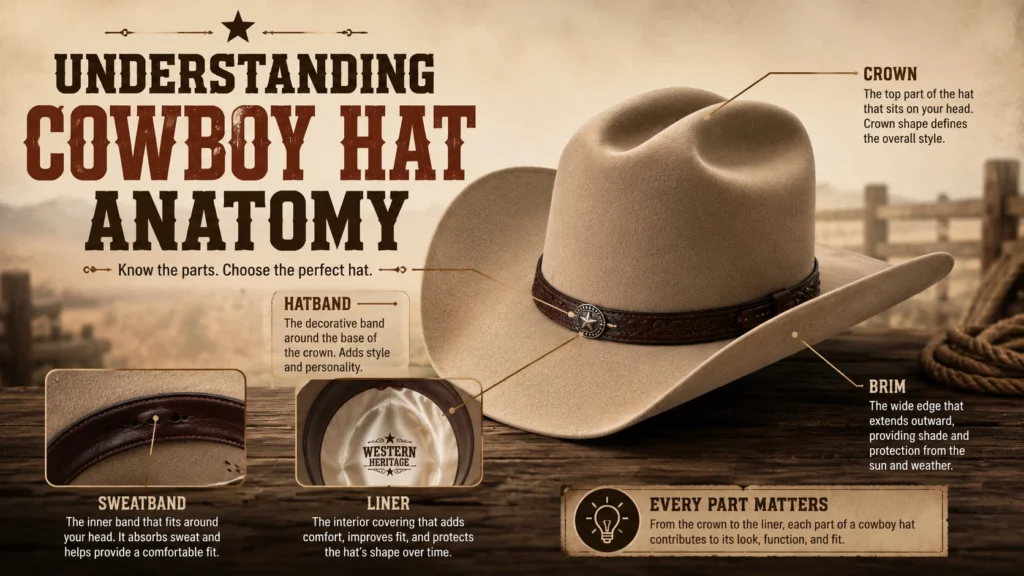
Before exploring different styles, it’s helpful to understand the main parts of a cowboy hat.
Crown
The crown is the top portion of the hat that sits above your head.
The shape of the crown largely determines the hat’s style and overall appearance.
Brim
The brim extends outward from the crown.
Its primary purpose is protection from sun and weather, but it also contributes significantly to the hat’s visual style.
Sweatband
Located inside the hat, the sweatband creates contact with your head and affects comfort and fit.
Hatband
The decorative band wrapped around the crown can range from simple leather strips to elaborate Western designs.
Liner
Some premium cowboy hats include interior liners for additional comfort and durability.
Cowboy Hat Styles vs. Cowboy Hat Shapes
One of the most common points of confusion is the difference between cowboy hat styles and cowboy hat shapes.
Cowboy Hat Styles
A cowboy hat style generally refers to the overall design category.
Examples include:
- Cattleman
- Gus
- Gambler
- Pinch Front
- Buckaroo
- Open Crown
These styles are primarily defined by the crown configuration.
Cowboy Hat Shapes
Cowboy hat shapes refer to specific modifications made to the crown and brim.
Two hats may share the same style while featuring different brim shapes or crown variations.
Understanding this distinction makes shopping and customization much easier.
Most Popular Cowboy Hat Styles
Cattleman
The Cattleman is widely considered the classic cowboy hat.
Features include:
- Three crown creases
- Moderate brim curve
- Traditional Western appearance
This style is commonly seen among ranchers, rodeo competitors, and everyday Western wear enthusiasts.
Gus
The Gus features a distinctive sloped crown profile.
Characteristics include:
- Tall crown
- Front-sloping shape
- Strong Western appearance
It remains one of the most recognizable cowboy hat styles.
Pinch Front
The Pinch Front blends Western and modern fashion influences.
Characteristics include:
- Teardrop crown
- Front pinches
- Contemporary appearance
This style works particularly well for casual wear.
Gambler
The Gambler offers a unique look compared to traditional Western hats.
Features include:
- Flat brim
- Low-profile crown
- Distinctive Old West styling
Buckaroo
Buckaroo hats make a bold statement.
Characteristics include:
- Extra-wide brim
- Tall crown
- Strong ranching heritage
They remain popular in parts of Nevada, Oregon, and the broader Western United States.
For a detailed breakdown of every major crown style and identification tips, see our guide on Cowboy Hat Styles Explained: How to Identify Each Type at a Glance.
Understanding Cowboy Hat Brim Shapes
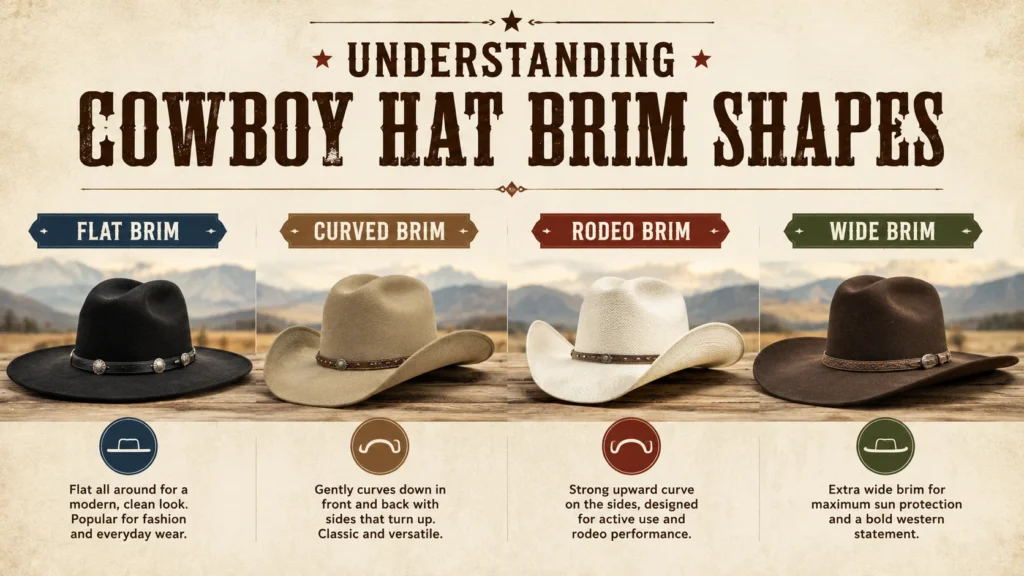
The brim dramatically affects both appearance and functionality.
Flat Brim
Flat brims create a modern and fashionable look.
They have become increasingly popular among younger Western wear enthusiasts.
Curved Brim
Traditional curved brims provide excellent sun protection and classic Western styling.
Rodeo Brim
Rodeo-style brims often feature aggressive upward curves designed for active movement.
Wide Brim
Wider brims provide maximum shade and weather protection.
They are often preferred by ranch workers and outdoor professionals.
Choosing the Right Cowboy Hat for Your Face Shape
Not every cowboy hat looks the same on every person.
Understanding face shape can help narrow your options.
Round Face
Best choices:
- Taller crowns
- Moderate to wide brims
- Angular crown shapes
These create additional visual length.
Oval Face
Often considered the easiest face shape to fit.
Most cowboy hat styles work well with oval facial proportions.
Square Face
Look for:
- Rounded brim curves
- Softer crown shapes
These help balance strong facial features.
Long Face
Consider:
- Wider brims
- Lower crowns
This combination helps create visual balance.
Cowboy Hat Materials Explained
Material selection affects comfort, durability, appearance, and price.
Felt Cowboy Hats
Felt remains the gold standard for many Western hat enthusiasts.
Benefits include:
- Durability
- Premium appearance
- Excellent shape retention
- Year-round versatility
Felt hats are especially popular during cooler months.
Straw Cowboy Hats
Straw hats dominate warm-weather wear.
Advantages include:
- Lightweight construction
- Better ventilation
- Improved comfort in hot climates
Many Western wearers switch between felt and straw seasonally.
Wool Cowboy Hats
Wool hats offer an affordable entry point.
Benefits include:
- Lower cost
- Wide style availability
- Suitable casual wear
Leather Cowboy Hats
Leather provides a rugged alternative.
Advantages include:
- Unique appearance
- Weather resistance
- Distinctive character development over time
Cowboy Hat Sizing Basics
One of the biggest mistakes first-time buyers make is assuming cowboy hats fit like baseball caps.
They don’t.
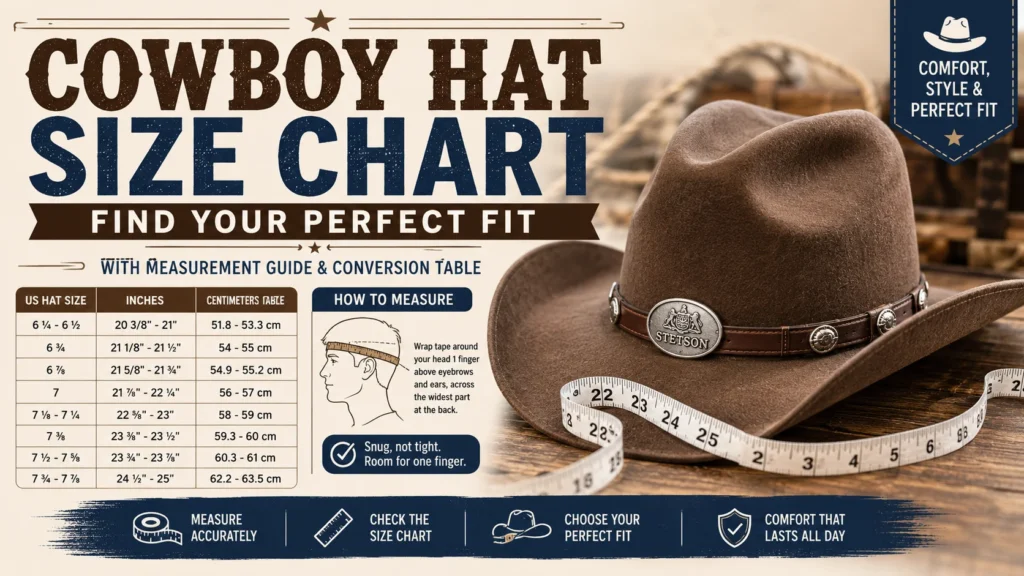
Cowboy hats rely on precise head circumference measurements.
Sizing typically includes:
- Numeric hat sizes
- Inches and centimeters
- Small, Medium, Large conversions
Accurate measurement is critical for long-term comfort.
Why Size Matters
A hat that is too small can cause:
- Pressure points
- Headaches
- Forehead marks
A hat that is too large can:
- Shift while walking
- Blow off in windy conditions
- Feel unstable
For detailed measuring instructions and a complete cowboy hat sizing chart, see our Cowboy Hat Size Guide: How to Tell If Your Cowboy Hat Fits (Too Small or Too Big).
How a Cowboy Hat Should Fit
A properly fitted cowboy hat should feel:
- Secure
- Comfortable
- Balanced
It should not feel tight or loose.
Signs of a Good Fit
- Even contact around the sweatband
- Minimal movement during normal activity
- No pressure points
- Comfortable all-day wear
Signs of a Poor Fit
- Excessive shifting
- Forehead marks
- Headaches
- Constant adjustment
The goal is secure comfort, not tightness.
Common Cowboy Hat Buying Mistakes
Buying Based on Appearance Alone
Many shoppers focus entirely on style and ignore fit.
Comfort should always come first.
Skipping Measurements
Guessing your size frequently leads to returns and exchanges.
Choosing Trends Over Function
A fashionable hat that doesn’t suit your lifestyle often ends up unworn.
Ignoring Climate
Material choice should reflect where and when you’ll wear the hat.
Assuming All Brands Fit the Same
Even identical labeled sizes can fit slightly differently between manufacturers.
How to Choose Your First Cowboy Hat
If you’re buying your first cowboy hat, start with these questions:
Where Will You Wear It?
- Everyday use
- Ranch work
- Rodeo events
- Country concerts
- Special occasions
What Climate Do You Live In?
Hot climates often favor straw hats.
Cooler regions may benefit from felt hats.
What Style Appeals to You?
Traditional buyers often choose:
- Cattleman
- Gus
- Rancher styles
Fashion-focused buyers may prefer:
- Pinch Front
- Gambler
- Flat brim variations
What’s Your Budget?
Cowboy hats range from affordable wool models to premium handcrafted felt hats costing hundreds or even thousands of dollars.
Caring for Your Cowboy Hat
Proper care helps preserve both fit and appearance.
Storage Tips
- Store on a hat rack or stand
- Avoid crushing the brim
- Keep away from excessive heat
Cleaning Tips
- Brush felt hats regularly
- Remove dust from straw hats gently
- Follow manufacturer recommendations
Handling Tips
Always pick up your cowboy hat by the brim rather than squeezing the crown excessively.
Frequently Asked Questions
What is the most popular cowboy hat style?
The Cattleman remains the most popular and widely recognized cowboy hat style in North America.
Are cowboy hats still in style?
Yes. Cowboy hats continue to grow in popularity through Western fashion, country music culture, rodeo events, and everyday wear.
Should my cowboy hat feel tight?
No. It should feel secure without creating pressure or discomfort.
Can cowboy hats be reshaped?
Many felt cowboy hats can be professionally reshaped or customized.
How long should a cowboy hat last?
With proper care, a quality cowboy hat can last for many years and often decades.
Finding the Perfect Cowboy Hat
The best cowboy hat is the one that fits comfortably, suits your lifestyle, and reflects your personal style.
While styles, shapes, and materials all matter, fit remains the most important factor. A properly fitted cowboy hat will always look better and feel better than an expensive hat in the wrong size.
Start by understanding the major cowboy hat styles, choose a material that fits your climate and needs, measure your head accurately, and focus on comfort throughout the buying process.
Once you find the right combination, you’ll quickly understand why cowboy hats have remained an enduring part of American Western culture for generations.
Call to Action
To learn more about cowboy hats and the ranch culture of the Wild West, keep visiting Hatwanderer.com and reading our informative blog posts.

Mike Wilson is a Western fashion enthusiast, content creator, and founder of HatWanderer.com. He shares expert insights, buying guides, and honest reviews to help readers choose the right cowboy hats and Western apparel.
Passionate about Western culture and craftsmanship, Mike covers hat styles, fit, materials, care, and the heritage behind iconic Western brands. His goal is to help both newcomers and longtime enthusiasts build a timeless Western wardrobe with confidence.
When he’s not writing, Mike enjoys exploring Western fashion trends, studying the history of cowboy culture, and discovering quality craftsmanship from respected hat makers.