|
Getting your Trinity Audio player ready...
|
There was a time when a simple hat could tell the world everything about you.
Not your name. Not your job. Just your hat.
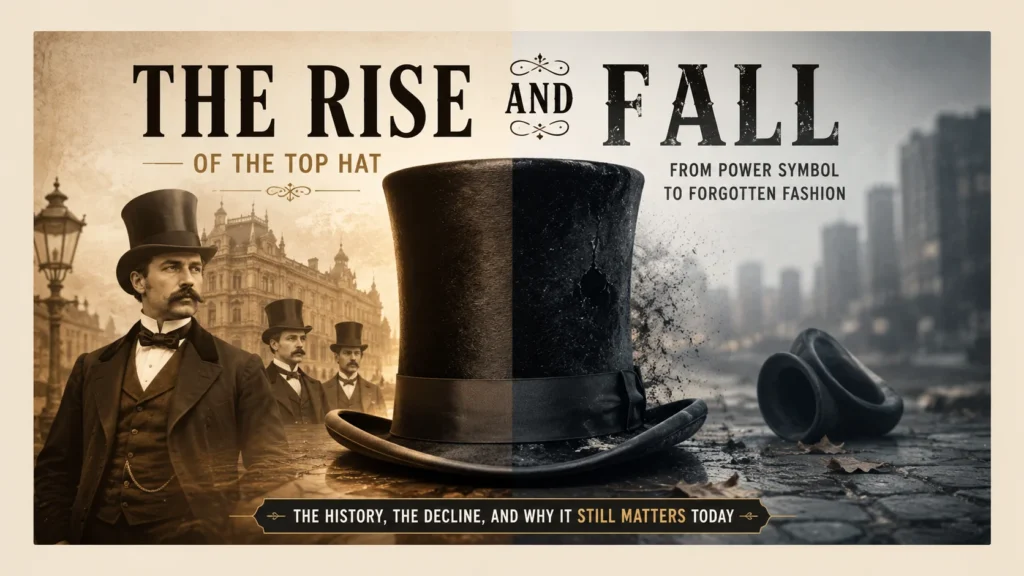
And the most powerful one of them all was the top hat.
Today, it looks like something you’d see in a magic show or a costume party. But once upon a time, it was serious business. Presidents wore it. Kings wore it. Rich businessmen refused to step outside without it.
So what happened? How did something so powerful just… disappear?
When a Hat Meant Everything
The top hat wasn’t just fashion.
It was a message.
A tall, black cylinder sitting on your head basically said: “I matter. I have money. I have status.”
Simple as that.
In the 1800s, society was obsessed with appearance. And height meant power. The taller you looked, the more important you seemed. The top hat made ordinary men look like they were above everyone else—literally and socially.
It became a uniform for the powerful:
- Politicians
- Royalty
- Wealthy businessmen
- High society gentlemen
If you didn’t wear one to formal events, you were basically invisible in elite circles.
But There Was a Problem…
Here’s the uncomfortable truth.
The top hat was also… impractical.
Really impractical.
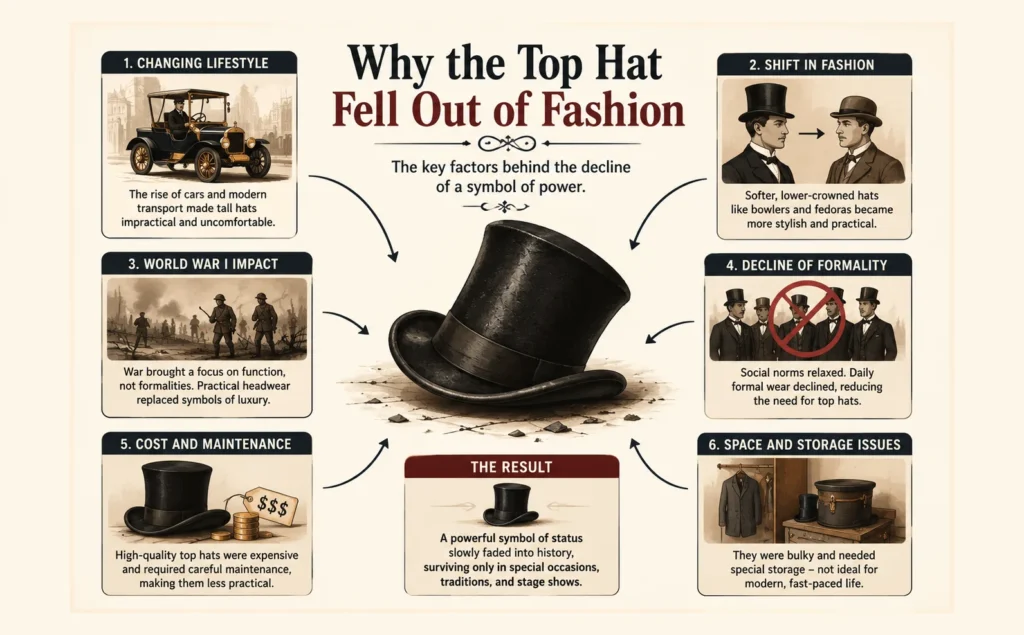
It was tall. Fragile. Expensive. And not exactly friendly to everyday life.
Try sitting in a carriage or early car with a 20 cm hat on your head. Not fun. Try walking into a theater and keeping it on. Also not fun—for the people behind you, at least.
It created awkward social rules too. You had to wear it in, but take it off inside. And then… hold it? Store it? Hope it didn’t get crushed?
It was a status symbol that slowly turned into a burden.
The Quiet Collapse
Fashion doesn’t die loudly. It fades.
That’s exactly what happened here.
As the world changed, the top hat stopped making sense.
Cars replaced horse carriages. Cities got more crowded. People started choosing comfort over formality.
New hats like bowlers and fedoras were simpler, lighter, and way more practical.
And just like that, the top hat started disappearing from daily life.
No big announcement. No dramatic ending.
Just a slow exit from reality.
A Strange Afterlife
But here’s the interesting twist.
The top hat didn’t completely die.
It just… moved.
Today, you’ll still see it in a few places:
- Magicians pulling rabbits out of it
- Royal ceremonies in the UK
- Fancy horse races like Royal Ascot
- Steampunk fashion and stage performances
It’s no longer part of everyday life. It’s more of a symbol now. A reminder of a different world.
A world where clothing wasn’t just clothing. It was identity.
What This All Really Means
The top hat story isn’t just about fashion.
It’s about how quickly the world changes.
Something can be:
- Powerful Today
- Normal Tomorrow
- And Forgotten the Day After
We see this everywhere now. Apps rise and fall. Trends explode and disappear. What feels permanent rarely is.
The top hat is just an old version of that same pattern.
The Takeaway
Maybe the real lesson is simple.
Don’t confuse status with stability.
Just because something looks powerful doesn’t mean it will last.
And just because something disappears doesn’t mean it wasn’t important.
The top hat had its time. It ruled fashion, shaped identity, and defined an era.
Then the world moved on.
And honestly… that’s just how life works.
Call to Action
To learn more about cowboy hats and the ranch culture of the Wild West, keep visiting Hatwanderer.com and reading our informative blog posts.

Mike Wilson is a Western fashion enthusiast, content creator, and founder of HatWanderer.com. He shares expert insights, buying guides, and honest reviews to help readers choose the right cowboy hats and Western apparel.
Passionate about Western culture and craftsmanship, Mike covers hat styles, fit, materials, care, and the heritage behind iconic Western brands. His goal is to help both newcomers and longtime enthusiasts build a timeless Western wardrobe with confidence.
When he’s not writing, Mike enjoys exploring Western fashion trends, studying the history of cowboy culture, and discovering quality craftsmanship from respected hat makers.