|
Getting your Trinity Audio player ready...
|
Finding the perfect cowboy hat isn’t just about choosing a style you love. The right fit makes all the difference in comfort, appearance, and confidence. Whether you’re buying your first western hat or replacing a favorite that’s seen years of wear, understanding cowboy hat sizes can save you from expensive mistakes.
Many people assume all hats fit the same, but that’s rarely the case. Different manufacturers may size their hats slightly differently, and factors such as crown shape, sweatbands, and materials can all affect the way a hat feels. That’s why learning how to measure your head accurately is the first step toward choosing a hat you’ll actually enjoy wearing.
In this complete guide, you’ll learn how to measure your head, read a cowboy hat size chart, understand western sizing, fit, crown and brim styles, materials, care, etiquette, and answers to the most frequently asked sizing questions, whether you’re shopping for a Stetson, Cody James, or another popular western brand.
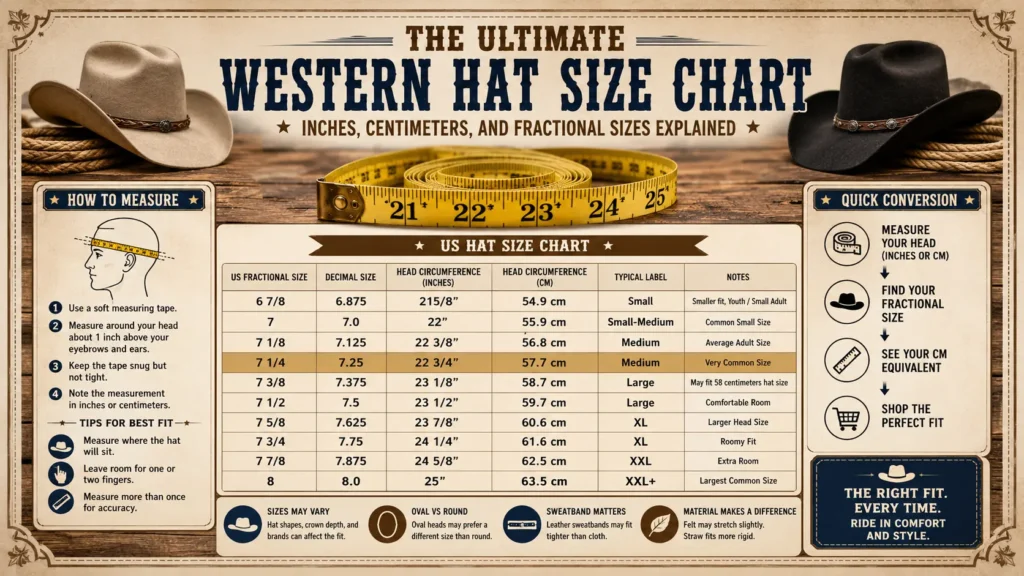
Cowboy Hat Size Chart
Use the chart below to convert your head measurement into the appropriate hat size. This sizing works for most western hat brands sold in the United States; however, always check the manufacturer’s recommendations because sizing can vary slightly.
| Head Circumference | US Hat Size | Size Label |
| 20 7/8 in (53 cm) | 6 5/8 | XS |
| 21 1/4 in (54 cm) | 6 3/4 | XS |
| 21 5/8 in (55 cm) | 6 7/8 | S |
| 22 in (56 cm) | 7 | S |
| 22 3/8 in (57 cm) | 7 1/8 | M |
| 22 3/4 in (58 cm) | 7 1/4 | M |
| 23 1/8 in (59 cm) | 7 3/8 | L |
| 23 1/2 in (60 cm) | 7 1/2 | L |
| 24 in (61 cm) | 7 5/8 | XL |
| 24 3/8 in (62 cm) | 7 3/4 | XXL |
Western Hat Size Chart (Inches & Centimeters)
A western hat size chart uses the same measurements as traditional hat sizing, but western brands often focus more on fit because cowboy hats are designed to stay secure while riding, ranching, or working outdoors. Knowing both inches and centimeters makes shopping much easier, especially when purchasing hats online.
| Size | Inches | Centimeters |
| XS | 20.9–21.3 | 53–54 |
| Small | 21.6–22 | 55–56 |
| Medium | 22.3–22.8 | 57–58 |
| Large | 23.1–23.5 | 59–60 |
| XL | 24–24.4 | 61–62 |
How to Measure Your Head for a Cowboy Hat
One of the most common questions buyers ask is how to measure their head for cowboy hat sizing. Fortunately, it’s a simple process that only takes a few minutes.
Step 1: Gather a Flexible Measuring Tape
Use a soft tailor’s measuring tape. If you don’t have one, wrap a piece of string around your head and measure it with a ruler afterward.
Step 2: Measure the Correct Position
Place the tape about one inch above your eyebrows and ears. Wrap it completely around your head where the hat’s sweatband will naturally rest. Avoid pulling the tape too tightly.
Step 3: Record Your Measurement
Measure in both inches and centimeters. Round to the nearest one-eighth inch if needed.
Step 4: Compare With the Cowboy Hat Size Chart
Match your measurement to the chart above. If you’re between sizes, most experts recommend choosing the larger size. A slightly loose hat can often be adjusted with sizing tape, while a hat that’s too tight is much harder to make comfortable.
Measuring Without a Tape Measure
If you don’t own a measuring tape, don’t worry; you can still determine your size using common household items. Wrap a piece of string, ribbon, or even a charging cable around your head in the correct position. Mark where the ends meet, then measure the length with a ruler. This method provides a surprisingly accurate measurement when done carefully.
Factors That Determine Your Size
Beyond the raw measurement, a few other factors affect how a hat will ultimately fit:
- Head circumference
- Hat brand sizing
- Material of the hat
Felt cowboy hats usually stretch slightly over time, while straw hats generally stretch much less. Leather sweatbands also mold to your head after several wears, improving comfort.
What Size Cowboy Hat Do I Wear?
The answer depends entirely on your head measurement. For example:
- 22 inches usually equals Size 7
- 22 3/8 inches usually equals Size 7⅛
- 22¾ inches usually equals Size 7¼
- 23⅛ inches usually equals Size 7⅜
A head measurement of approximately 22½ inches, one of the most commonly searched sizes. Generally it falls between Size 7⅛ and Size 7¼, depending on the manufacturer. If you’re between sizes, consider your preferred fit and the hat material before deciding.
Cowboy Hat Fit: What Should It Feel Like?
A great cowboy hat should feel secure without causing pressure. Understanding proper fit helps you avoid buying a hat that’s either painfully tight or constantly slipping. A properly fitted hat should:
- Sit evenly around your head
- Stay in place when you bend over
- Feel snug but comfortable
- Leave no painful pressure points
- Not require constant adjustment
A hat that constantly shifts while walking is probably too large. A hat that leaves deep marks or causes headaches is likely too small.
How Should a Cowboy Hat Sit on Your Head?
The sweatband should make even contact around your forehead and the back of your head. The hat shouldn’t squeeze your temples or slide down over your eyes. Most cowboy hats sit approximately one finger’s width above your eyebrows, with the front brim slightly above the eyebrows and the crown resting level across your head. This placement offers both comfort and the traditional western appearance, along with better sun protection. Avoid tilting the hat too far back unless you’re intentionally going for a fashion-forward look.
How Tight Should a Cowboy Hat Fit?
Think of a firm handshake: a properly fitted hat should feel secure but never uncomfortable. It should feel snug enough that it won’t move around during normal activities but never so tight that it causes discomfort after a few minutes. A well-fitted hat will stay put without a chin strap, resist light wind, feel balanced on your head, and become even more comfortable after several wears. High-quality felt hats often mold slightly to the shape of your head over time.
Signs your hat is too tight include:
- Headaches
- Red pressure marks
- Pain near the temples
- Difficulty wearing it for more than 15 to 20 minutes
Signs it’s too loose include:
- Sliding forward over your eyes
- Falling backward easily
- Rotating while walking
- Blowing off in light wind
Cowboy Hat Sizing by Brand and Audience
Cowboy Hat Sizes for Men
Although many cowboy hats are unisex, manufacturers often market them using a men’s cowboy hat size chart. Fortunately, sizing is based on head circumference rather than gender. Whether you’re shopping for yourself or buying a gift, always rely on measurements instead of assuming a standard size. Men with larger head sizes may find extended sizes like 7¾ or 8 available from select brands.
Stetson Cowboy Hat Size Chart
Stetson is one of the most respected names in western hats, and its sizing generally follows standard US measurements shown earlier in this guide. However, some collections may fit slightly differently depending on the crown style, sweatband material, and hat construction. When purchasing a Stetson online, always compare your head measurement with the sizing guide provided for the specific model rather than relying solely on your usual hat size.
Cody James Hat Size Chart
Cody James hats also use standard US sizing, making it easy to compare them with other western brands. Individual styles may feel slightly tighter or looser depending on the material and crown design. If you’re between sizes, choosing the larger size is often the safer option, especially for felt hats that may shrink slightly if exposed to moisture or heat.
Crown Height and Brim Size
Cowboy Hat Crown Height Explained
While size determines how a cowboy hat fits, crown height influences both its appearance and functionality. The crown is the raised portion of the hat that sits above your head, and different heights create different looks. Most cowboy hat crowns range from 4 to 6 inches before shaping; after the hat is creased, the visible height may appear slightly shorter.
| Crown Height | Best For |
| 4–4.25 inches | Everyday casual wear and modern western styles |
| 4.5–5 inches | Traditional ranch, rodeo, and all-purpose wear |
| 5.25–6 inches | Classic western fashion and statement looks |
A taller crown often provides a more traditional western appearance, while shorter crowns tend to look more contemporary. Your personal preference, comfort, and face shape all play a role in choosing the right crown height.
Understanding Cowboy Hat Brim Sizes
Brim size affects sun protection, weather resistance, and the overall style of the hat. Most brims fall between 3½ and 4½ inches.
| Brim Width | Typical Use |
| 3½ inches | Casual western fashion |
| 4 inches | Everyday ranch work and versatile styling |
| 4¼ inches | Rodeo and traditional western wear |
| 4½ inches or wider | Maximum sun protection and bold western appearance |
A wider brim provides better protection from sunlight and rain, making it a practical choice for outdoor work. Narrower brims are lighter and often preferred for everyday wear or social events. When choosing a brim width, think about where you’ll wear your hat most often, function for long hours outdoors, or style for everyday and social settings.
Cowboy Hat Shape Chart: Choosing the Right Style
One of the most exciting parts of buying a cowboy hat is selecting the shape. Although shapes vary by manufacturer, these are among the most common crown and brim combinations. Shape affects appearance rather than sizing, once you’ve selected the correct size, you can choose the crown and brim style that best reflects your personality.
Cattleman Crease
One of the most recognizable cowboy hat styles, featuring three creases along the crown with a gently curved brim. Best for ranch work, rodeo, traditional western attire, and everyday versatility.
Pinch Front
Inspired by fedora styling, the Pinch Front has a narrower front crown with a modern appearance. Best for casual western outfits, urban fashion, and everyday wear.
Gus
The Gus crown is taller and slopes slightly toward the front, giving it a rugged, historic western look. Best for western enthusiasts, historical reenactments, and statement fashion.
Brick Crown
This style has a squared-off appearance with clean, structured lines. Best for contemporary western fashion and balanced facial proportions.
Open Crown
An open crown arrives unshaped, allowing professionals to customize the crease according to personal preference. Best for experienced cowboy hat owners and custom hat shaping.
Choosing the Right Cowboy Hat for You
What Type of Cowboy Hat Should I Get?
The answer depends on how and where you’ll wear it.
- Everyday wear: a medium crown with a 4-inch brim in felt or straw, depending on the season
- Ranch work: durable felt in cooler months and breathable straw during summer, with a wider brim for added protection
- Rodeos: taller crowns and wider brims for a bold western profile with practical sun coverage
- Formal occasions: black or silver belly felt hats for weddings, western banquets, and dressier events
- First-time buyers: a classic Cattleman crease with a medium brim is one of the safest, most versatile options
Choosing a Cowboy Hat for Your Face Shape
Although personal style always comes first, certain hat shapes naturally complement different facial features.
- Round face: taller crowns add height and create a longer visual profile; slightly angled brims help balance softer features
- Oval face: considered the most versatile, nearly every crown and brim combination works well
- Square face: rounded brims and softer crown shapes help balance strong jawlines
- Long face: lower crowns and medium-width brims create visual balance without adding unnecessary height
Trying on different styles is often the easiest way to discover what looks best on you.
Defining How You’ll Use Your Hat
The best cowboy hat for a cattle ranch isn’t always the best option for a country concert or a wedding. Before shopping, ask yourself:
- Will you wear it every day?
- Is it mainly for fashion?
- Will it be used for horseback riding or outdoor work?
- Do you need it for special occasions?
Answering these questions helps narrow your options before you begin shopping.
Materials and Construction
Choosing the Right Material
Higher-quality hats generally last longer and maintain their appearance better over time. Common materials include:
- Wool felt: a budget-friendly choice suitable for occasional wear
- Fur felt: made from rabbit, beaver, or blended fur, offering excellent durability, shape retention, and weather resistance
- Straw: ideal for warm climates and summer activities thanks to lightweight, breathable construction
Choosing the right material often depends on your local climate and how frequently you plan to wear the hat.
Construction Details That Matter
Not all cowboy hats are built the same. Small differences in construction can affect comfort, durability, and overall value.
- Sweatband: a high-quality leather sweatband improves comfort and gradually conforms to your head
- Liner: premium felt hats often include satin liners, adding both comfort and a polished appearance
- Edge finish: the brim edge may be bound, rolled, or left raw depending on the design
- Stitching quality: even stitching and consistent finishing are signs of careful craftsmanship
Paying attention to these details can help distinguish a premium hat from a lower-quality alternative.
Seasonal Hat Guide
Many western enthusiasts own more than one hat because different materials perform better throughout the year.
- Spring: lightweight felt hats work well as temperatures begin to rise
- Summer: straw hats provide ventilation while protecting your face and neck from the sun
- Fall: medium-weight felt hats are versatile enough for changing weather
- Winter: high-quality fur felt offers insulation and better protection from wind and light rain
Rotating hats seasonally can also extend the lifespan of each one.
Popular Colors and When to Wear Them
- Black: a timeless option for formal occasions and evening wear
- Chocolate brown: pairs well with denim, leather boots, and everyday western clothing
- Silver belly: one of the most versatile western colors, suitable for both casual and dress occasions
- Natural straw: perfect for warm-weather events, outdoor festivals, and ranch work
- White: often seen at rodeos, summer celebrations, and country music events
If you’re buying your first cowboy hat, a neutral color such as black, brown, or silver belly offers the greatest versatility.
Common Sizing and Buying Mistakes to Avoid
Common Sizing Mistakes
- Buying based only on your old hat. Sweatbands stretch over time, so an old hat alone is an inaccurate reference
- Ignoring seasonal differences. A a felt hat in winter feels different from a lightweight straw hat in summer
- Assuming every brand fits identically. Construction techniques and materials vary between manufacturers
- Choosing style over comfort. An attractive hat won’t be enjoyable if you constantly need to adjust it
- Forgetting hair changes. A new haircut or different hairstyle can subtly affect how a hat feels
Mistakes First-Time Buyers Often Make
- Purchasing solely because of current fashion trends
- Ignoring material quality
- Choosing an extremely dramatic brim or crown that limits versatility
- Failing to consider where the hat will actually be worn
- Skipping care instructions after purchase
Taking a little extra time to research your options often leads to a much more satisfying purchase.
Buying a Cowboy Hat Online
Shopping online offers access to thousands of styles, but it also requires extra attention to detail. Before placing an order:
- Review the retailer’s size chart
- Read customer reviews for sizing feedback
- Check the return and exchange policy
- Compare crown height and brim width specifications
- Look at customer photos whenever possible
Many retailers also include recommendations about whether a particular model runs true to size, slightly large, or slightly small.
Caring for Your Cowboy Hat
Proper care helps maintain both the appearance and fit of your cowboy hat.
Store It Correctly
Place your hat upside down on its crown or use a dedicated hat stand. Avoid resting it on the brim for extended periods, as this can alter its shape.
Keep It Dry
If your hat gets wet, allow it to air dry naturally at room temperature. Avoid using direct heat sources such as hair dryers or radiators.
Clean It Regularly
Use a soft horsehair brush for felt hats to remove dust and dirt. Straw hats can typically be wiped clean with a slightly damp cloth.
Handle It Properly
Pick up your hat by the brim near the front and back rather than repeatedly grabbing the crown. This helps preserve the crown’s shape over time.
Signs It’s Time to Replace Your Hat
Even well-maintained hats eventually reach the end of their lifespan. Consider replacing your hat if you notice:
- Permanent loss of shape
- Cracked or damaged sweatband
- Torn lining
- Excessive fading
- Structural damage from moisture
- Brim that no longer holds its form
Minor issues can often be repaired professionally, but significant damage may justify investing in a replacement.
Cowboy Hat Etiquette and Common Myths
Cowboy Hat Etiquette
Cowboy hats have long been associated with western traditions, and while modern fashion allows for personal expression, a few etiquette guidelines remain widely respected.
- Remove your hat indoors, particularly during meals or ceremonies
- Remove your hat during the national anthem, prayer services, or moments of respect
- Avoid placing your hat on the floor. Instead use a clean surface or hat rack instead
- Respect personal property and avoid trying on someone else’s hat without asking
These customs aren’t strict rules, but they’re appreciated within many western communities.
Common Myths About Cowboy Hats
Myth: Expensive hats are only about branding. Reality: while branding affects price, premium hats often use higher-grade felt, stronger construction, and superior finishing techniques.
Myth: Cowboy hats are only for ranchers. Reality: today, cowboy hats are worn by musicians, outdoor enthusiasts, equestrians, fashion lovers, and people attending western-themed events.
Myth: Every cowboy hat looks the same. Reality: crown styles, brim shapes, materials, and finishes create hundreds of unique combinations.
Myth: One cowboy hat is enough. Reality: many experienced owners keep separate hats for work, travel, formal occasions, and warm-weather use.
Building a Complete Western Look
A cowboy hat often serves as the centerpiece of western attire. Consider pairing it with:
- Quality cowboy boots
- Boot-cut or straight-leg jeans
- A western belt with a classic buckle
- Pearl snap shirts
- Denim or suede jackets
- Leather accessories
The goal isn’t to match every item perfectly but to create a balanced look that feels authentic and comfortable.
Frequently Asked Questions
How do I know what size cowboy hat I wear?
Measure your head carefully and compare the measurement to the manufacturer’s sizing chart. If you’re between sizes, review the brand’s recommendations before purchasing.
Can cowboy hats stretch over time?
Yes. Felt hats with leather sweatbands often conform slightly to the shape of your head through regular wear. Straw hats typically maintain their original size more consistently.
Should I size up or down if I’m between sizes?
Most hat experts recommend selecting the larger size and using hat sizing tape if minor adjustments are needed.
Are western hat sizes universal?
Most manufacturers follow standard US sizing, but slight variations can occur depending on the materials and construction methods used.
Can I reshape a cowboy hat myself?
Many felt hats can be professionally reshaped using steam. While some experienced owners reshape hats at home, beginners often achieve better results through a professional hat shop.
What’s the difference between a fashion cowboy hat and a working cowboy hat?
Working hats are typically built with durability, weather resistance, and long-term comfort in mind. Fashion hats may prioritize appearance, lighter materials, or trend-driven designs.
Final Thoughts
Choosing the right cowboy hat goes beyond selecting a style that looks good on the shelf. From accurate sizing and proper fit to crown height, brim width, shape, material, and construction, every detail contributes to how the hat looks, feels, and performs over time.
Whether you’re buying your first western hat or expanding an existing collection, taking the time to compare styles, evaluate construction, and invest in proper care will help you get the most value from your purchase. A well-chosen cowboy hat can last for many years, becoming more comfortable and full of character with every wear.
Use this guide whenever you’re ready to shop, compare brands, or learn more about western hats and you’ll be equipped to choose a hat that offers lasting comfort, timeless style, and dependable performance wherever your western journey takes you.
| US Hat Size | Head Circumference (Inches) | Head Circumference (CM) | Stetson Size |
|---|---|---|---|
| 6 3/4 | 21 1/8 | 53.7 cm | Small |
| 6 7/8 | 21 1/2 | 54.6 cm | Small |
| 7 | 22 | 55.9 cm | Medium |
| 7 1/8 | 22 3/8 | 56.8 cm | Medium |
| 7 1/4 | 22 3/4 | 57.8 cm | Large |
| 7 3/8 | 23 1/8 | 58.7 cm | Large |
| 7 1/2 | 23 1/2 | 59.7 cm | XL |
| 7 5/8 | 23 7/8 | 60.6 cm | XL |
Continue Reading
If you’re still researching to learn more about Cowboy Hat Styles, Shapes and Sizing Charts, these blog posts can help:
- The Complete Cowboy Hat Guide
- How to Measure Hat Size
- Cowboy Hat Styles vs. Cowboy Hat Shapes
- Anatomy of Cowboy Hats
- Cowboy Hat Styles Explained
- Cowboy and Cowgirl Hats Explained
- Cowboy Hat Shapes Explained
Call to Action
To learn more about cowboy hats and the ranch culture of the Wild West, keep visiting Hatwanderer.com and reading our informative blog posts.

Mike Wilson is a Western fashion enthusiast, content creator, and founder of HatWanderer.com. He shares expert insights, buying guides, and honest reviews to help readers choose the right cowboy hats and Western apparel.
Passionate about Western culture and craftsmanship, Mike covers hat styles, fit, materials, care, and the heritage behind iconic Western brands. His goal is to help both newcomers and longtime enthusiasts build a timeless Western wardrobe with confidence.
When he’s not writing, Mike enjoys exploring Western fashion trends, studying the history of cowboy culture, and discovering quality craftsmanship from respected hat makers.